love is the bridge between you and everything: the deeper meaning
“Love is the bridge between you and everything” is one of Rumi’s most shared quotes, but the Persian couplet behind it opens a deeper meaning. In the Mathnawi, love becomes the bridge from earthly attachment to divine Reality, from the visible world to the Real.

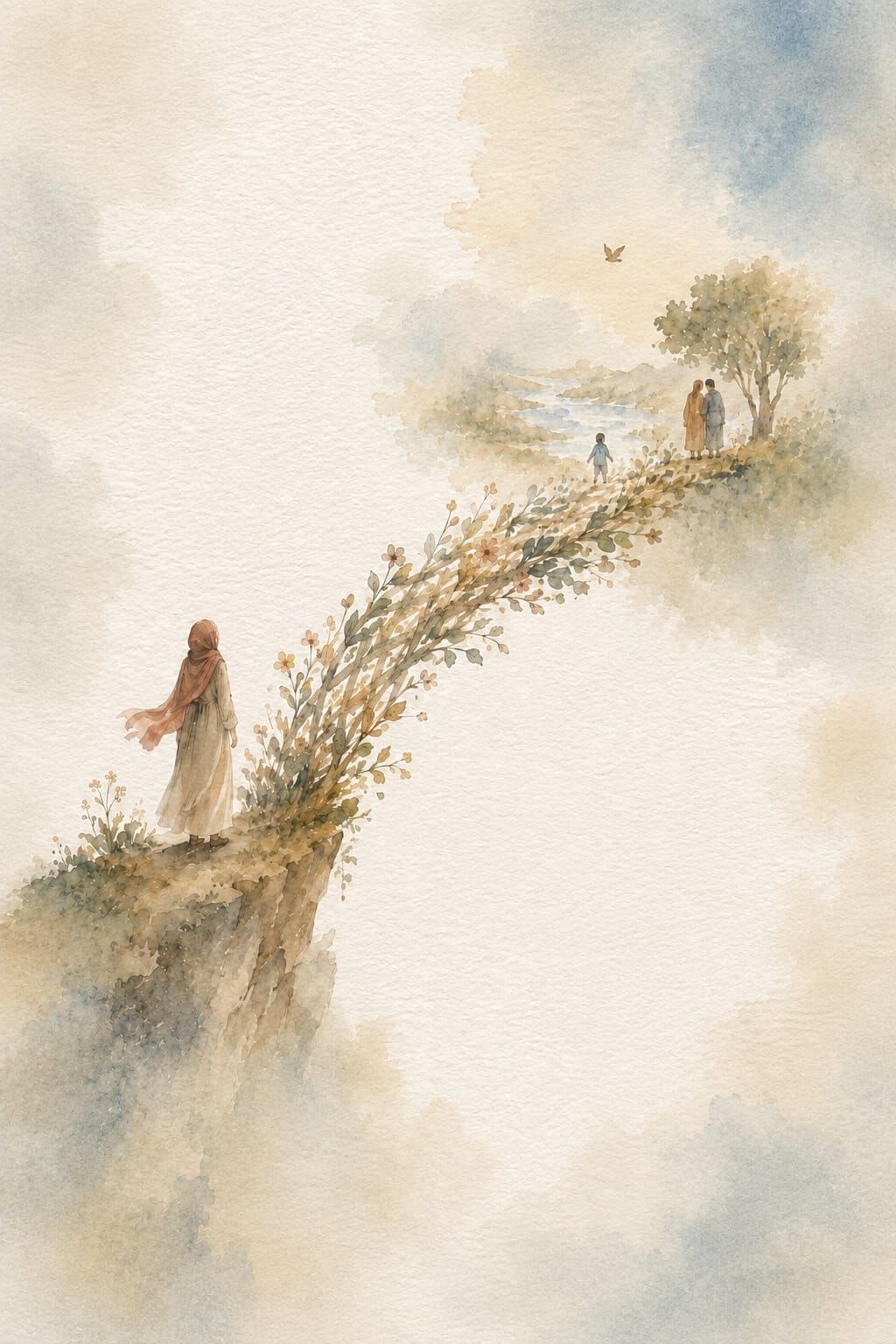
This is the Rumi quote you may have seen tattooed on the forearm of a young barista at your local café.
Or maybe it appeared when you searched for the most famous love quotes by Rumi.
“Love is the bridge between you and everything.”
Rumi
And yes, there is an entire world behind this single line. Rumi, known to many as Molana, wrote in Farsi, the language of his poetry and spiritual work.
To understand this English translation properly, we need to return to the Persian couplet in the Mathnawi, where Rumi writes about love, illness, the heart, and the strange way earthly love can guide us toward the divine.
Quick links
The original Farsi text behind Love is the bridge between you and everything
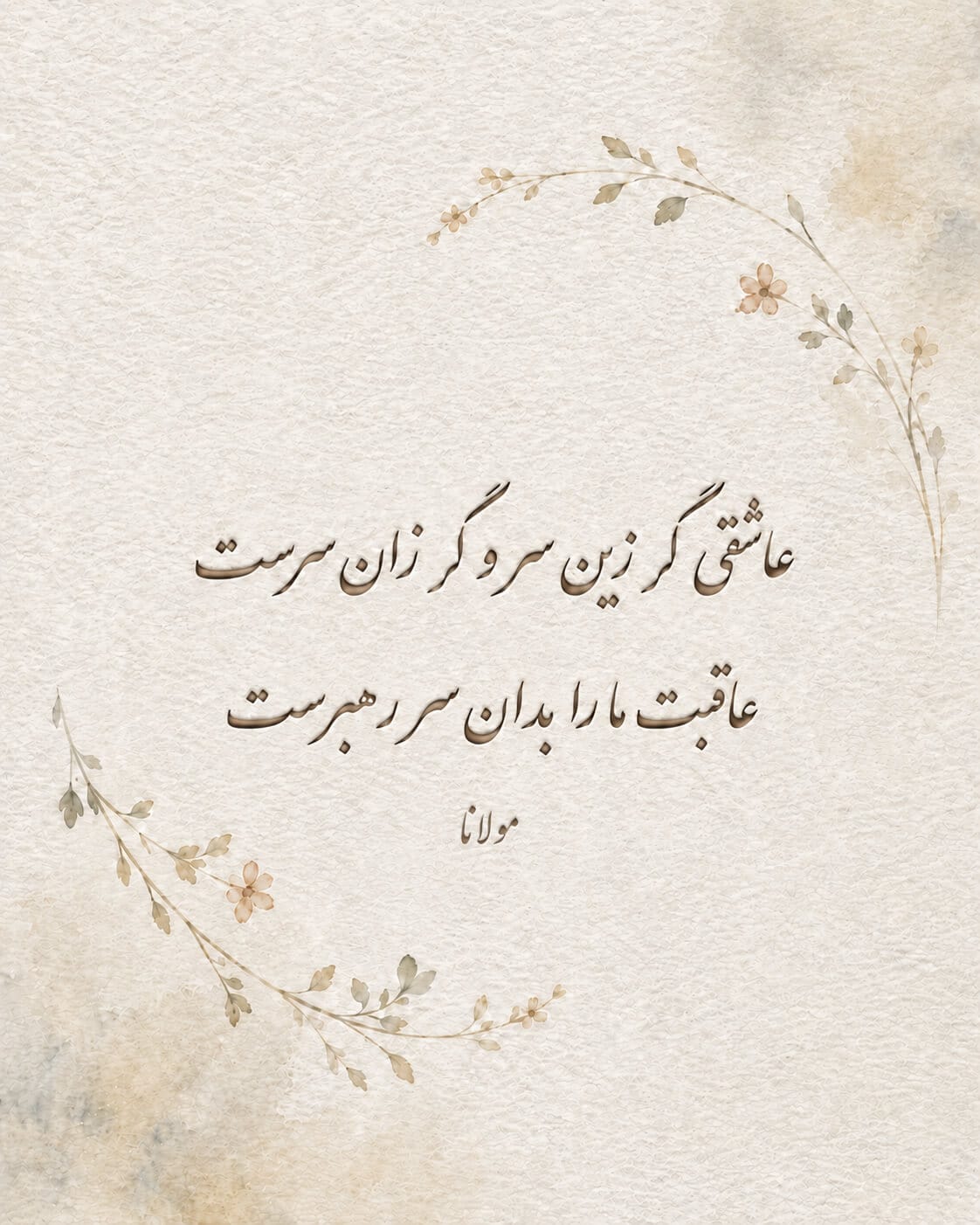
The English line “Love is the bridge between you and everything” is widely shared in Rumi quote collections.
The Persian couplet behind this quote appears in Rumi’s Mathnawi:
عاشقی گر زین سر و گر زان سرست
عاقبت ما را بدان سَر رهبرست
Transliteration:
‘Āshiqī gar zīn sar o gar zān sar ast
‘Āqibat mā rā bedān sar rahbar ast
A close literal meaning would be:
Whether love is of this (earthly) side or that (divine) side,
in the end, it guides (bridges) us toward that (divine) side.
In other words, Rumi is not separating love into “good love” and “bad love” in a simple way. He is saying that love, even when it begins in the visible world, has the potential to guide the heart toward the divine. Earthly love is not the final destination, but it can become the bridge.
Rumi uses عاشقی (āshiqī), not simply عشق (eshq). We can translate it as “love” for readability, but the word is more active. It means the state or practice of being a lover: loving, longing, and being shaped by love. In this couplet, love is not just a feeling. It is something lived, something that guides.
Where the Rumi love quote appears in the Mathnawi
This couplet appears in the Mathnawi, Book 1, in the story of the king, the wise physician, and the sick girl.
The story begins with a girl who appears to be physically ill. The king is worried, and different treatments have already been tried, but nothing truly heals her. On the surface, it looks like a medical problem: a body that is weak, a patient who needs medicine, an illness that should be diagnosed and treated.
But when the wise physician sees her, he understands that the real wound is not in the body. It is in the heart.
Rumi writes:
دید از زاریش کاو زارِ دِلست
تن خوشَست و او گرفتارِ دِلست
Meaning:
He saw from her suffering that her pain was the pain of the heart.
The body was well, but she was caught by the heart.
This is the important turn in the story. The ordinary doctors had treated what they could see. The wise physician sees what is hidden.
The king sees a sick girl. The physician sees a heart in love. And from there, Rumi moves into one of his most powerful reflections on love: what love does to the heart, why it cannot be treated like ordinary pain, and how it can become a guide toward the divine.
Why Rumi sees love as the bridge to the Real
After describing the girl’s illness of the heart, Rumi writes:
عاشقی پیداست از زاریّ دل
نیست بیماری چو بیماریّ دل
Meaning:
Love can be recognised from the suffering of the heart.
There is no illness like the illness of the heart.
Then he continues:
علّت عاشق ز علتها جداست
عشقْ اصطرلاب اسرارِ خداست
Meaning:
The condition of the lover is separate from other conditions.
Love is the astrolabe of the mysteries of God.
This line is very important.
An astrolabe is not the sky itself. It is a tool used to find direction through the sky.
So when Rumi calls love the astrolabe of God’s mysteries, he is saying that love helps the soul orient itself. Love helps us read what cannot be seen directly. It is a way of finding direction. That is why love becomes a bridge.
Why Rumi says love is beyond explanation
After the couplet, Rumi almost warns us against thinking we can explain love completely.
He writes:
هرچه گویم عشق را شرح و بیان
چون به عشق آیم خجل باشم از آن
Meaning:
Whatever I say to explain love,
when I come to love itself, I feel ashamed of my explanation.
Then:
گرچه تفسیرِ زبان روشنگرست
لیک عشقِ بیزبان روشنترست
Meaning:
Although spoken words (of love) can enlighten,
wordless love (the feeling) is more enlightening.
And then this famous image:
چون قلم اندر نوشتن میشتافت
چون به عشق آمد قلم بر خود شکافت
Meaning:
The pen was rushing as it wrote,
but when it came to love, the pen split itself open.
This is such a Rumi moment.
The writer wants to explain.
The mind wants to organise.
The pen wants to keep going.
But love is larger than the explanation of love. You cannot write love with the same force that love is felt.
That does not mean we should not reflect on it. It means we should reflect with humility. A quote can fit on a postcard. But the meaning may take a lifetime.
Deep meaning of Love is the bridge between you and everything
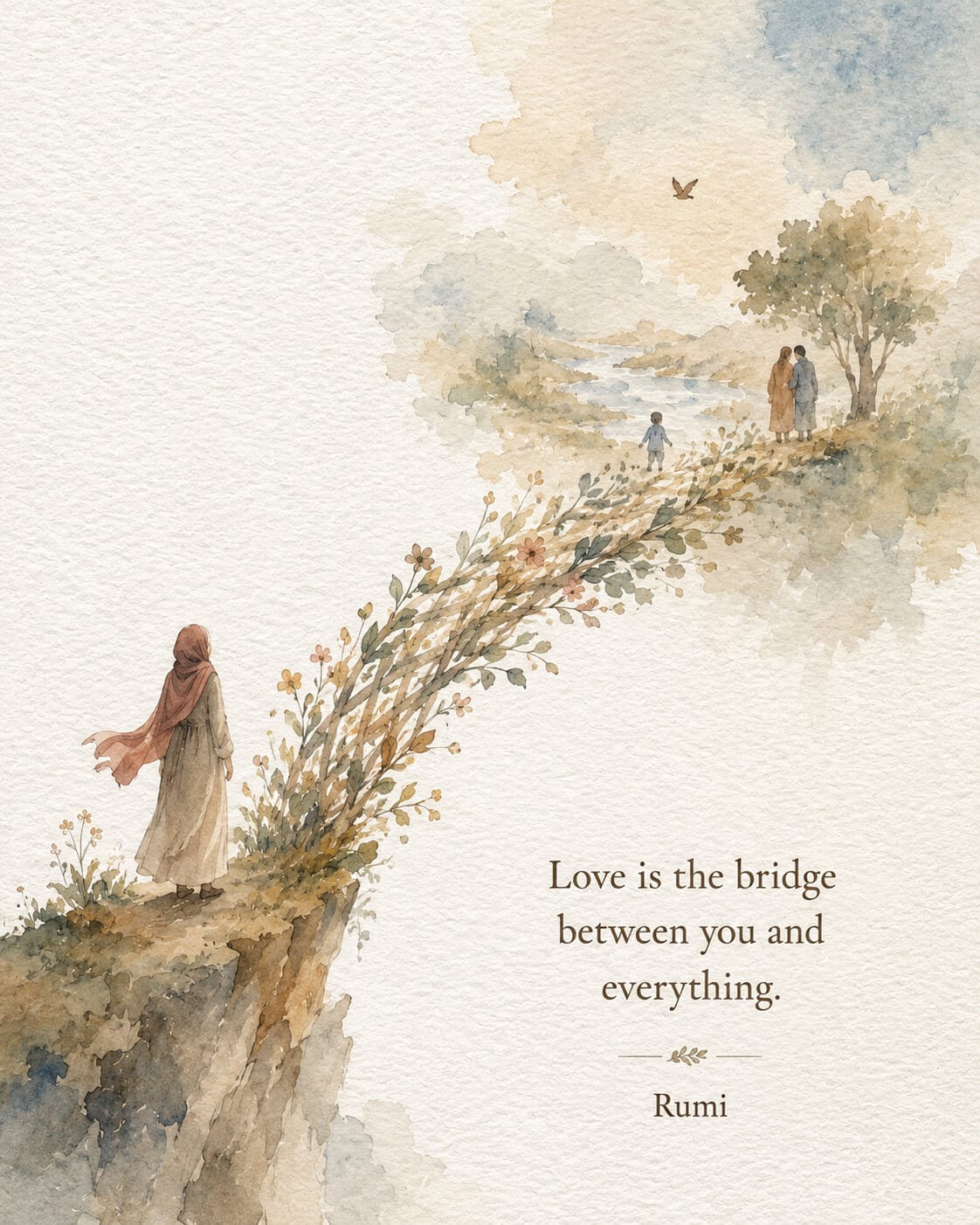
This is the heart of the post: what Rumi may be saying about love, “this side” and “that side.” Here, we look at how earthly love can become more than attachment, and how the visible world can point the heart toward the Real.
The meaning of “this side” and “that side” in Rumi’s poem
Now the couplet becomes much more powerful:
عاشقی گر زین سر و گر زان سرست
عاقبت ما را بدان سَر رهبرست
Whether love is of this (earthly) side or that (divine) side,
in the end, it guides (bridges) us toward that (divine) side.
“This side” can be understood as the earthly side.
- the world we can see
- the people we love
- the friendships we form
- the child we hold
- the beauty we notice
- the birds, water, trees, grapevines, cafés, kitchens, homes, and small ordinary moments that make life feel full
“That side” is the divine side.
- The unseen
- The hereafter
- The Reality behind the visible world
- The truth that gives everything else its meaning.
Most of us live as if this world is the most solid reality, while the unseen feels vague or far away. The afterlife, the divine, the eternal; all of it can start to feel less immediate than what we can touch, photograph, buy, lose, or hold.
But Rumi turns this around.
He suggests that what we call “real life” may only be this side of the bridge: the visible side.
And what love does, if we let it mature, is guide us beyond the visible toward the divine.
From what we can see, toward what is ultimately Real.
Rumi on earthly love and divine love
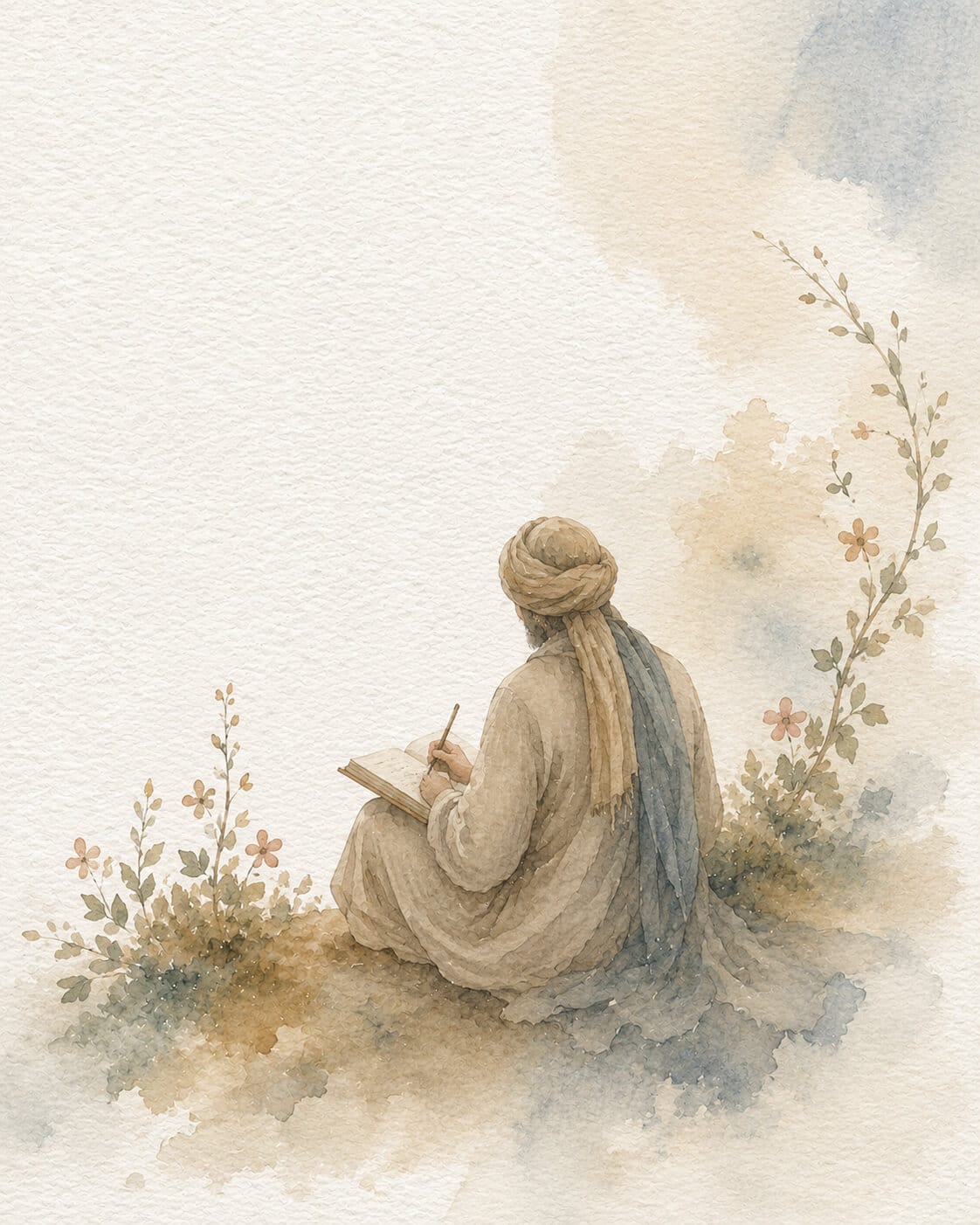
One of the most beautiful things in this couplet is that Rumi does not reject earthly love. He is not saying that human love is worthless, or that only divine love matters.
Instead, he suggests that love, whether earthly or divine, can still become a guide. Love for Allah, love for a spouse, a child, a friend, beauty, nature, and even the love that comes through longing, loss, tenderness, grief, or confusion; all of it can carry meaning when it moves the heart beyond itself.
All of it can become a "bridge".
The issue is not that we love earthly things. The issue is when we stop at them, as if they are the final shore.
Love as the bridge from the visible world to the Real
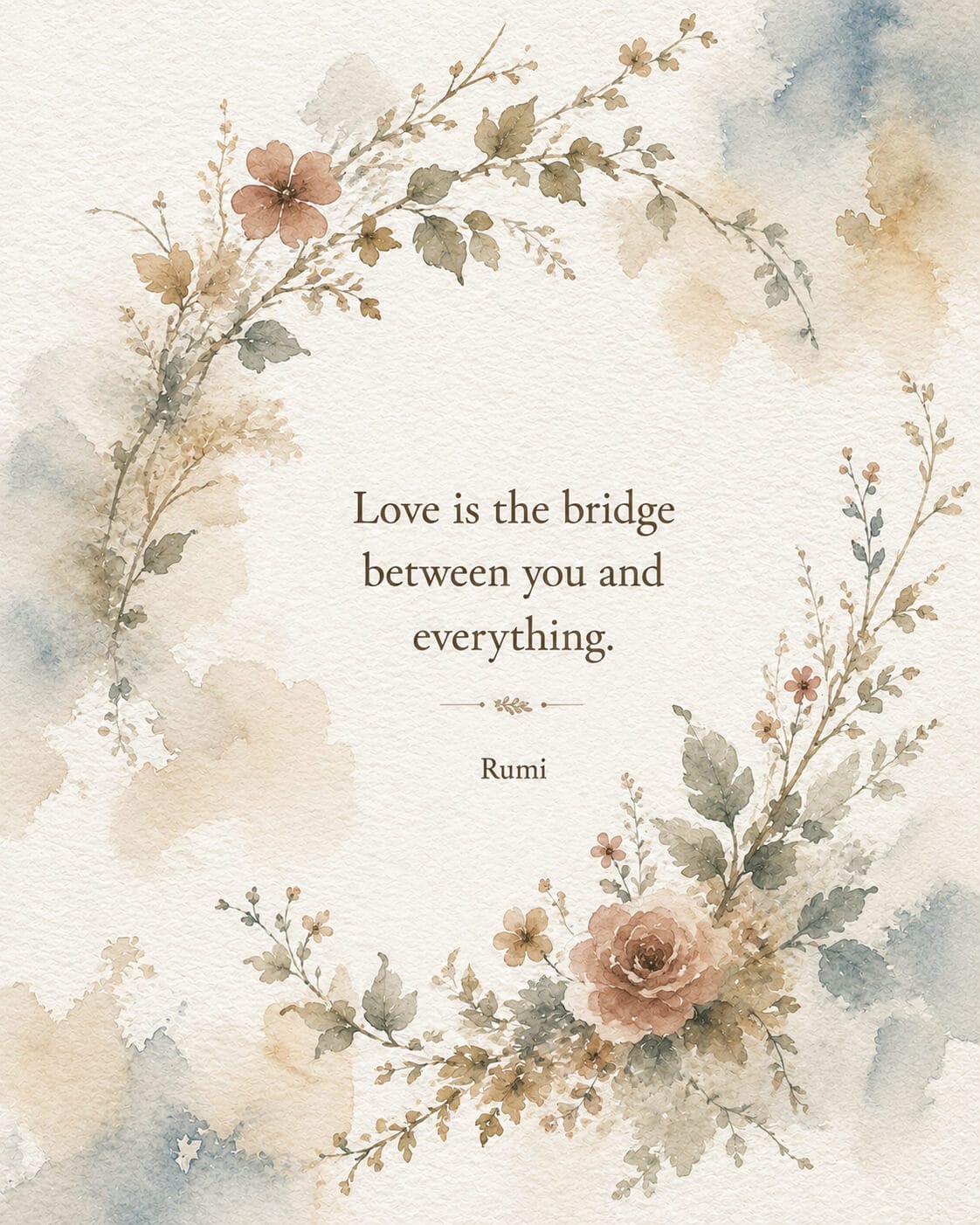
The English quote says:
“Love is the bridge between you and everything.”
At first, “everything” may sound like everything around us. Such as family, friends, nature, food, art, beauty, and home. And yes, love does connect us to all of that.
But through Rumi’s Persian couplet, “everything” becomes larger. Everything is not only the visible world. Everything is also the truth behind the visible world.
Love is the bridge because it teaches us not to stop at the surface. All forms of love can become part of that bridge, carrying us from what is near toward what is Real.
Rumi on love as an illness of the heart
Returning to the story in the Mathnawi, the girl’s illness looked physical, but it was inward. That is very modern, actually. How often do we treat our own restlessness as if it is only practical?
We think:
- I need more success
- I need more money
- I need a better house
- I need more attention
- I need people to finally understand me
- I need my life to look more like the life I imagined
And sometimes, yes, there are practical needs. But sometimes the ache is deeper. Sometimes the heart is not asking for more noise, more proof, more chasing, or more control. Sometimes the heart is asking for direction, meaning, and nearness to Allah. For a life that is not only full, but true.
Rumi’s physician sees beneath the surface. And Rumi invites us to do the same.
Reflection on living for the visible or the Real
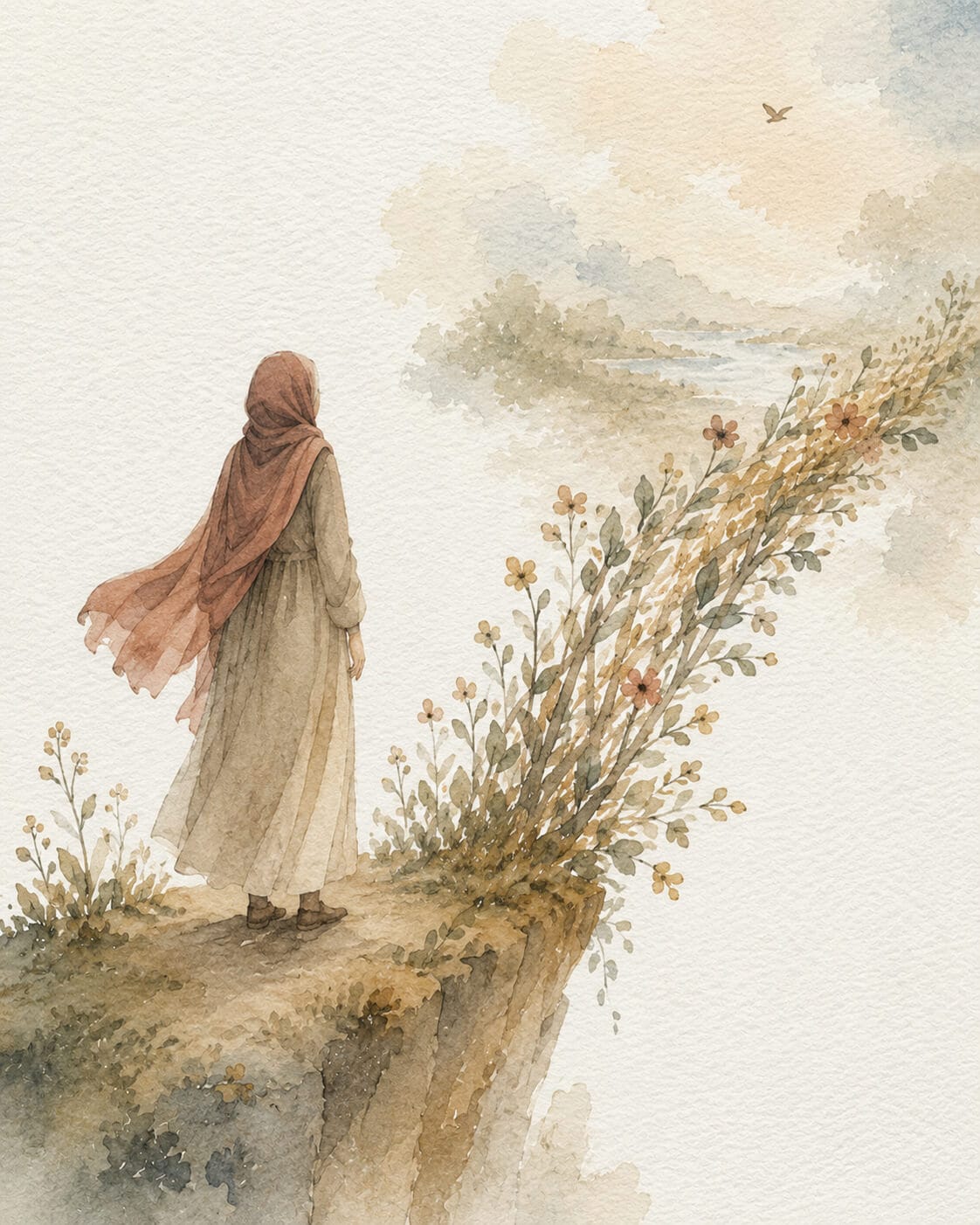
This quote becomes uncomfortable in a good way when we turn it toward ourselves. If love is the bridge between the visible and the Real, then the question becomes:
Am I living only for this side?
Am I living only for what can be seen, photographed, bought, praised, displayed, measured, and approved? Or am I allowing the visible world to lead me toward something truer?
Because this world is not meaningless. Rumi is not asking us to reject it. The visible world is full of signs.
The problem is not loving beauty, family, friendship, home, food, art, water, birds, or gardens. The problem is forgetting that they are signs.
They are not the final Reality. They are not the destination. They are part of the bridge.
What Rumi’s love quote means in everyday life
You do not have to read this quote only as a mystical idea. It can shape ordinary life.
- When you love your family, let that love make you softer, not more controlling.
- When you love beauty, let it remind you of the One who created beauty.
- When you love a friend, let that friendship teach you loyalty and mercy.
- When you love nature, let water, birds, trees, and sky become signs, not just scenery.
- When you feel longing, do not always rush to distract yourself from it.
Ask what it is trying to show you. Maybe the ache itself is part of the bridge.
Love is the bridge home: from this side to that side
So yes, “Love is the bridge between you and everything” is a beautiful quote.
But when we read it beside Rumi’s Persian, it becomes more than a soft line about connection.
Love is the bridge because it takes what begins here and guides it there.
From this side to that side.
From the visible to the unseen truth.
From attachment to meaning.
From beauty to the Source of beauty.
From the wound of the heart to the awakening of the heart.
We may think this world is the solid reality and the unseen is vague.
Rumi suggests something else.
This world may be the near side.
And love, if we let it become more than possession, may be the bridge that teaches us how to cross.
Loved this Rumi line? There is another quote people often know before they know the Persian behind it. Read the Deenista reflection on “What you seek is seeking you” and how Rumi turns longing into a path back to the Divine.
 Neda A.