hayat in Islam: 4 meanings of life in the Quran
What does Hayat mean in Islam? Explore 4 meanings of life in the Quran: hayat al-dunya, hayat al-akhira, hayatan tayyibah, and life from Allah.

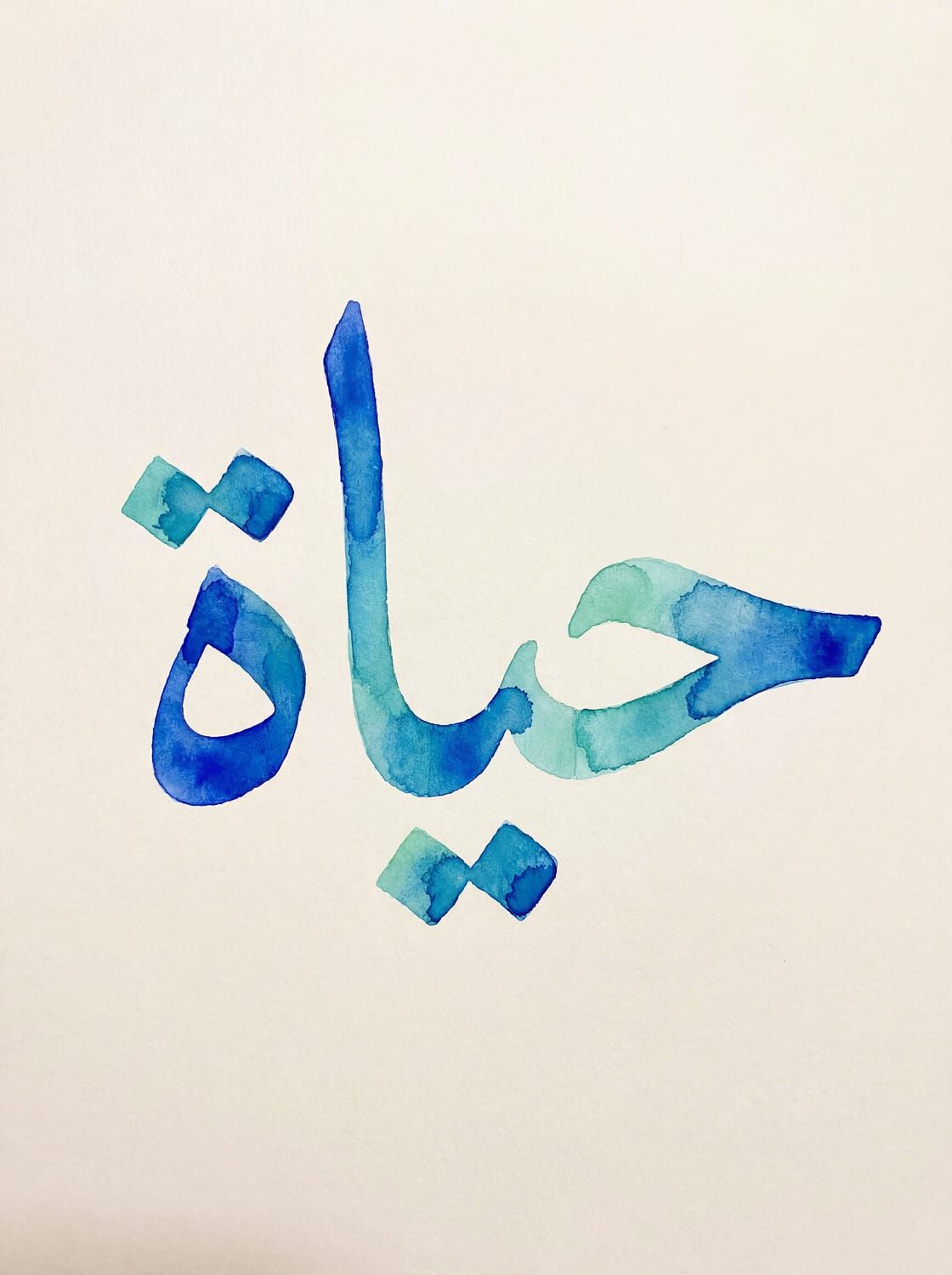
Hayat (حياة) means life in Arabic, but in the Quran the word carries a much deeper meaning. Across different verses, Hayat opens into four distinct dimensions: the life of this world, the life of the Hereafter, the good and blessed life, and the deeper truth that all life comes from Allah. Together, these meanings reveal a much fuller Quranic understanding of what life is.
In this post, we’re looking at 4 meanings of Hayat in the Quran, what each one reveals about how Islam understands life, and what each one teaches us.
Quick links
- What does Hayat mean in Arabic and Islamic thought?
- 1. Hayat al-dunya
- 2. Hayat al-akhira
- 3. Hayatan tayyibah
- 4. Life from Allah
- FAQ about Hayat in Islam
What does Hayat mean in Arabic and Islamic thought?
In Arabic, Hayat (حياة) means life. In the Quran, however, the word appears within a much larger spiritual and moral framework. Sometimes the Quran uses the language of life to speak about this world and its temporary nature. Sometimes it points to the Hereafter as the life that truly lasts. In another place, it describes the good and blessed life for believers. At the deepest level, it also reminds us that life itself belongs to Allah, who is Al-Hayy, the Ever-Living.
1. Hayat al-dunya, the life of this world
One of the clearest Quranic ideas connected to Hayat is hayat al-dunya, the life of this world.
This is the life we are living now, the visible one. It includes everything that feels immediate and real to us: work, family, ambition, comfort, stress, money, beauty, disappointment, plans, home, illness, joy, and all the ordinary details that make up a human life. The Quran never treats this life as meaningless, but it does repeatedly remind us that it is temporary. That reminder matters, because in Islamic thought this life is important, but it is never presented as the whole picture.
Surah Al-An’am (6:32)
وَمَا ٱلْحَيَوٰةُ ٱلدُّنْيَآ إِلَّا لَعِبٌ وَلَهْوٌ ۖ وَلَلدَّارُ ٱلْـَٔاخِرَةُ خَيْرٌۭ لِّلَّذِينَ يَتَّقُونَ ۗ أَفَلَا تَعْقِلُونَ
“And the life of this world is nothing but play and amusement. But the home of the Hereafter is best for those who are mindful of Allah. Will you not then understand?”
Quran 6:32
In Surah Al-An’am (6:32), the Quran places the life of this world in proportion. It acknowledges the pull of worldly life, but it also reminds the reader that this visible life is only part of a much larger reality. In Islamic thought, hayat al-dunya is meaningful, but never final. The believer is asked to live in this world with care and gratitude, while remembering that life extends beyond what is immediate and visible.
What does Hayat al-dunya teach us?
Hayat al-dunya is probably the meaning of Hayat most people understand first, simply because it is the one we are immersed in every day. It is also the one most likely to distort our perspective if we are not careful. A difficult season can start to feel permanent. A personal disappointment can start to feel like the whole story. Even something as ordinary as status, appearance, or comparison can slowly take up more space in our minds than it deserves.
The Quran keeps returning us to proportion. This life matters, but it is not the only life, and it is not the final one. That balance is part of what gives the word Hayat such depth in Islamic culture and art. It can feel bright and hopeful on the surface, while still carrying a reminder that the life in front of us is only one part of a much larger picture.
2. Hayat al-akhira, the life that lasts
If hayat al-dunya is the life we are living now, then hayat al-akhira is the life the Quran keeps calling us back to.
In Surah Al-Ankabut (29:64), we are once again reminded that life is spoken about in more than one sense. This world is part of life, but it is not the goal, and it is not the final form of life in Islamic thought.
Surah Al-Ankabut (29:64)
وَمَا هَـٰذِهِ ٱلْحَيَوٰةُ ٱلدُّنْيَآ إِلَّا لَهْوٌۭ وَلَعِبٌۭ ۚ وَإِنَّ ٱلدَّارَ ٱلْـَٔاخِرَةَ لَهِىَ ٱلْحَيَوَانُ ۚ لَوْ كَانُوا۟ يَعْلَمُونَ
“And this worldly life is not but diversion and play. And indeed, the home of the Hereafter, that is the real life, if only they knew.”
Quran 29:64
The use of the word play here is especially noticeable. Play is not always something negative. It can be enjoyable, absorbing, and easy to get caught up in, which is exactly why the image works so well. The Quran is reminding us that this life can be full and engaging, but it can also distract us if we begin treating it as the end goal. The real focus of the believer is the life that lasts: hayat al-akhira.
What does Hayat al-akhira teach us?
Hayat al-akhira is one of the most grounding ideas in the Quran, especially in today's culture that constantly trains people to treat the visible, immediate, and measurable parts of life as the only things that matter. The Quran resists that way of thinking. It teaches Muslims to take this world seriously, but not absolutely. You can build a life, enjoy beauty, pursue good things, and care deeply about your responsibilities here, but none of that should erase the fact that there is a life beyond this one, and in Islam that life is central.
3. Hayatan tayyibah, the good life
Among the Quranic meanings connected to Hayat, this one stands slightly apart. It is not only describing a type of life, like the life of this world or the life of the Hereafter. It is also describing how life is lived. In other words, hayatan tayyibah is not just about life existing. It is about what makes a life good in the Quranic sense.
The phrase hayatan tayyibah (حياة طيبة) is usually translated as a good life, a wholesome life, or sometimes a pure life. It appears in one of the Quran’s most reassuring promises, and it offers a very different definition of the “good life” from the one modern culture usually celebrates.
Surah An-Nahl (16:97)
مَنْ عَمِلَ صَـٰلِحًۭا مِّن ذَكَرٍ أَوْ أُنثَىٰ وَهُوَ مُؤْمِنٌۭ فَلَنُحْيِيَنَّهُۥ حَيَوٰةًۭ طَيِّبَةًۭ ۖ وَلَنَجْزِيَنَّهُمْ أَجْرَهُم بِأَحْسَنِ مَا كَانُوا۟ يَعْمَلُونَ
“Whoever does righteousness, whether male or female, while being a believer, We will surely grant them a good life, and We will surely reward them according to the best of what they used to do.”
Quran 16:97
Today, the phrase “the good life” often brings to mind comfort, success, ease, or a carefully curated lifestyle. The Quran gives it a different centre of gravity. In this verse, a good life is tied to belief and righteous action. It is not defined only by what a person has, but by the kind of person they are becoming and the kind of life they are building with Allah’s guidance.
What does Hayatan tayyibah teach us?
Hayatan tayyibah shows that in Islam, a good life is not measured only by comfort or outward success. It is a life with moral direction, spiritual steadiness, and barakah. That does not mean it will always be easy. It means that even within difficulty, a life can still be sound, meaningful, and deeply good.
This meaning of hayatan tayyibah also sits closely beside another deeply comforting Quranic idea: that difficulty and ease can exist together. In Surah Ash-Sharh, Allah says, “Indeed, with hardship comes ease” (94:6). If you enjoy this kind of reflection, you may also like our piece on Sheikh Lotfollah Mosque in Isfahan and the verse that is said to have inspired its design.
4. Life from Allah, Allah is Al-Hayy
In Islamic thought, the word Hayat eventually leads back to Allah as the source of all life. He is Al-Hayy, the Ever-Living, and every form of created life exists through His sustaining power. That includes human life, plant life, and the natural cycles the Quran repeatedly uses as signs of life returning to the earth.
At this point in the Quranic picture of Hayat, the word is no longer only about the life we are living. It points back to the One who gives life, sustains it, and renews it.
Surah Al-Baqarah (2:255)
ٱللَّهُ لَآ إِلَـٰهَ إِلَّا هُوَ ٱلْحَىُّ ٱلْقَيُّومُ
“Allah, there is no deity except Him, the Ever-Living, the Sustainer of all existence.”
Quran 2:255
This is from Ayat al-Kursi, and it contains one of the most powerful names in the Quran: Al-Hayy.
A Quranic sign of life: water
The Quran also returns to one of its clearest visual signs of life: water. In more than one place, water is tied directly to living things, growth, and the return of life to what looked dry or still.
Surah Al-Anbiya (21:30)
وَجَعَلْنَا مِنَ ٱلْمَآءِ كُلَّ شَىْءٍ حَىٍّۢ
“And We made from water every living thing.”
Quran 21:30
Surah Al-An’am (6:99)
وَهُوَ ٱلَّذِىٓ أَنزَلَ مِنَ ٱلسَّمَآءِ مَآءًۭ فَأَخْرَجْنَا بِهِۦ نَبَاتَ كُلِّ شَىْءٍۢ
“And it is He who sends down rain from the sky, and We produce thereby the growth of all things…”
Quran 6:99
Taken together, these verses make the connection very clear. In the Quran, water is not only part of the natural world. It is one of the clearest recurring signs of life itself, and one of the most vivid reminders that life is given, sustained, and renewed by Allah.
What does this meaning of Hayat reveal?
This meaning gives the word Hayat one of its deepest dimensions in the Quran. It places life within a much larger frame: life is not self-generated or self-sustaining, but given by Allah, who is Al-Hayy. Seen this way, life becomes more than an individual possession or private story. It becomes something shared across humanity. If every life comes from the same Creator, that naturally reshapes how a person sees others: with more humility, more responsibility, and often more compassion.
FAQ about Hayat in Islam
Is Hayat the same as Haya in Arabic?
No. These are two different Arabic words, even though they are often confused in English transliteration.
- Hayat (حياة) means life
- Haya (حياء) means modesty, shyness, or moral reserve
They are both beautiful and important words in Islamic vocabulary, but they do not mean the same thing.
Does the Quran actually mention Hayat al-dunya and Hayat al-akhira?
Yes. The Quran repeatedly contrasts the life of this world with the life of the Hereafter, even when the exact phrasing differs across verses and translations.
This contrast is one of the clearest themes in the Quran. It shapes how Muslims are taught to understand time, value, attachment, and perspective. The point is not that worldly life has no value, but that it should never be treated as the full measure of reality.
Are there really only 4 meanings of Hayat in Islam?
Not in a strict technical sense.
This post uses 4 key Quranic meanings of Hayat as a clear and readable framework, but Islamic scholarship can discuss life in more detailed ways depending on the topic.
For example, people may also talk about:
- the life of this world
- life in the grave (Barzakh)
- resurrection
- eternal life
- the spiritual life of the heart
- revived earth as a sign of life
So this is not meant as a complete theological catalogue. It is a focused way of understanding four especially meaningful Quranic uses of the word.
Is Barzakh also part of Hayat in Islam?
Barzakh belongs to the broader Islamic understanding of existence after death, but it is not the focus of this post.
That distinction matters because the phrase “types of life in Islam” can quickly pull readers into a different conversation about stages or realms of existence, including Barzakh, resurrection, and the Hereafter. This article is doing something more specific. It is looking at the Quranic meanings of Hayat, especially the conceptual and spiritual ways the Quran speaks about life.
So while Barzakh is absolutely part of Islamic belief, it is not one of the four meanings being highlighted here.
What does Hayatan tayyibah mean in the Quran?
Hayatan tayyibah means a good life, a wholesome life, or a pure and beautiful life.
It appears in Quran 16:97 and refers to the life Allah promises to believing men and women who live righteously.
In Islamic thought, it does not simply mean comfort or worldly success. It points more toward a life with barakah, spiritual steadiness, and a sense of goodness that goes deeper than outward circumstances.
What Hayat means in Islam today
Some Arabic words are visually beautiful before you even know what they mean. Hayat is one of them.
What makes it especially meaningful in Islam is that the Quran gives the word real substance. It speaks about the life of this world, the life that lasts, the possibility of a good and blessed life, and the fact that all life belongs to Allah in the first place. Once you know that, the word begins to feel less like a simple translation and more like a compact reminder of how Islam teaches us to understand life itself.