

InshAllah
One of the most used expressions among Muslims. We say it casually, at the end of a conversation or a text message, often without thinking twice. It has become part of the rhythm of our speech, almost a cultural reflex. People from other cultures sometimes find it fascinating. They may say, “We will meet on Tuesday,” and we respond with "inshAllah."
They wonder: Is this a yes? A maybe? A polite way of stepping back from the plan?
But beneath this everyday expression lies something far deeper than habit, something many of us, even as Muslims, rarely pause to think about. We say inshAllah because we know that we plan, but Allah is the best of planners.
Surah Al-Anfal (8:30)
وَيَمْكُرُونَ وَيَمْكُرُ ٱللَّهُ ۖ وَٱللَّهُ خَيْرُ ٱلْمَاكِرِينَ
“They plan, and Allah plans. And Allah is the best of planners.”
This verse reminds us that human planning, no matter how powerful or deliberate, never overrides divine wisdom.
But does saying “God willing” mean that nothing is in our hands? That everything is already decided and our choices carry little weight? If true Tawakkul means placing our trust in Allah, is there a risk of becoming passive, stepping back from responsibility and waiting for events simply to just happen?
In this post, we explore the difference between Tawakkul and passivity, and how to live life with a mindset that is spiritually anchored and fully engaged.
What Tawakkul is, and what it is not
The Quran uses the word Tawakkul in several places, usually paired with action, responsibility and decision-making. One of the clearest foundations comes from Surah At-Tawbah:
“Nothing will happen to us except what Allah has written for us; He is our Protector.”
(9:51)
This verse is often searched when life feels unpredictable. But it was revealed during a moment of preparation and movement, not stillness. The early Muslims were planning, acting and facing external threats. Their trust did not cancel their effort, it strengthened it.
Tawakkul is often misunderstood as passive reliance. In reality, it looks much more like active trust. It shows up in small, lived ways:
It means:
You take your steps, but you loosen your grip on outcomes.
You work, but you do not place your worth in results.
You move, but you do not fear what is beyond your control.
Passivity, on the other hand, is avoiding action and calling it faith.
Quranic verses that clarify the balance between Tawakkul and passivity
There are countless moments in the Quran where humans are called to act, think, choose and move. The invitation to effort appears so often that one post is far too small to cover it all. What we can do, however, is look at a few key verses that make something very clear:
Tawakkul has nothing to do with being passive. It is the opposite of passivity.
True trust in Allah shows itself through action: in how we earn, how we eat, how we behave and how we shape the choices that make up our daily lives. We take these steps while knowing that outcomes are not fully in our hands. That balance is what makes Tawakkul a living, active part of faith.
In today’s world we often hear: “Nothing is impossible if you put your mind to it.”
As motivating as this may sound, it can create anxiety and the illusion that everything depends on us alone.
If we do not succeed, it is our fault.
If we do not achieve something, our fault.
If our health, career or relationships suffer, again our fault.
This is too heavy a burden for any human to carry.
But Tawakkul teaches something else: knowing when to release control in order to remain whole and grounded. You try, sincerely and consistently, but not everything lies in your power. This realisation brings a sense of calm that is only understood when experienced.
Quranic verses that show how Tawakkul requires action
These verses show that trust does not replace effort; it accompanies it.
1. Surah Aal-Imran (3:159)
“...so when you have decided, then place your trust in Allah; surely Allah loves those who trust.”
Notice the order:
Decide → then trust.
Trust is not meant to replace decision-making; it follows it.
2. Surah Al-Ankabut (29:69)
“As for those who strive in Our cause, We will guide them to Our paths.”
Guidance comes to those who strive, not to those who wait passively for clarity before moving.
3. “Tie your camel”
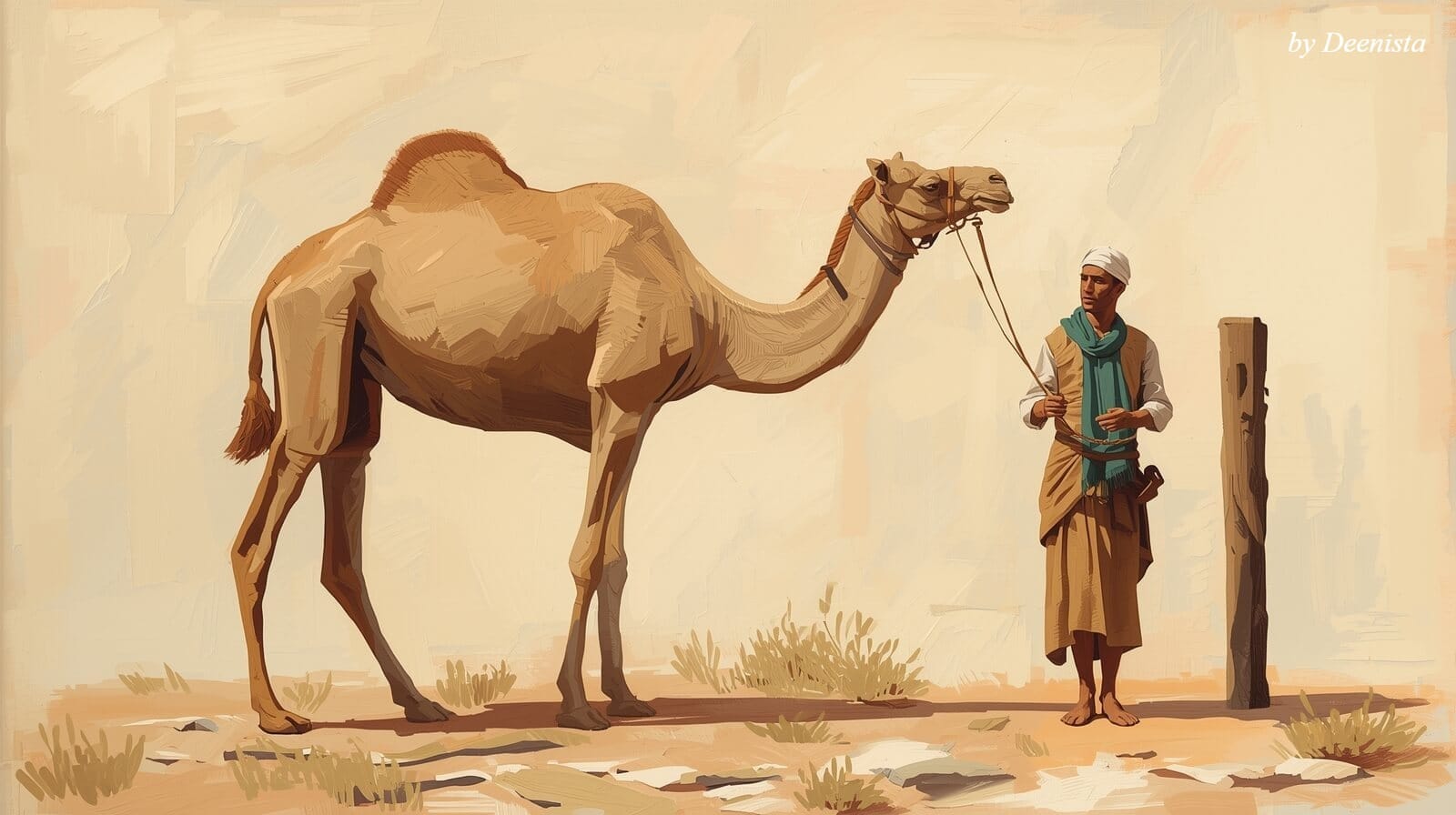
From a hadith where a man asked the Prophet ﷺ whether he should leave his camel untied and trust in Allah. The Prophet replied:
“Tie it, and then trust in Allah.”
Faith does not cancel responsibility. Faith completes responsibility.
If you enjoy exploring verses that reshape how we see our lives, you may like our reflection on the verse that inspired a masterpiece.
Why passivity is mistaken for Tawakkul
Passivity often disguises itself as spiritual maturity. It whispers:
“If Allah wills it, it will come to me.”
“I am simply trusting Allah.”
“I do not want to force anything.”
But beneath these sentences there is sometimes fear:
- fear of failure
- fear of making the wrong choice
- fear of effort without guaranteed results
- fear of responsibility
Passivity gives temporary comfort but long-term anxiety.
Tawakkul requires effort but brings long-term peace.
What happens spiritually when Tawakkul replaces passivity
When you practise real Tawakkul:
- Your fear of outcomes decreases.
- Your effort becomes lighter.
- Your anxiety softens.
- You stop catastrophising.
- You understand that what is written for you will unfold with wisdom.
Passivity leaves a person stuck, waiting for life to happen.
Tawakkul allows a person to move with dignity, knowing Allah walks with them.
A healthier way to view control
The Quran reminds us that outcomes are not ours to control, while effort is our responsibility. Certainty belongs to Allah, while responsibility rests with us.
Once you take the steps that are yours, you release the rest.
A believer is not anxious about results because results were never their task.
There is also another verse that poses a question every believer should reflect on: So where are you going? It redirects the heart when life feels unsettled or overwhelming.
A closing reflection
Tawakkul is not an escape from responsibility. It is a way of standing in the world with humility and determination.
It teaches us how to live:
- engaged, not idle
- trusting, not fearful
- responsible, not overwhelmed
- hopeful, not passive
In a world that continually tells us to control everything, Tawakkul offers a gentler truth:
Do what is yours. Leave what is not.
And know that Allah’s decree is written for you, never against you.


