

If you have Iranian friends or family, you may have noticed that there is one night almost as meaningful as Nowruz, and that night is Yalda. If you want to understand how important Yalda is for Persians, you can think of it as standing on the same level of significance as Thanksgiving in the United States or Midsummer in Sweden. It is a night that brings people together to mark the turning of the season.
Yalda marks the winter solstice, the longest night of the year when the sun reaches its southernmost point. It is a turning moment in the calendar when daylight slowly begins to return. If you want a simple scientific explanation, the Royal Museums Greenwich has a clear overview here.
Before we look at the rituals of Yalda and share our contemporary Yalda table setup for inspiration, it is worth noting that Deenista offers a pomegranate themed artwork that fits naturally with Yalda decor and the colours of the winter solstice.
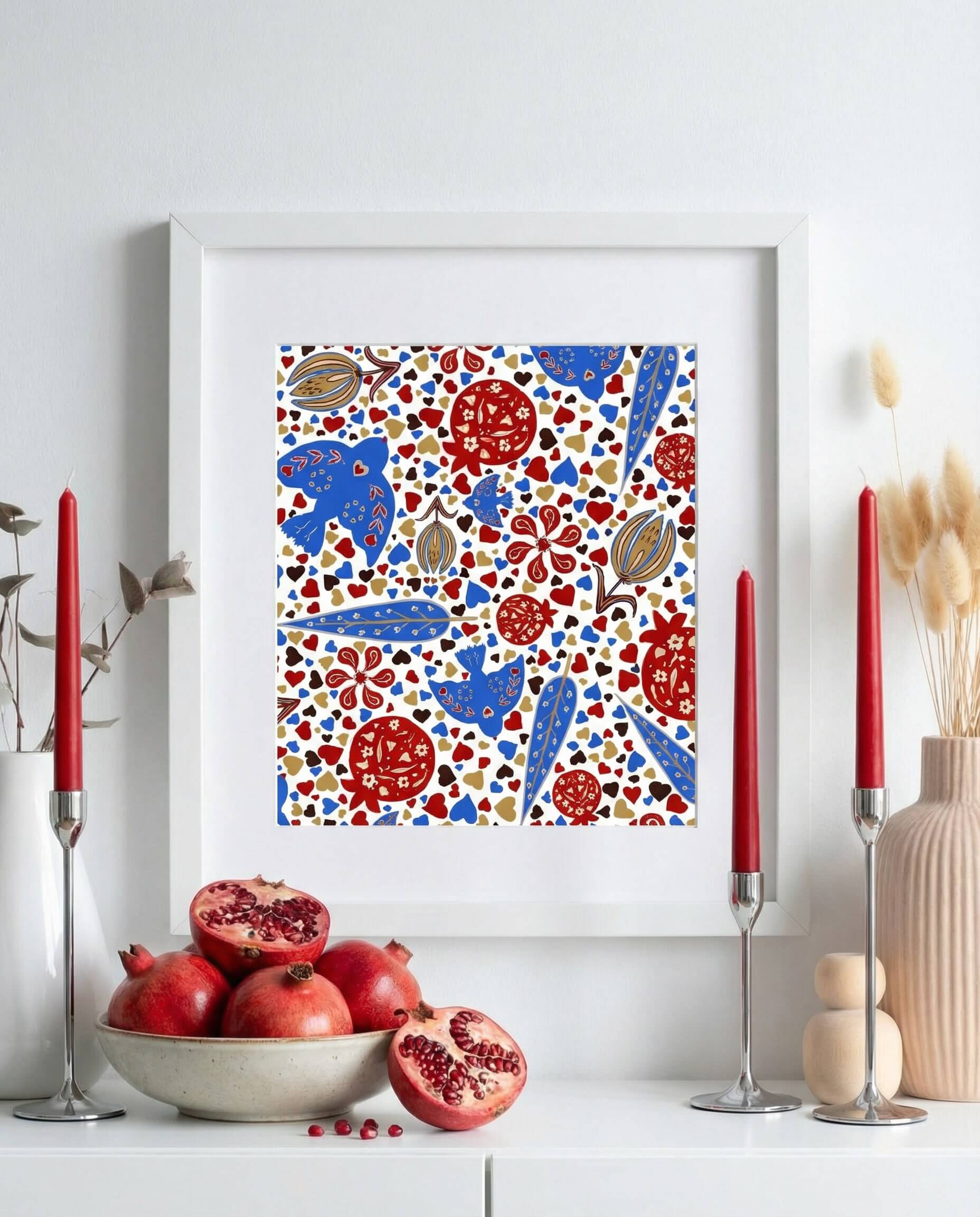
The Seeker’s Garden (Limited Edition)
If you want to bring a touch of Yalda into your home in a more contemporary way, this artwork is a beautiful companion to the Yalda table. The pomegranate motif sits at the heart of the design, surrounded by symbols of abundance, renewal and the small joys that shape this night. The colours echo the warmth of red candles and the clarity of winter light, which makes it a natural fit for your Yalda table or for a quiet corner of your home throughout the season.
What exactly is Yalda?
Yalda marks the transition point between darkness and the promise of light. Traditionally, people gather at a shared table, the sofreh, filled with seasonal fruits such as pomegranate, persimmon (khormaloo), and watermelon, nuts, poetry books and whatever brings comfort during the coldest and longest stretch of winter.
At the heart of the night is the idea that light is returning. The solstice itself is astronomical, but the emotion attached to it is cultural, the sense that difficulties ease, slowly but surely, once the darkest point is behind us.
Why the pomegranate is everywhere
No Yalda table feels complete without bright ruby red pomegranates. Their seeds symbolise the glow of dawn breaking through the darkness. Many Iranians associate them with blessings, continuity and the beauty of what is hidden inside something small and simple.
The pomegranate appears in Persian poetry and art as a reminder of renewal, making it one of the most recognisable motifs of the night.
If you are curious to explore this symbol through a different lens, The Seeker’s Garden captures that sense of quiet abundance beautifully.
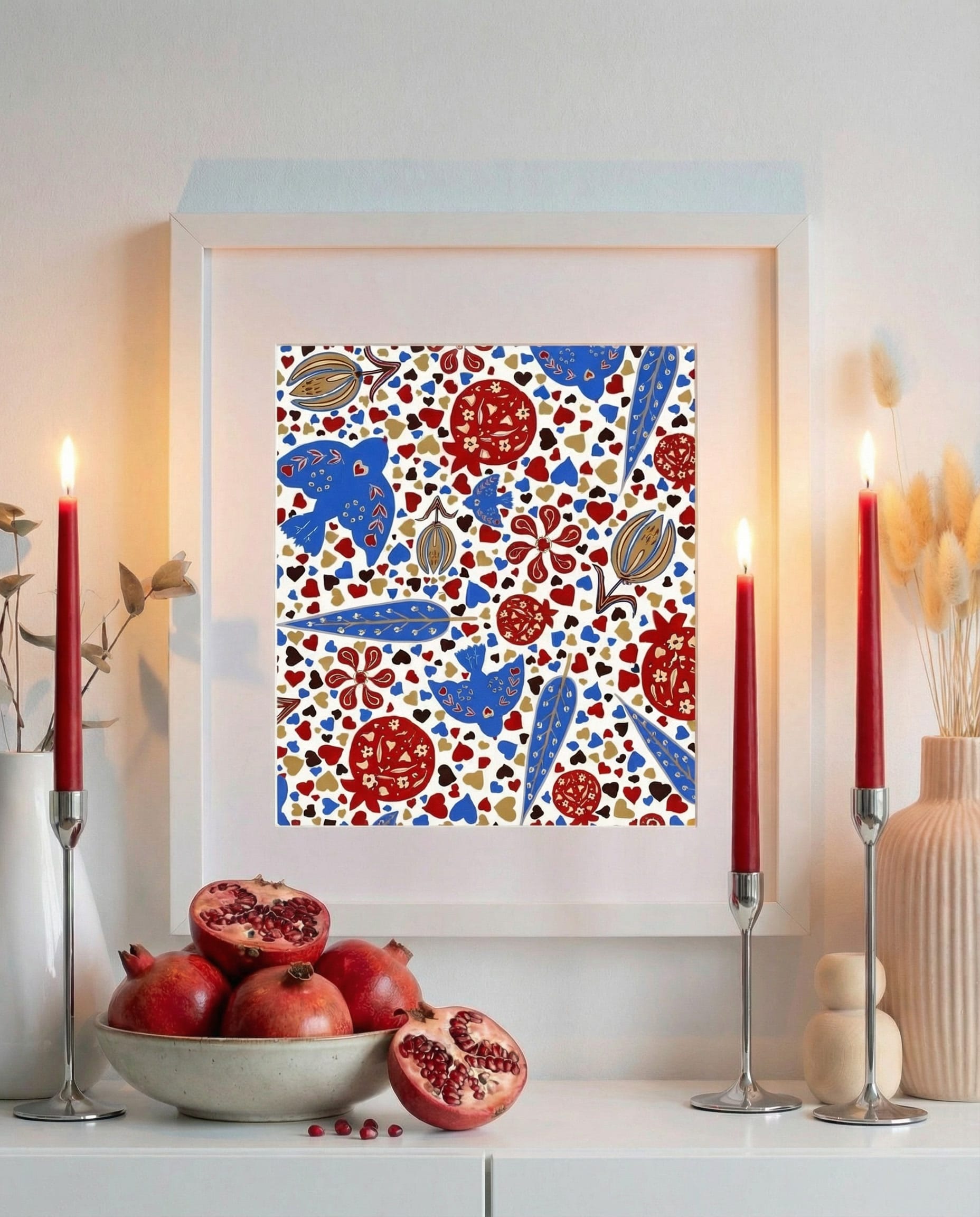
The Seeker’s Garden (Limited Edition)
This pomegranate themed artwork, originally painted by hand, is offered as a limited edition fine art print on high quality museum paper. It brings a touch of Yalda into your home in a contemporary way.
Staying awake together: stories, poems and a sense of continuity
In the past, families gathered around a lamp or fire and kept the night warm with storytelling. Many homes also used a korsi, a low table covered with heavy blankets with a source of heat underneath, where everyone sat close together through the long winter night. Today the rituals have changed in form but remain intact. Reading a poem from Hafez, opening his book at random for a fal, talking through old family memories or simply sitting together with tea and a plate of fruit.
These moments give Yalda its emotional depth. It is not a performance. It is a moment to pause and reflect and feel close to your loved ones.
Fal-e Hafez: a small ritual everyone does
No Yalda passes without a fal-e Hafez. It is one of those rituals almost every Iranian participates in, regardless of how religious or secular they are. Before opening the Divan, many of us recite a familiar invocation, a way of asking for clarity and opening the heart:
«ای حافظ شیرازی تو محرم هر رازی
تو را به خدا و به شاخ نباتت قسم می دهم
که هر چه صلاح و مصلحت می بینی برایم آشکار
و آرزوی مرا برآورده سازی»
Translation:
O Hafez of Shiraz, you who are entrusted with every secret
I swear by God and by your beloved Shakh-e Nabat
that whatever you see as good and beneficial for me, reveal it
and grant the wish that rests in my heart
After this, the book is opened at random with a niyat, a quiet intention or question. It is not fortune telling and it is not meant to make predictions. It is a reflective practice, a moment of connection with God through the layered and symbolic language of Hafez. His poetry moves between the spiritual and the everyday, which is why readers often find something personal in whichever verse appears. Every poem carries a lesson, so whichever one comes forward can speak to you in its own way.
One of Hafez’s most famous verses appears in Ghazal No. 374, a poem filled with hope, companionship and the courage to imagine something new:
بیا تا گل برافشانیم و می در ساغر اندازیم
فلک را سقف بشکافیم و طرحی نو دراندازیم
Come, let us scatter roses and pour wine into the cup
let us tear the roof of the heavens and create a new design
As the longest night approaches and candles soften the room, verses like this settle beautifully into the atmosphere. They remind us why this small ritual endures. We pause, we read, we reflect and we allow a few lines of poetry to brighten the night.
The foods that define the night
Every item on the Yalda table has a meaning.
Pomegranates, symbol of light, renewal and blessing.
Watermelon, linked to the old belief that eating it on the longest winter night protects one from heat and illness awaiting you in summer.
Ajil, nuts and dried fruits, symbol of abundance and gratitude.
Persimmons and grapes, reminders of autumn’s last gifts.
These foods are no longer eaten only for their symbolism. People serve them simply because the night would not feel complete without them.
A Yalda table setting for inspiration
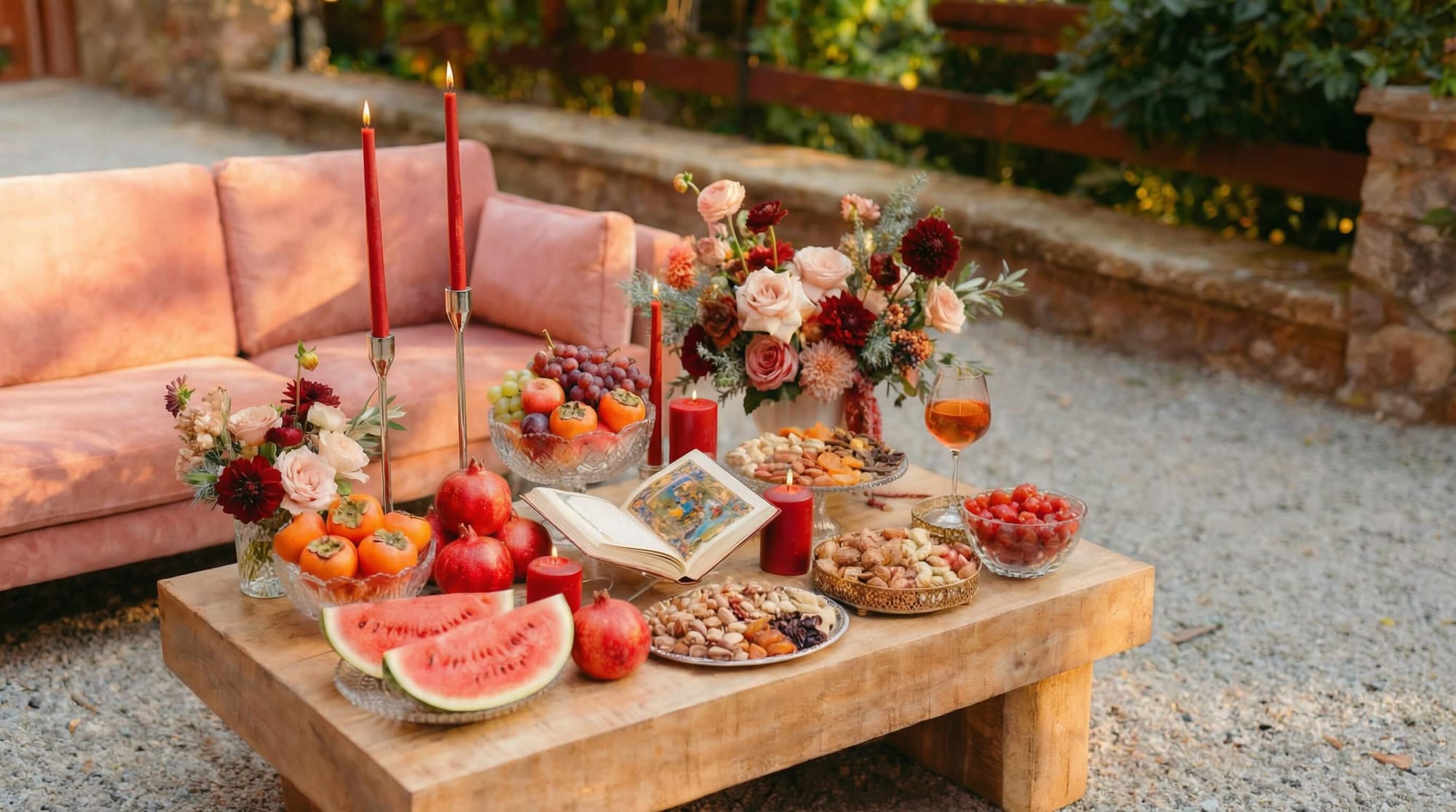
This year we prepared a Yalda table setting that brings together the elements most people associate with the winter solstice in Iranian culture. Pomegranates, watermelon slices, persimmons, grapes, ajil-e Yalda and of course a Divan of Hafez opened at the centre of the sofreh. Deep red candles, crystal bowls and soft floral arrangements create a warm contrast against the winter evening. This is exactly the atmosphere Yalda is meant to hold: light, abundance and togetherness on the longest night of the year.
What makes a sofreh Yalda special is not only the food but the atmosphere around it. The red tones symbolise dawn returning after darkness. The fruits carry meanings of blessing, renewal and protection. And the book of Hafez reminds us to pause and reflect. If you are looking for Yalda table decor ideas or wondering how to style a traditional Yalda setup in a modern home, this arrangement shows how simple elements can create a table that feels both rooted in tradition and visually inviting.
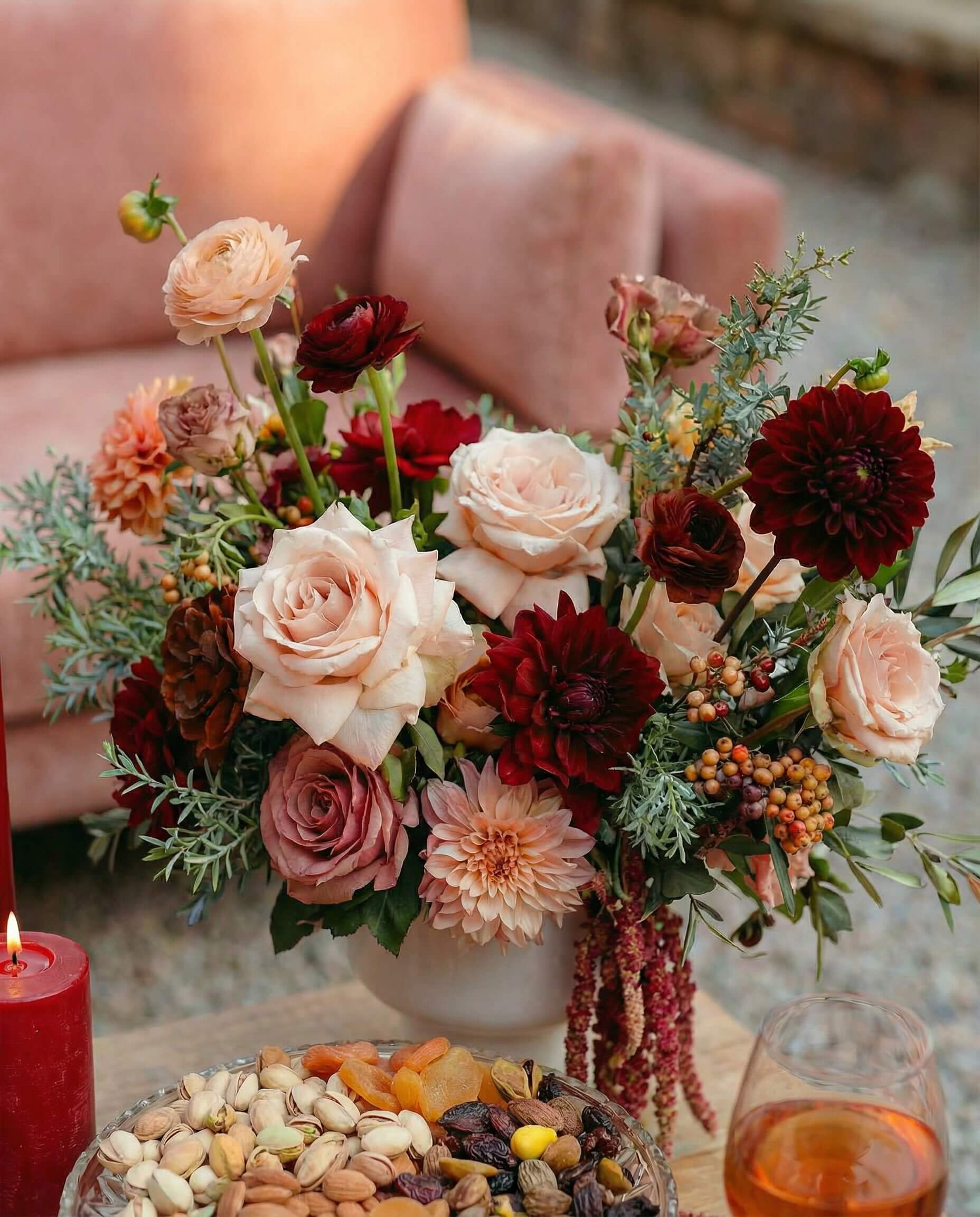
Many people searching for Yalda decoration inspiration, Persian winter solstice celebration ideas or how to set a Yalda table will recognise this classic composition. Red candles, fruit bowls, nuts and an open Hafez book placed at the centre. These details turn the sofreh into more than a display. They make it a gathering point for storytelling, poetry and connection.
A tradition that keeps adapting
Yalda has travelled with the Iranian diaspora and with each generation the celebration changes slightly. New serving dishes, new colours, new ways of decorating the sofreh. Yet the meaning remains intact. The darkest night passes and the light returns.
A twist: pomegranate Christmas ornaments for Yalda
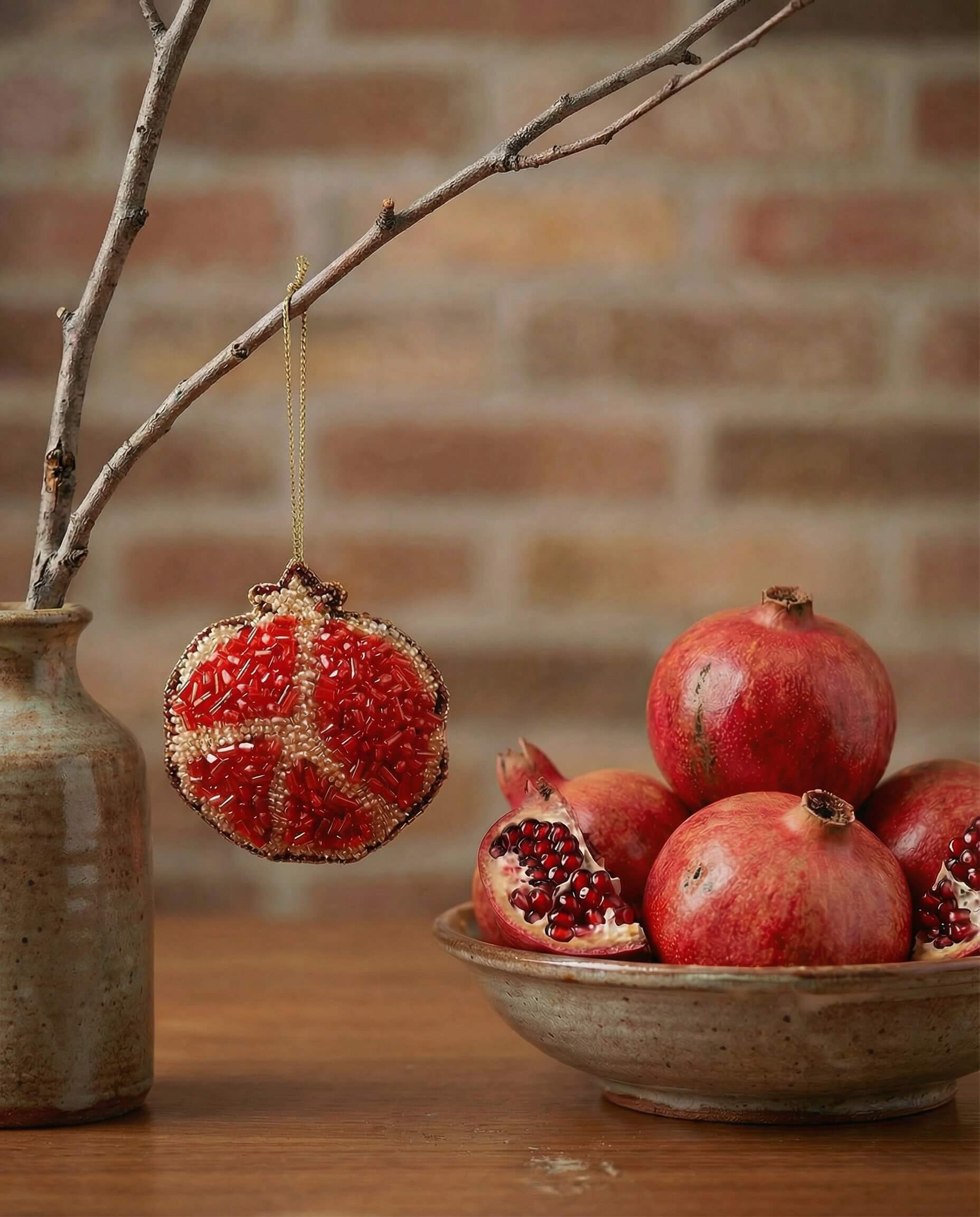
This year pomegranate ornaments have appeared in many Christmas displays, and it is lovely to see the fruit becoming part of seasonal decor. For Yalda, Deenista has chosen a beautiful handmade pomegranate ornament from a local boutique in Sweden. It is a small twist that feels close to the colours and atmosphere of the night, and it sits naturally within the Yalda celebration.
We thought it might be helpful to show how one ornament can serve both Christmas and Yalda, a small two in one idea for the season.
If you enjoyed this glimpse into Yalda and its traditions, you can explore more pomegranate inspired pieces and seasonal artwork in the Deenista shop.


