
The moon is the symbol of Ramadan for a very simple reason: the timing of Ramadan depends on the moon.
The month begins when the new crescent moon is observed in the sky, and it ends the same way. There is no fixed date that can be marked months in advance. Without the moon, Ramadan cannot be placed on a calendar at all.
This is why the moon is not a decorative motif, but the reference point through which the month exists.
In this post, we’ll explain how Islamic timekeeping works, why Ramadan moves through the seasons, and how the moon and the sun together shape the experience of the fast.
What calendar does Islam follow?
Different societies use different systems to measure time, depending on what they need that system to do.
Most countries organise civil life using a solar calendar, where the year is based on the Earth’s movement around the sun. Dates repeat in the same position each year within that calendar, even if the year does not begin on 1 January.
For example, the civil calendar used in Iran and the traditional calendar used in China do not begin on 1 January, but they are still solar calendars.
Islamic religious life follows a lunar calendar.
In the Islamic calendar, months are determined by the phases of the moon. Each month begins with the appearance of the new crescent. Because a lunar year is shorter than a solar year, Islamic dates move gradually in relation to the civil calendars used in most countries.
This applies to all major Islamic dates, including Ramadan, Eid al-Fitr, and Hajj.
How does the moon determine the start of Ramadan?
Ramadan begins only when the new crescent moon (hilāl) is confirmed.
Some scholars hold that the moon should be seen with the naked eye. Others accept optical aids or astronomical visibility calculations. These differences are part of Islamic scholarship and explain why Ramadan or Eid may begin on different days in different communities.
What remains constant is the principle:Ramadan begins with the moon, not with a pre-set date.
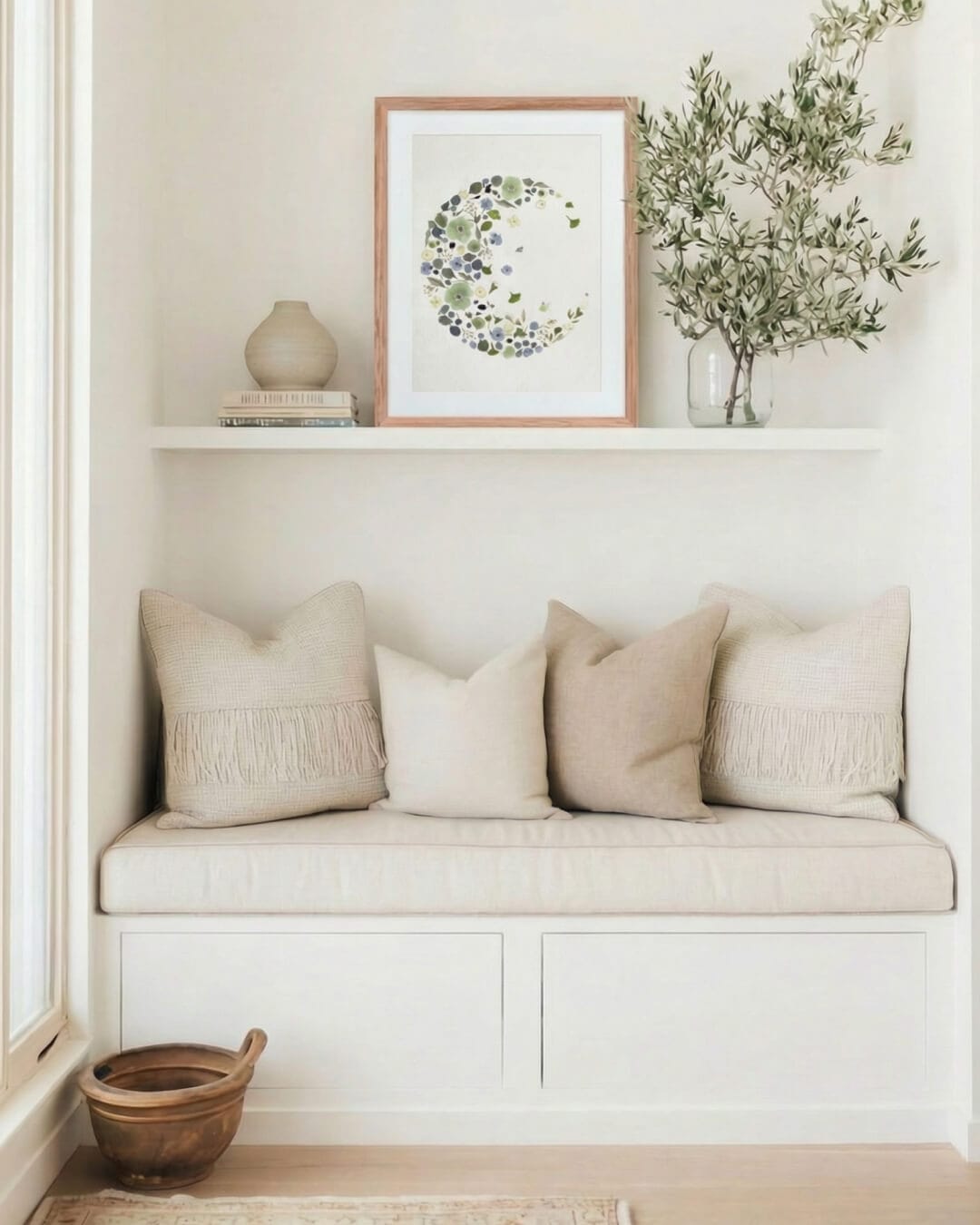
Fading Moon
A calm Ramadan artwork designed for reflection, reading corners, and quiet moments throughout the month.
Why does Ramadan move every year?
Because the Islamic calendar is lunar, Ramadan shifts about eleven days earlier each year.
Over roughly thirty-three years, Ramadan completes a full cycle through the seasons. This means a single person may experience Ramadan in very different conditions across their life.
You might fast during short winter days as a child.Later, you may fast during long summer days as an adult.
Ramadan is not designed to belong to one season, one climate, or one lifestyle. The lunar calendar ensures that it moves, creating variety and balance over time.
Are fasting hours based on the moon or the sun?
Although the month of Ramadan is determined by the moon, the daily fast is determined by the sun.
Fasting begins at dawn and ends at sunset. These times are based on the position of the sun in the sky, not on the moon. In other words, the Islamic calendar is lunar, but the daily rhythm of fasting is solar.
This distinction is important: the moon sets the frame of the month, while the sun sets the boundaries of each day. One could say that Ramadhan unites cosmic order with human worship in a beautiful way.
Why does fasting feel different in winter and summer?
Because fasting follows daylight hours, the length of the fast changes throughout the year.
In winter, days are shorter and fasting hours are fewer.In summer, days are longer and fasting hours increase.
In Nordic countries such as Sweden, this difference is especially noticeable. Winter days can be very short, while summer evenings extend late into the night. Experiencing Ramadan under these conditions makes the variation clear and tangible over time.
Why is the crescent moon associated with Ramadan?
Over time, the crescent moon became a widely recognised visual reference for Ramadan because it marks the beginning and end of the month.
While the crescent was never established as an official religious emblem, its practical role in timekeeping gave it a lasting presence in Muslim life. Through history, art, and architecture, it became a familiar sign of sacred time rather than a symbol chosen for decoration.
The crescent represents observation, transition, and renewal, all central to how Ramadan is experienced.
The fading moon in the Quran
The Quran describes the moon as moving through measured phases until it returns to a thin, curved form:
وَالْقَمَرَ قَدَّرْنَاهُ مَنَازِلَ حَتَّىٰ عَادَ كَالْعُرْجُونِ الْقَدِيمِ
"And the moon — We have measured it through phases, until it returns like an old date stalk." Quran, Surah Ya-Sin (36:39)
The Arabic word العُرْجُون (al-ʿurjūn) refers to the dried, curved stalk of a date cluster once the fruit has been harvested. It is thin, pale, and bent, a precise botanical image of something that has completed its cycle.
The verse does not describe loss or decay. It describes return. The moon reaches fullness, then gradually reduces, arriving back at a form that signals completion rather than absence.
This way of describing the moon aligns closely with the rhythm of Ramadan itself. The month builds, settles into practice, and then comes to an end, not abruptly, but by tapering. Completion is marked by quietness, not excess.
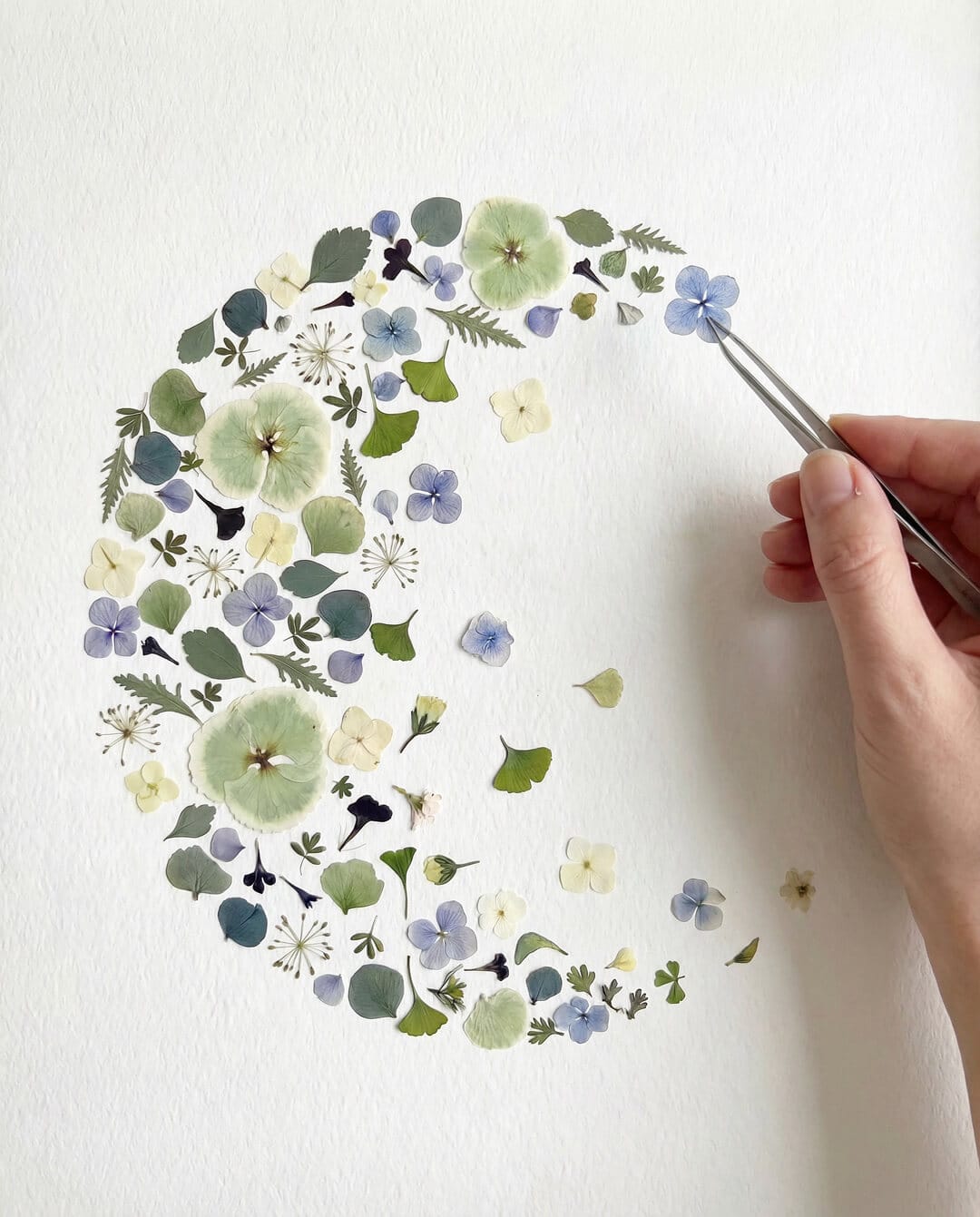
At Deenista, this Quranic image became the foundation for our fading moon artwork. The piece is a three-dimensional photographic composition made from small, dried flowers, each one hand-placed to form a moon in its final phase. Once living, now preserved, the flowers echo the imagery of the old date stalk — botanical, restrained, and deliberate.
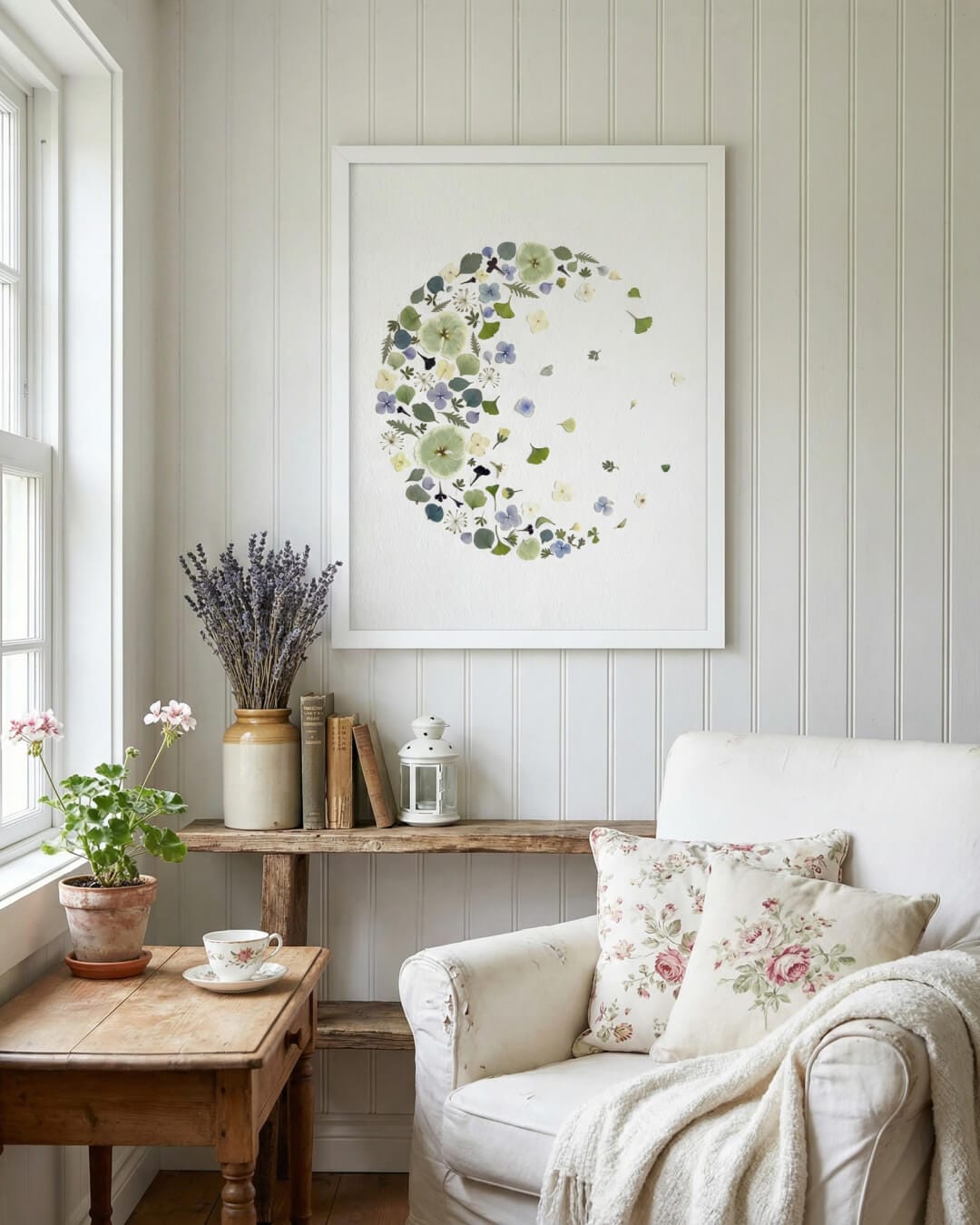
Fadin Moon
A calm statement piece for reading corners and quiet spaces, designed to bring a sense of pause and balance into the room.
The result is not a decorative or full moon, but a moment of return. A visual pause at the end of a cycle, where meaning has already been gathered.
If you’re interested in how everyday elements carry deeper meaning in Islam, you may also enjoy reading about the symbolism of the fig and the olive in the Quran:
 Neda A.