

Where we are born shapes more than our circumstances. It shapes how we see the world. What feels balanced. What feels familiar. What feels right.
The patterns you grow up with, in architecture, objects, streets, and everyday surroundings, slowly become part of your visual memory. Over time, they shape not just taste, but a sense of order. Heritage and history don’t live somewhere outside of us. They become part of how we read the world and who we are essentially.
“Geography doesn’t only shape our lives. It shapes our visual language.”
— Neda A., artist of Mondrian reimagined
Today, this visual language is finding new life as modern geometric wall art for contemporary homes.
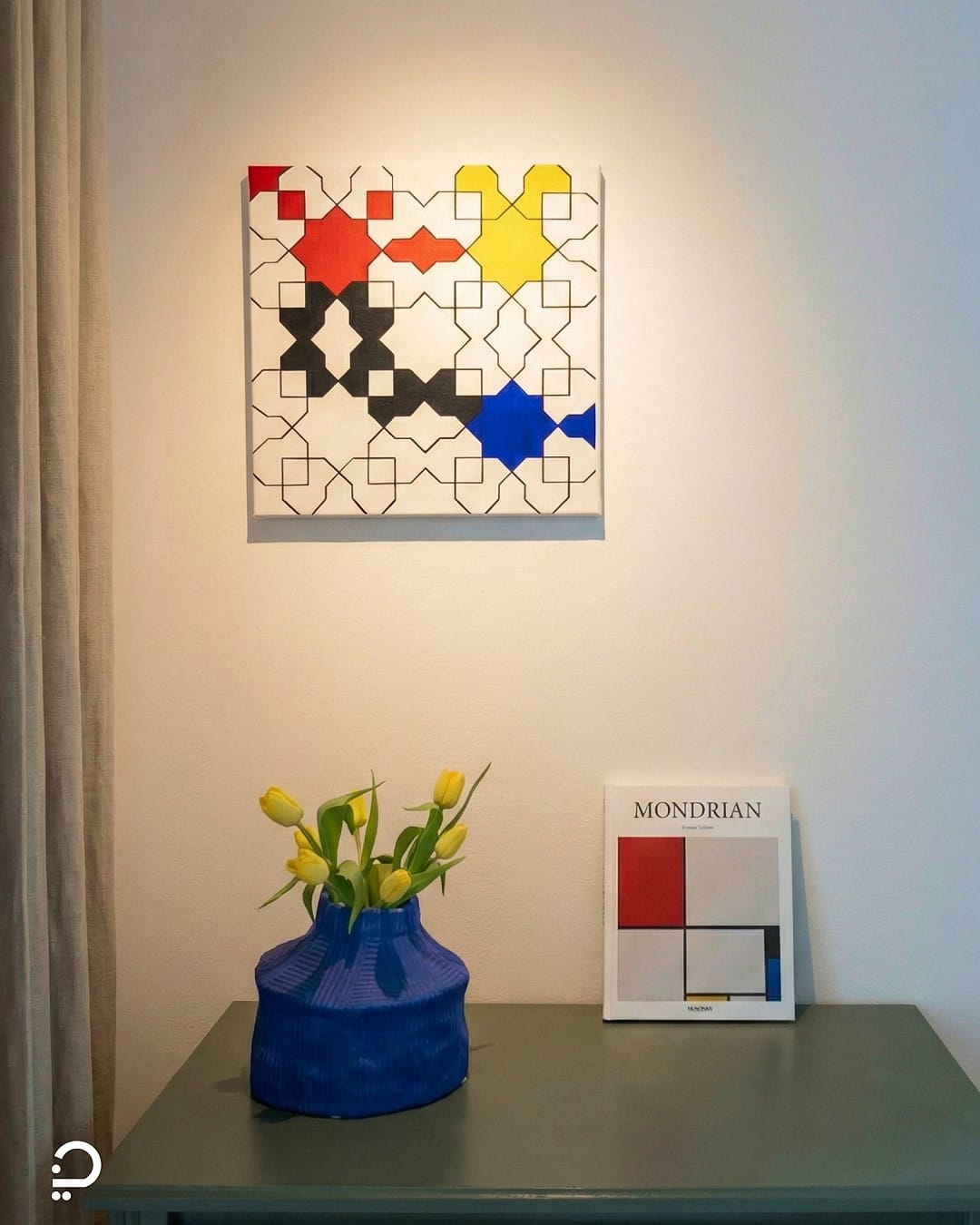
How our visual language shapes our art
This naturally raises questions.
If artists like Picasso, Hilma af Klint, or Piet Mondrian had been born somewhere else, in Iran, India, or China, would they have made the same work? Would they still have drawn minimal lines, or would geometry have played a larger role? Would their colour choices have leaned toward muted greens and greys, or toward turquoise, pinks, and sun-warmed tones? How much of an artist’s visual language comes from personal vision, and how much from the weather, the light, and the visual world they grow up inside?
These are not questions about rewriting art history. They are questions about how much the World we grow up in shapes us.
At Deenista, this curiosity has long been tied to Islamic heritage, particularly the role of geometry, repetition, and restraint in shaping visual culture. Islamic art offers a clear example of how place, belief, and daily surroundings form a shared way of seeing.
Artists don’t take in geography as an abstract idea. They take it in through what they see every day, buildings, surfaces, colours, patterns, and materials. Over time, these repeated visuals shape how form feels natural to them: what looks balanced, what feels structured, what makes sense visually.
Islamic geometric patterns as a visual system
Within Islamic art, geometry became one of the most enduring of these visual systems.
Repetition, symmetry, and proportion were used not as decoration, but as structure. Geometric patterns appeared across mosques, tiles, manuscripts, textiles, and everyday objects, not isolated as art, but integrated into lived space.
Over time, this created a visual culture where balance mattered more than imagery, and order mattered more than excess. Geometry became a way of organising space, experience, and attention.
Seen this way, Islamic geometric art is not simply a historical style. It is a way of seeing, one that makes the connection between place, pattern, and perception visible.
Mondrian reimagined through Islamic geometry
This line of thinking sits at the heart of Mondrian reimagined, a geometric artwork created for Deenista by artist Neda A.
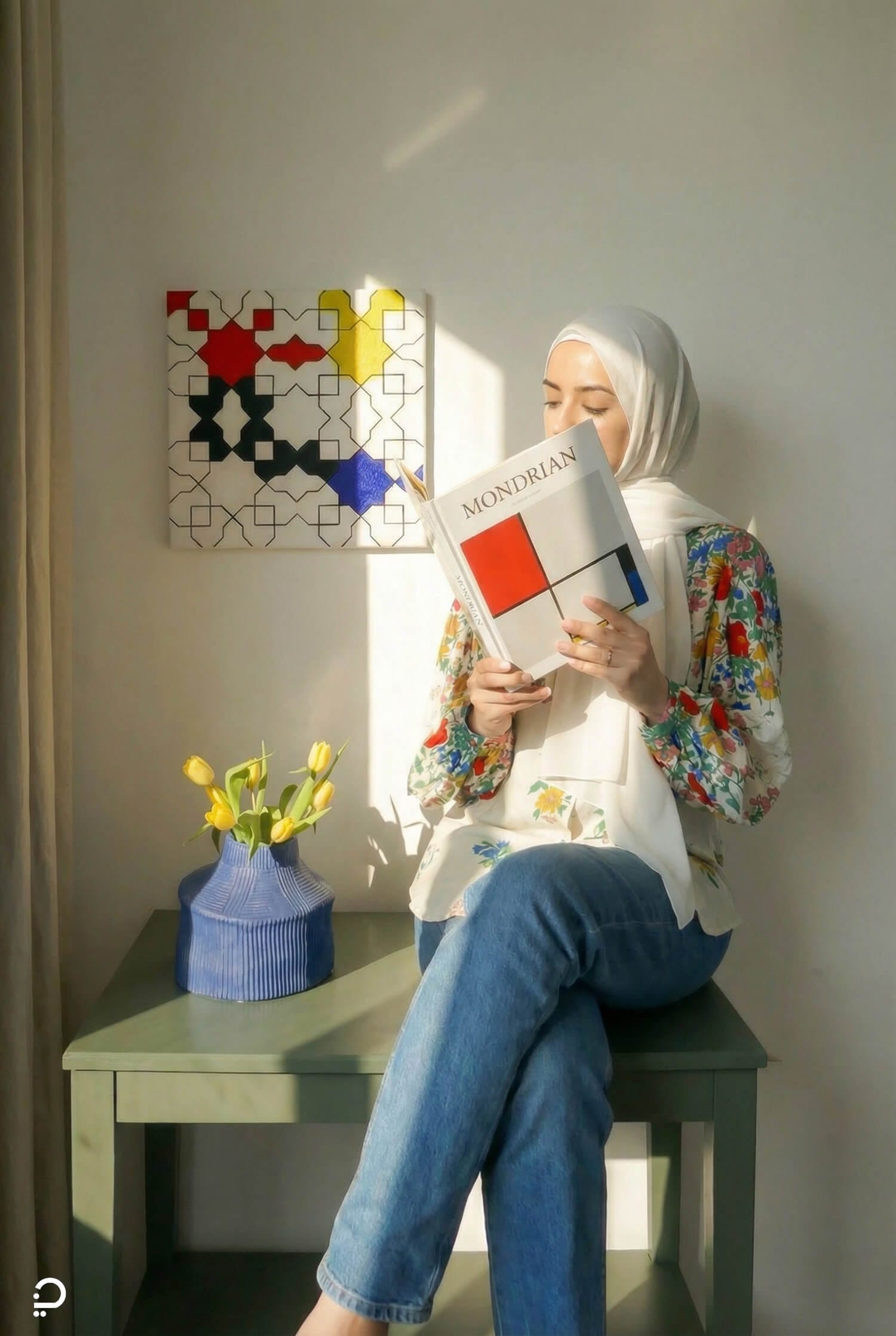
Rather than copying or reworking a historical style, the piece explores what happens when modern abstraction is viewed through a different visual inheritance. The familiar elements remain, primary colours, straight lines, disciplined composition, but they move within a rhythm shaped by geometric pattern.
The result is not a fusion, but a conversation.
A work that feels modern and grounded at the same time. Calm, structured, and intentional.
Designed for modern interiors, the artwork is meant to bring an edge to your space but in a minimalistic way.
Modern geometric wall art and interior design
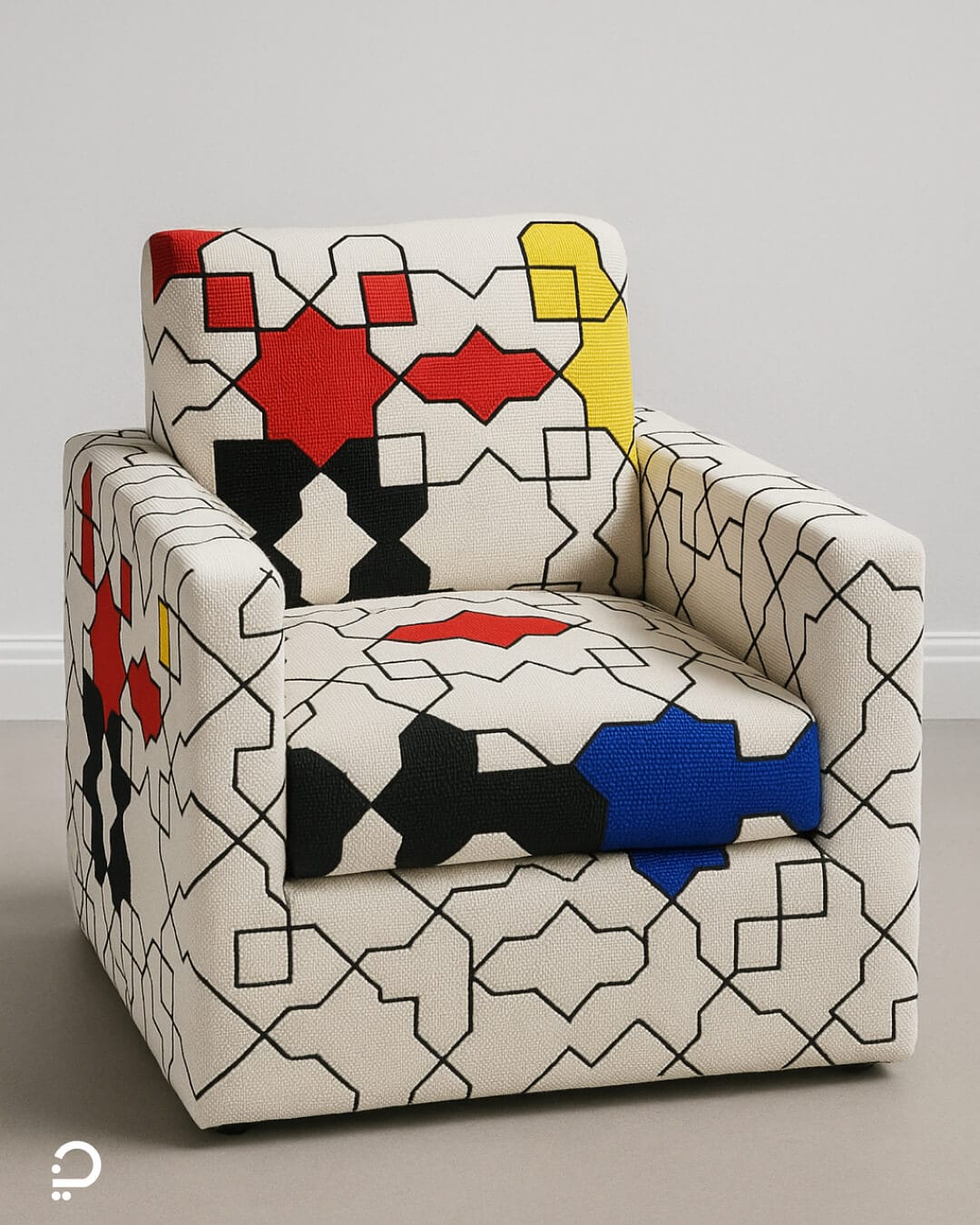
This exploration did not stop with a single canvas.
Historically, geometric patterns have always moved beyond framed art. They shaped furniture, surfaces, and objects, becoming part of everyday life.
Extending the same pattern language into mirrors, chairs, and upholstered furniture allows geometry to function as it always has: as something lived with. In this context, pattern becomes spatial. It shapes atmosphere, not just visuals.
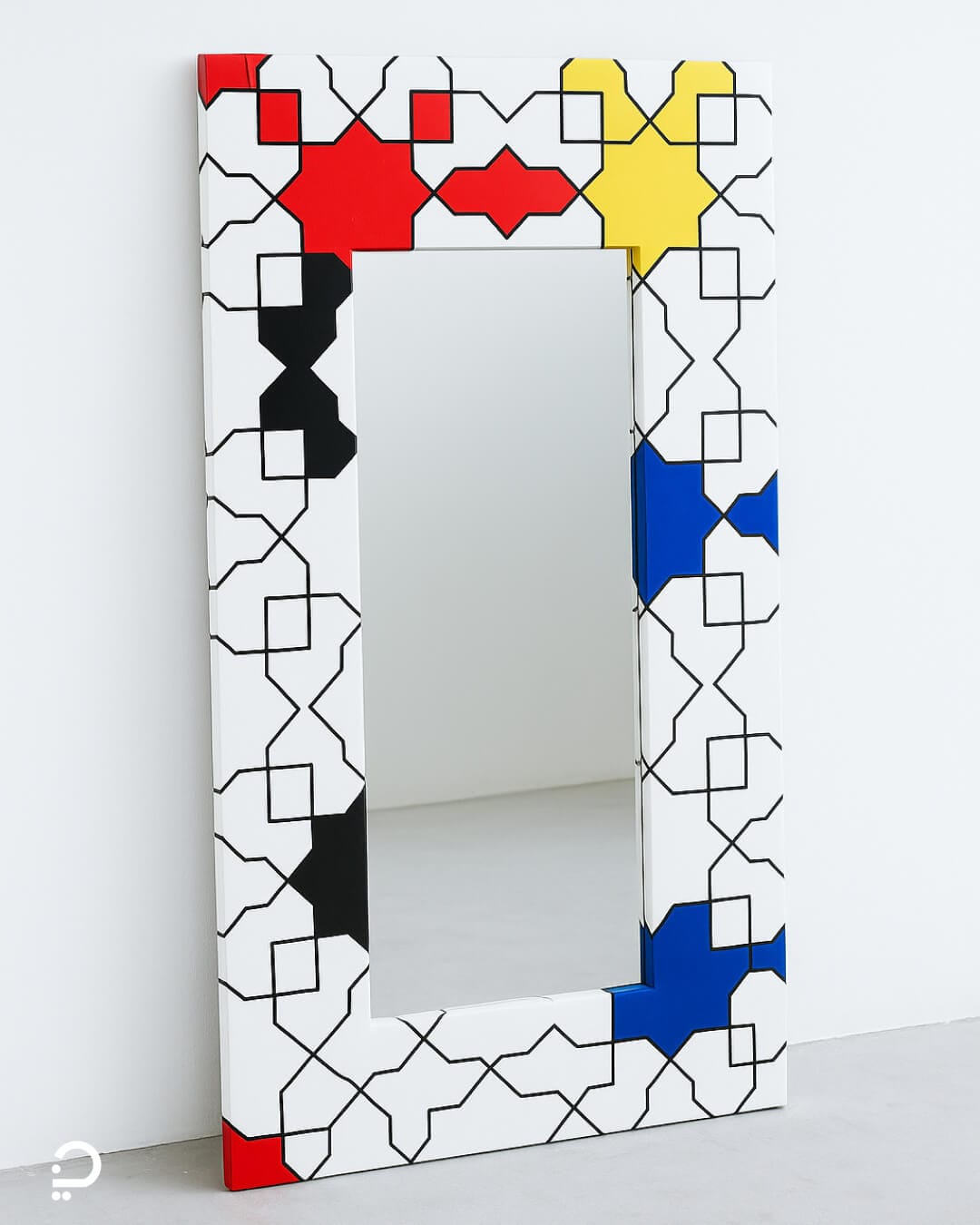
This is where modern interiors and Islamic geometric heritage meet most naturally, through shared values of restraint, balance, and proportion.
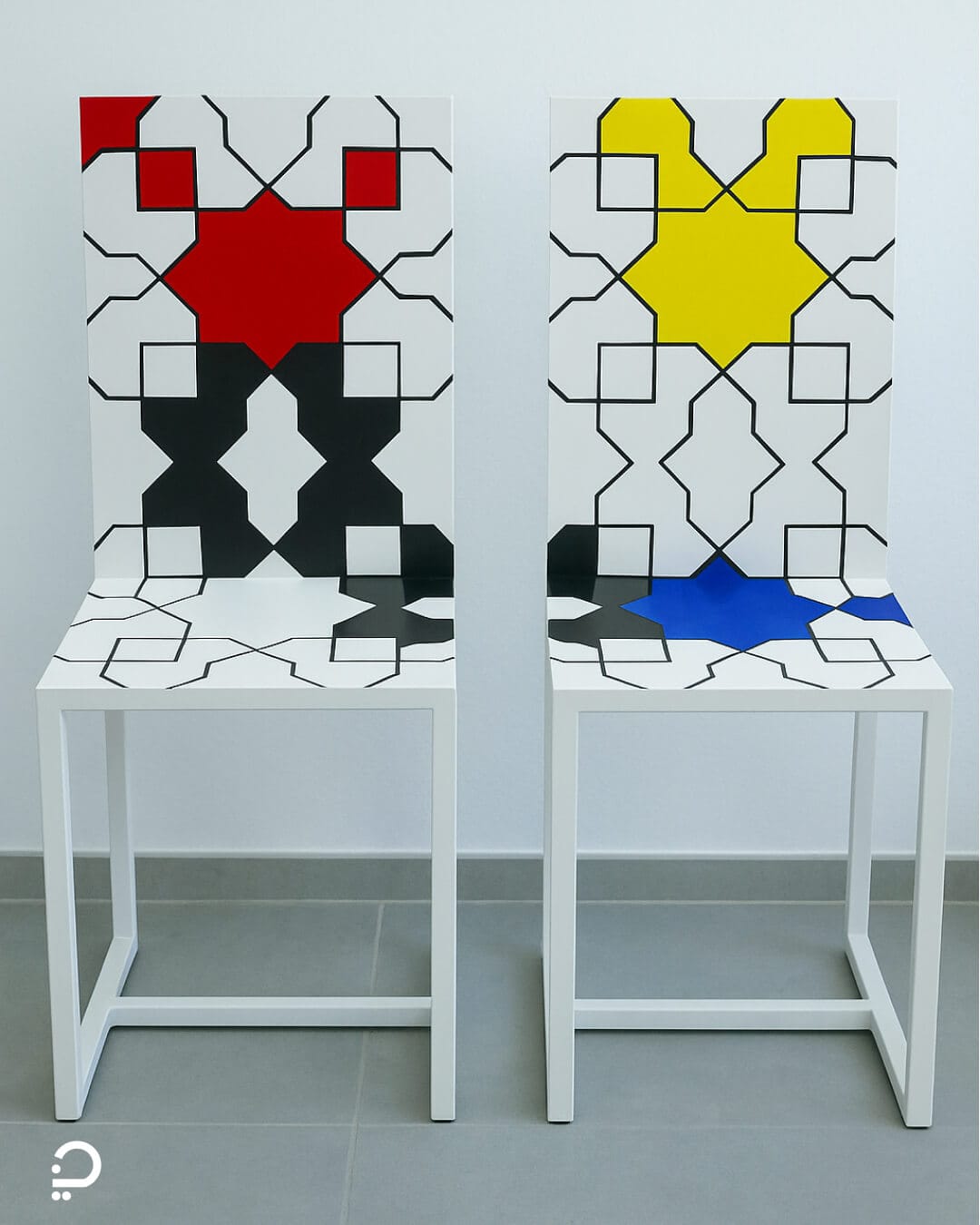
Modern geometric wall art inspired by Islamic patterns
At the centre of this exploration remains the canvas.
Mondrian reimagined is a combination of vibrant colours used by Mondrian with a touch of Islamic contemporary geometric patterns. Structured, balanced, and visually confident, it is designed to give that extra life in the home.
The artwork is available as a canvas piece and can be viewed here for contemporary homes:
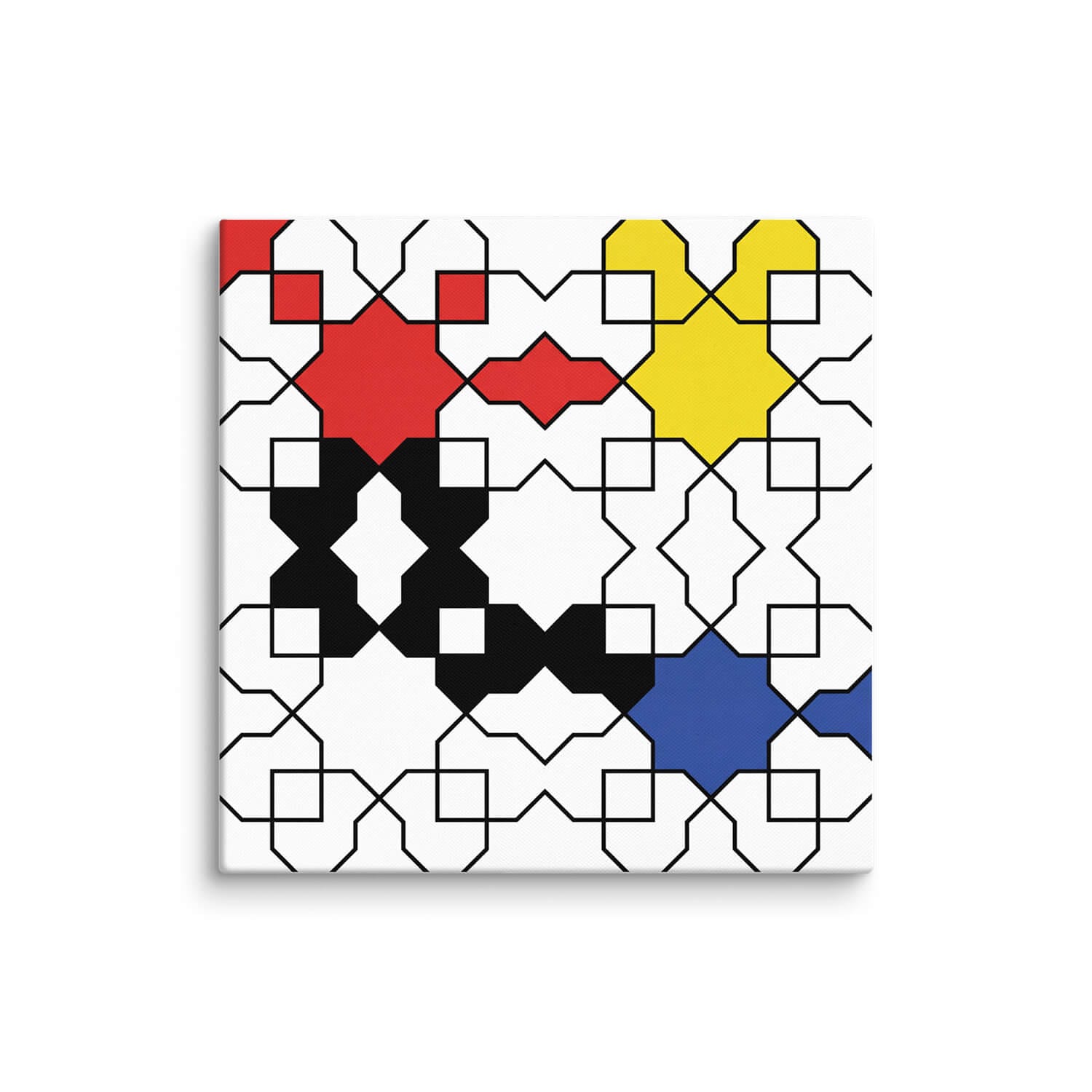
Mondrian Reimagined Wall Art
Mondrian Reimagined is a modern geometric study of balance, structure, and primary form.


