

Finding Islamic art activities for kids that are both meaningful and actually engaging can be challenging. Many crafts are fun in the moment but rarely used again.
If you follow us, you know that at Deenista we love reusable DIY concepts that engage the whole family. We also often hear from readers looking for screen-free activities that are structured, creative and easy to set up at home.
This time, we used something many families already have: LEGO DOTS and LEGO baseplates.
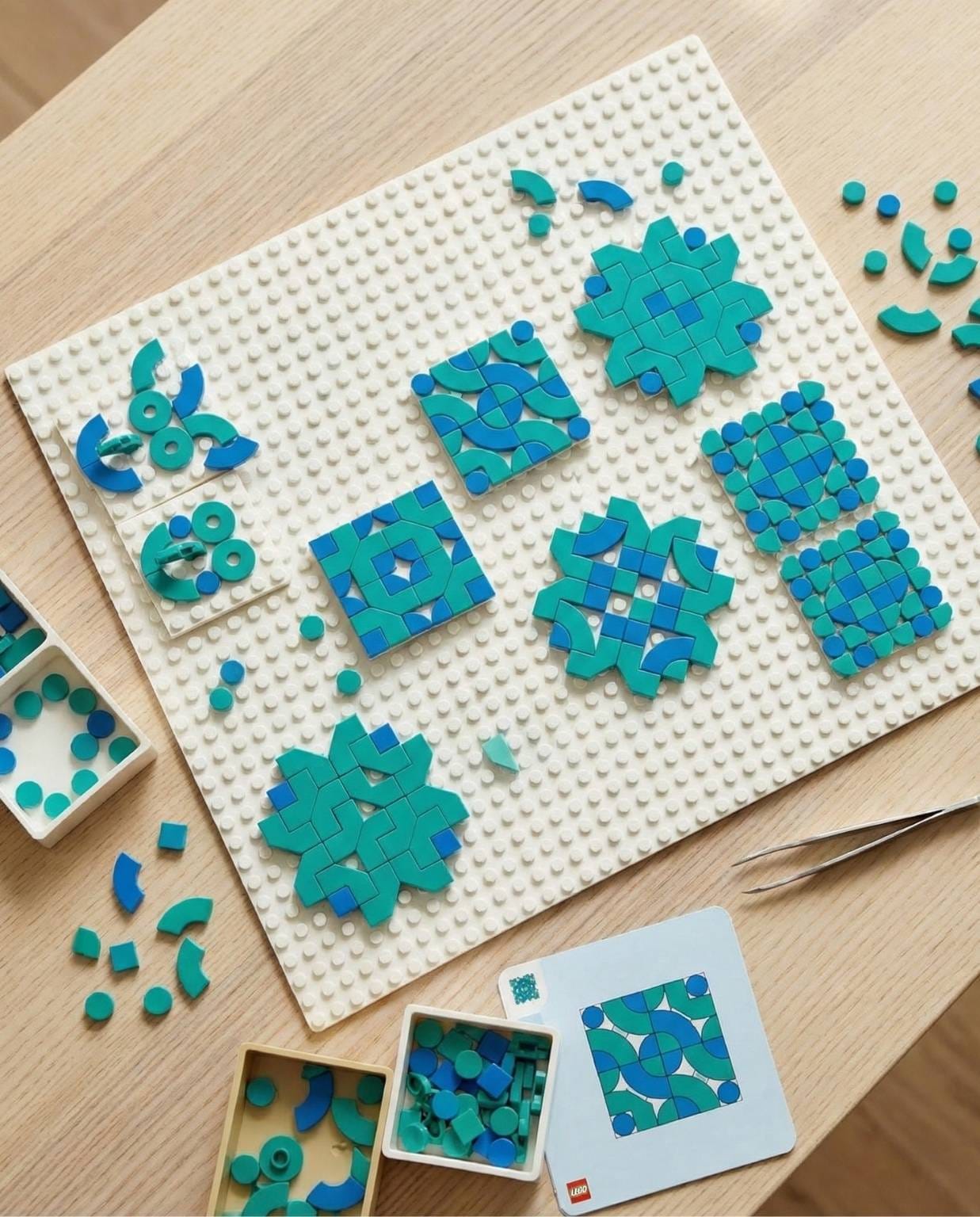
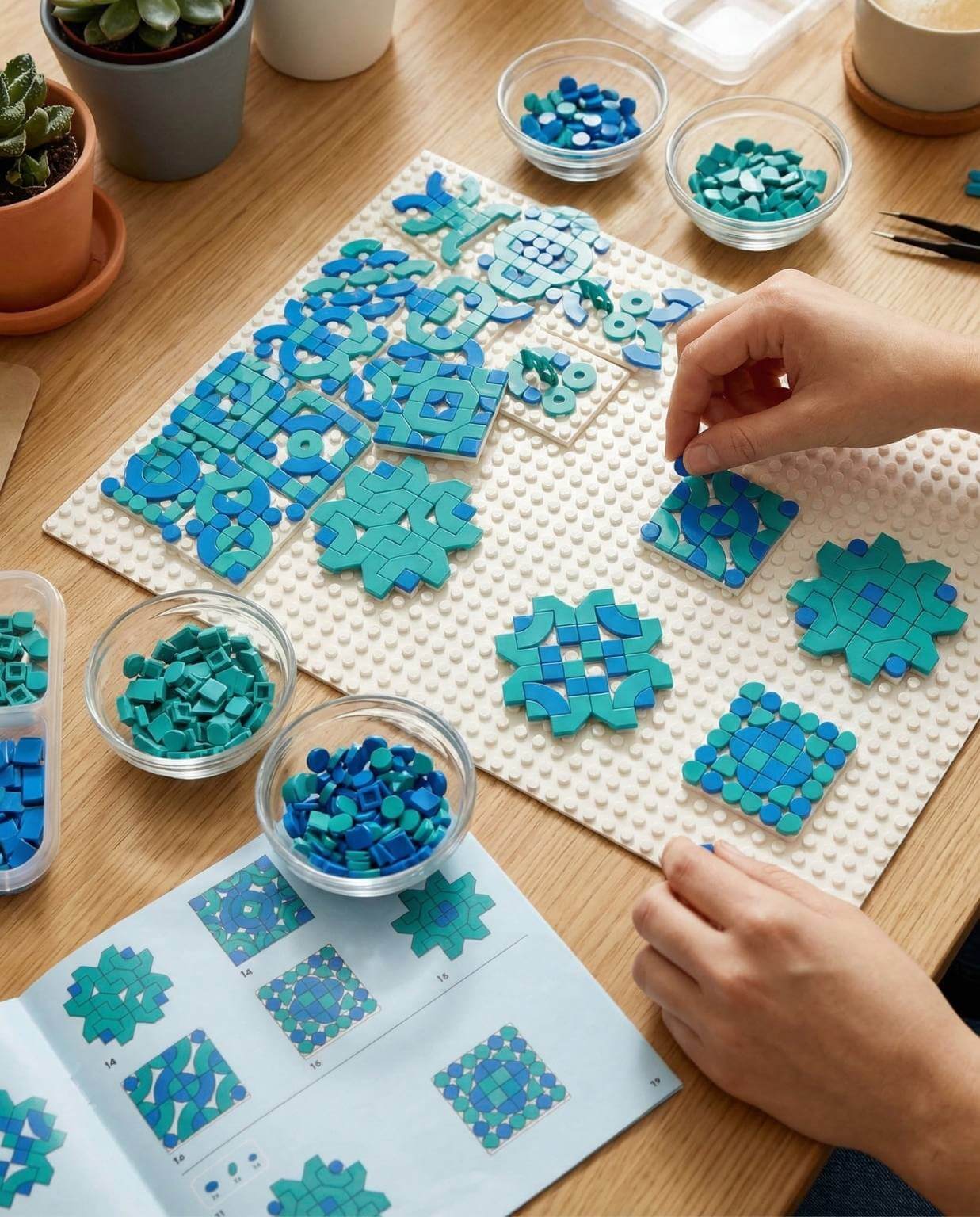
Instead of paper crafts, we explored Islamic geometric patterns, the repeating stars and tiled mosaics often seen in mosque interiors, and recreated them using LEGO DOTS on square baseplates to build our own “tiles.”
The idea is simple: use symmetry and repetition to design geometric patterns directly onto a LEGO baseplate.
It is not a formal art lesson, but it follows a clear and simple technique. It is a hands-on Islamic art activity that combines play, pattern recognition and design in a way that feels constructive rather than disposable.
Why Islamic geometric art works so well as an activity for kids
Geometry offers both freedom and boundaries. It allows creativity within the structure of mathematics.
Within a square LEGO baseplate, children can experiment endlessly, but symmetry naturally guides them toward balance. Repetition creates calm. Mirroring shapes brings order.
This is why Islamic geometric art works beautifully as an activity for kids. It invites exploration without chaos.
It is also naturally multi-generational. Younger children can focus on colour placement with the LEGO DOTS. Older children can aim for symmetry and star patterns. Even adults often find themselves drawn into the rhythm of repeating shapes.
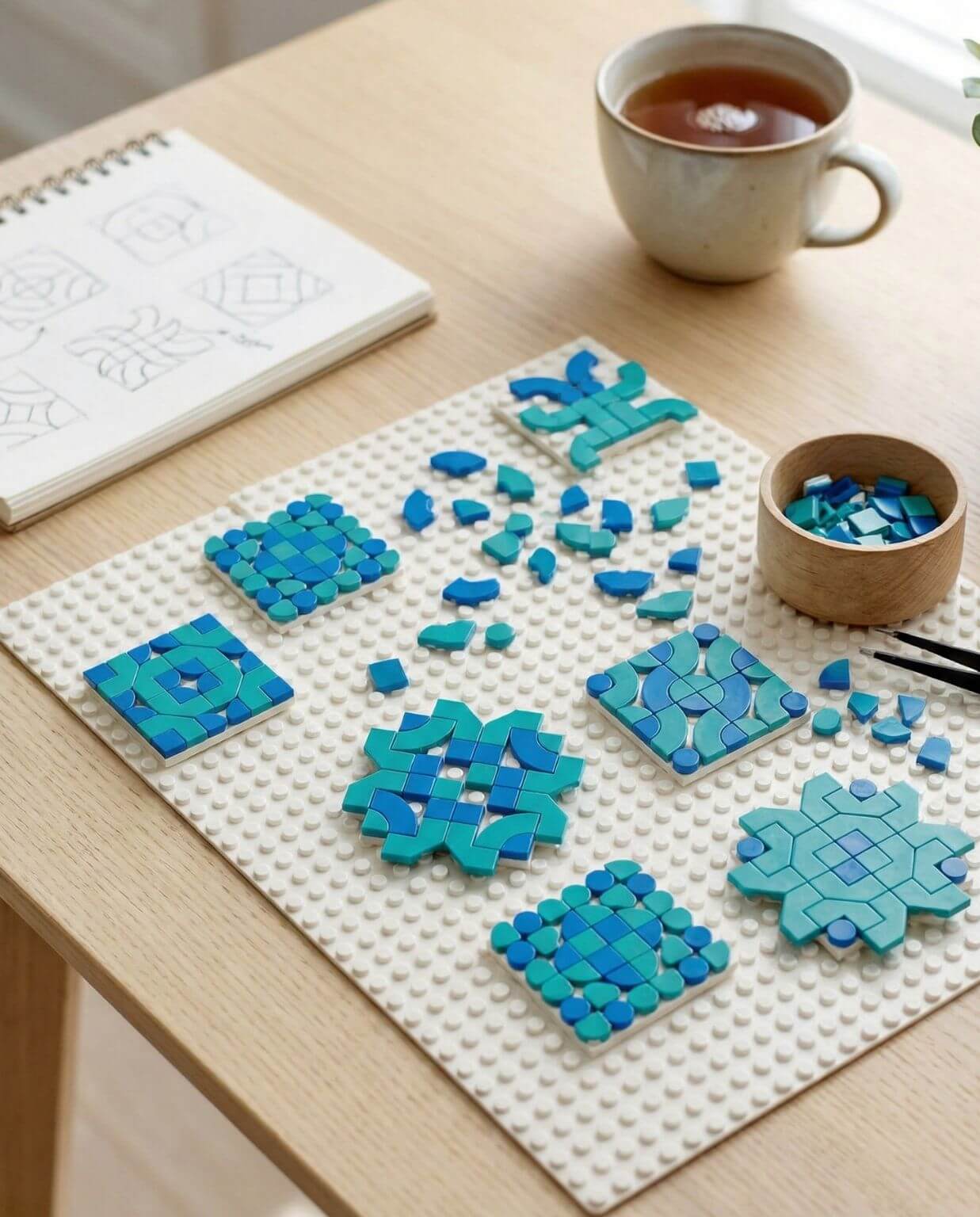
There is something unexpectedly meditative about building a geometric pattern piece by piece.
How to create Islamic geometric tile patterns using LEGO DOTS
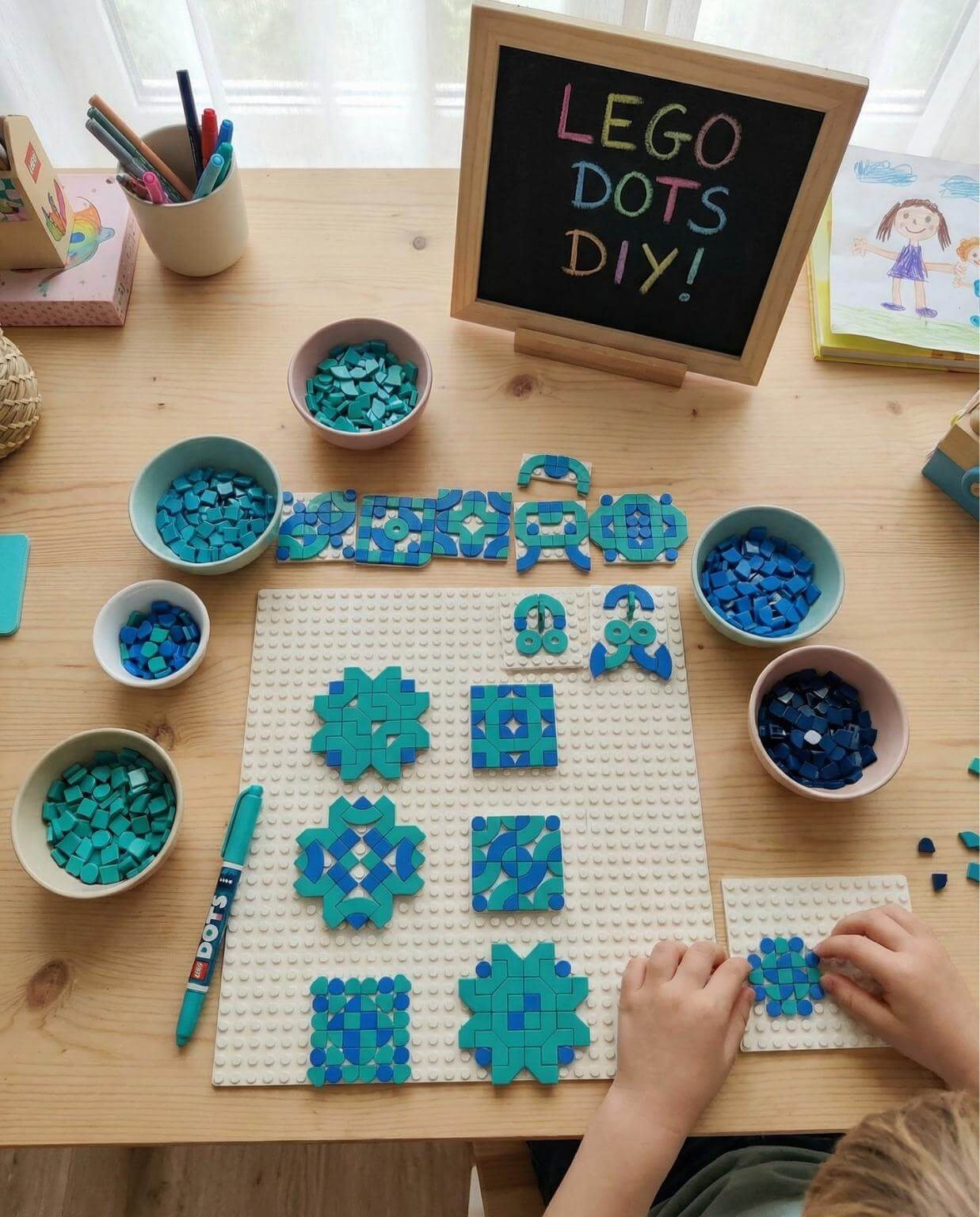
You do not need a special kit to try this Islamic art activity at home.
You only need:
- A few small LEGO baseplates (square works best) or a big one
- A handful of LEGO DOTS or any other flat tiles
- Two or three main colours for cohesion
Step 1: Choose a centre point on the baseplate.
Step 2: Begin building outward in mirrored sections using the LEGO DOTS.
Step 3: Repeat your shapes evenly on each side to form symmetry.
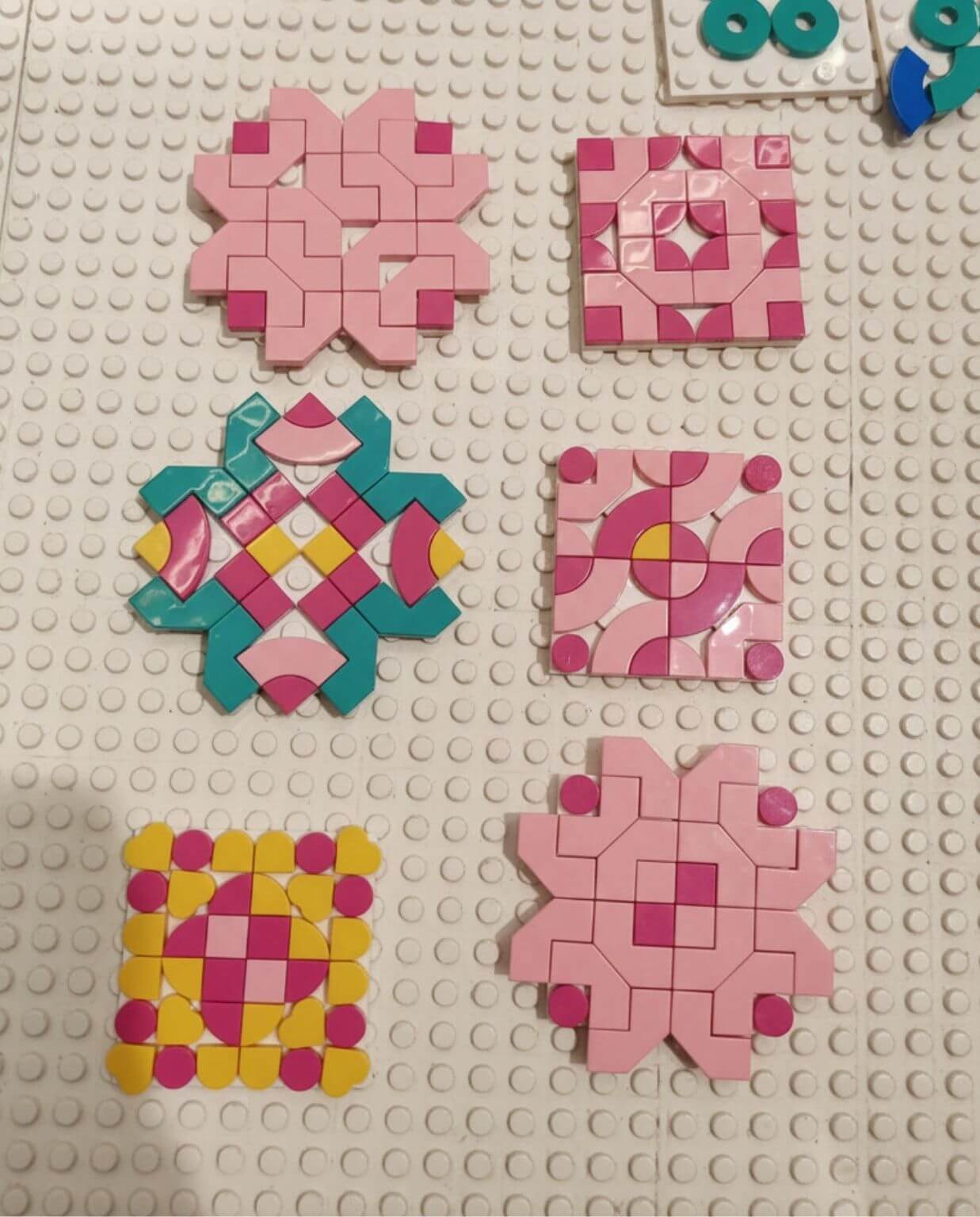
Working from the centre creates natural balance. Even simple cross or star formations begin to resemble traditional mosque tile art.
Small adjustments completely change the overall design. Move one LEGO DOTS and the entire rhythm shifts. Children quickly understand how repetition builds structure.
Because everything clicks together without glue or paint, the process stays clean and focused. A truly screen-free activity that keeps attention without overstimulation.
Try a mosque silhouette with LEGO DOTS
Once children become comfortable building geometric tiles, you can experiment further using the same LEGO DOTS and baseplates.
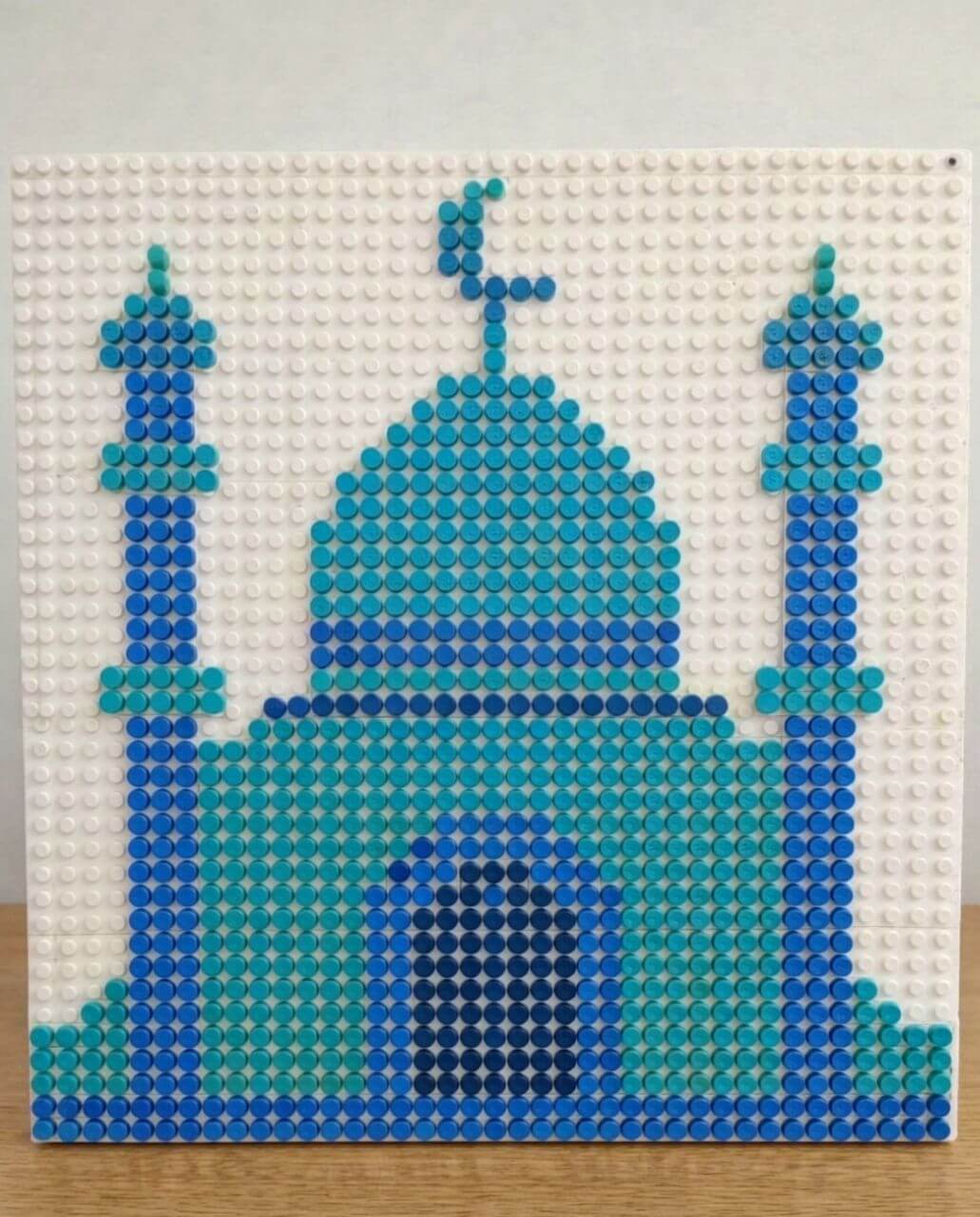
Instead of working inside small square tiles, use the full baseplate to create a simple mosque silhouette. By placing circular dots closely together, you can build a dome, minarets and arches in a pixel-style format.
If you don’t have LEGO DOTS, you can easily adapt this idea. Perler beads work beautifully for a similar mosaic effect, and even regular LEGO bricks can be used to build the shape in a more block-style version.
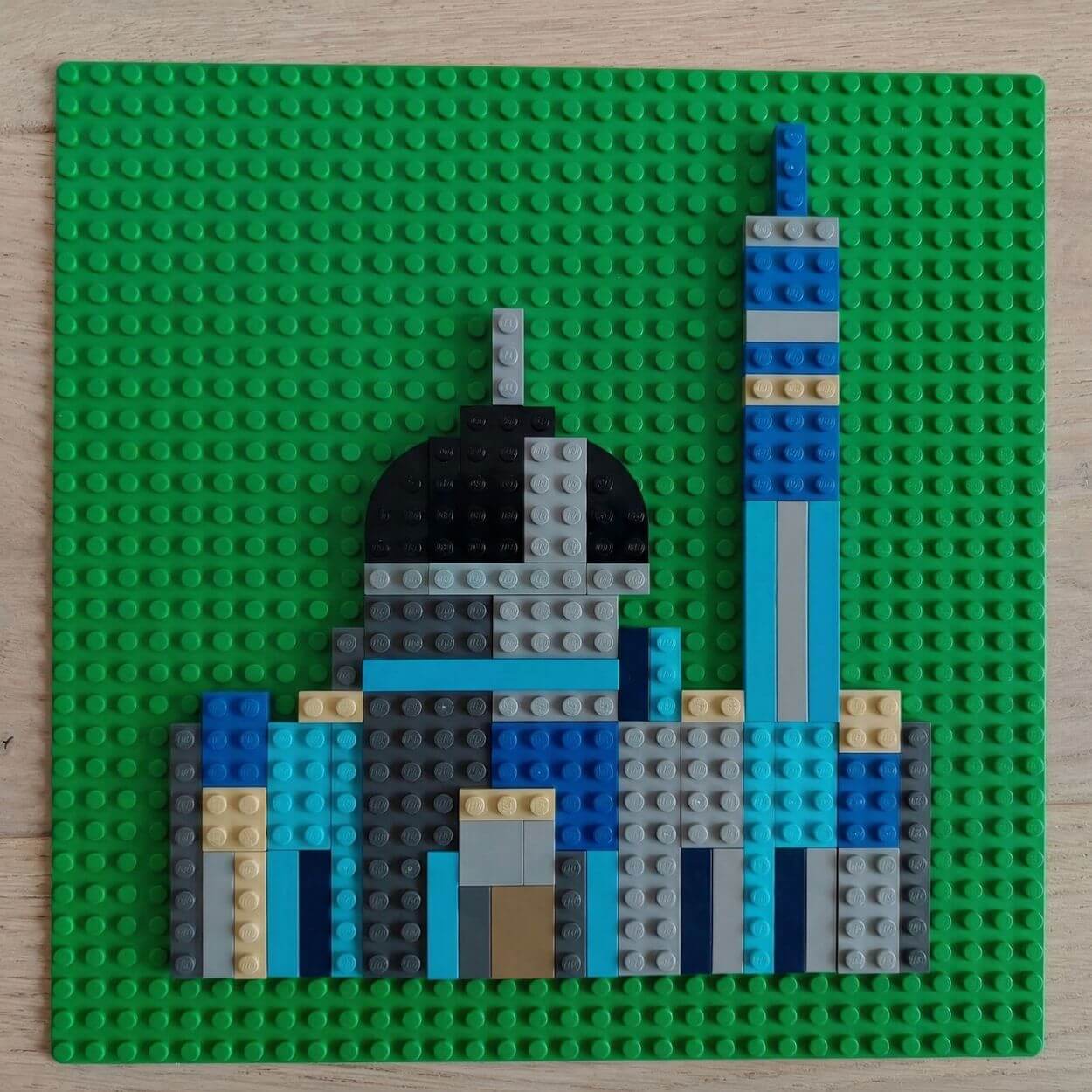
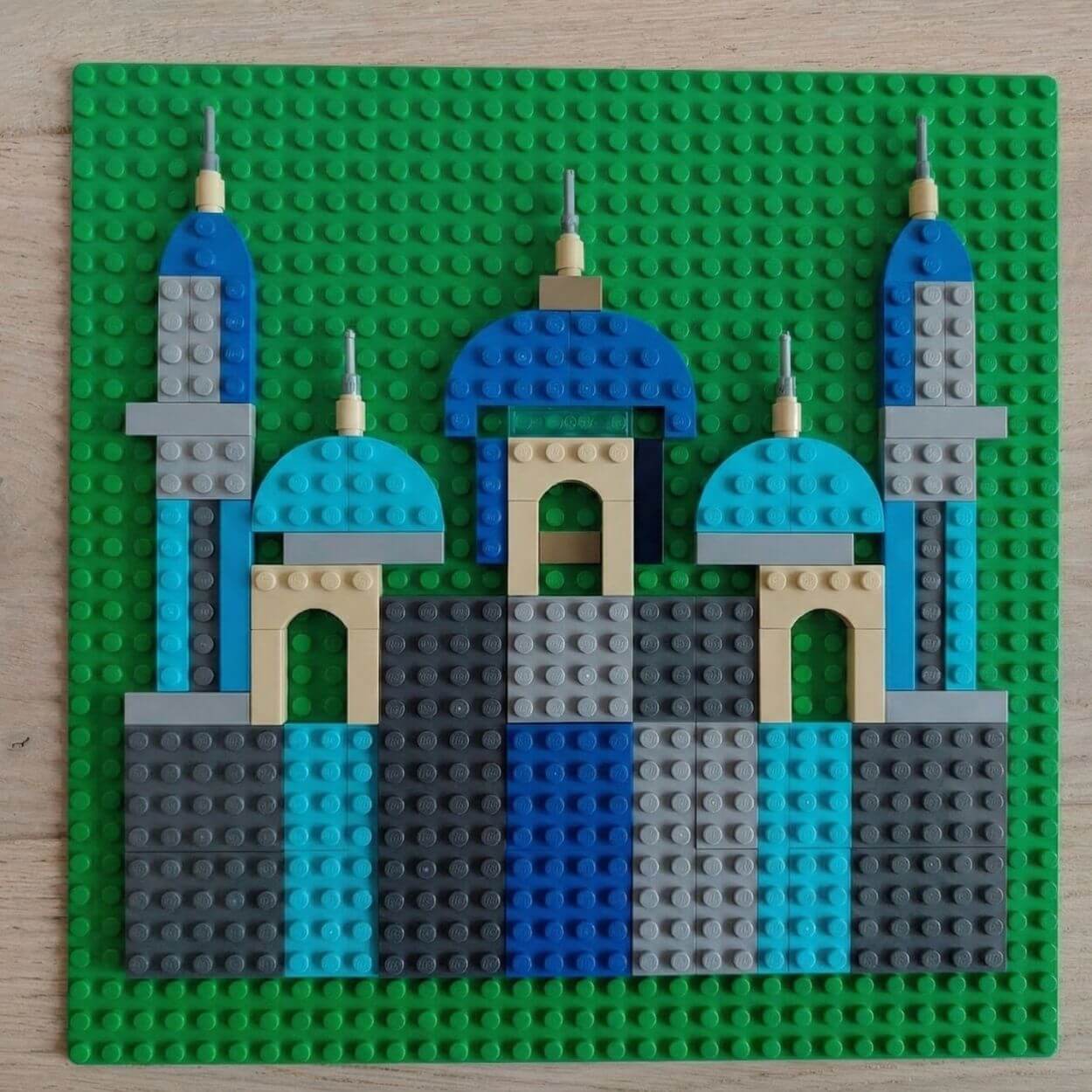
This version focuses less on symmetry and more on shape recognition. It’s especially engaging for younger children who enjoy creating recognisable forms.
Just like the geometric tiles, it remains:
- screen-free
- reusable
- structured
- creative
You can keep it minimal in two or three shades of blue, or experiment with different colour palettes. The strength of the design comes from repetition and density, not complexity.
It’s a simple way to turn everyday LEGO DOTS into a meaningful Islamic art activity at home.
What children learn through Islamic pattern and symmetry
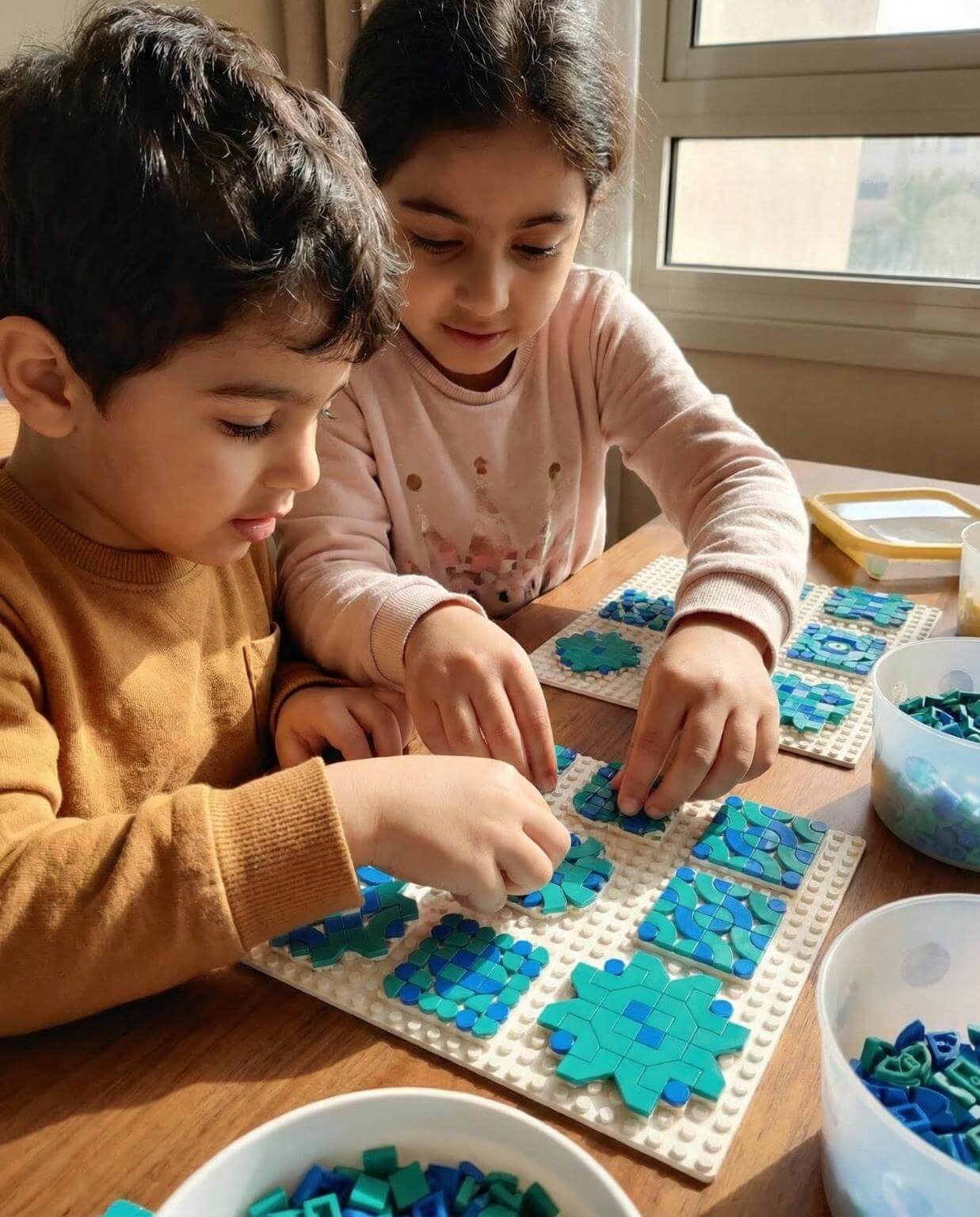
This kind of Islamic art activity quietly develops:
- spatial awareness
- patience
- visual discipline
- understanding of symmetry and tessellation
It also opens the door to meaningful conversations about Islamic history and craftsmanship.
You can speak about how geometric designs appear in mosques and traditional architecture. How artisans relied on mathematics and precision. How repetition reflects order and harmony.
A calm Ramadan activity for kids at home
While this LEGO-based Islamic art activity works beautifully year-round, it becomes especially meaningful during Ramadan.
The long hours before iftar often call for something calm but engaging. This becomes a thoughtful Ramadan activity for kids, one that keeps hands busy without screens and invites quiet focus.
You could build one small LEGO tile each evening and combine them into a larger geometric mosaic by Eid.
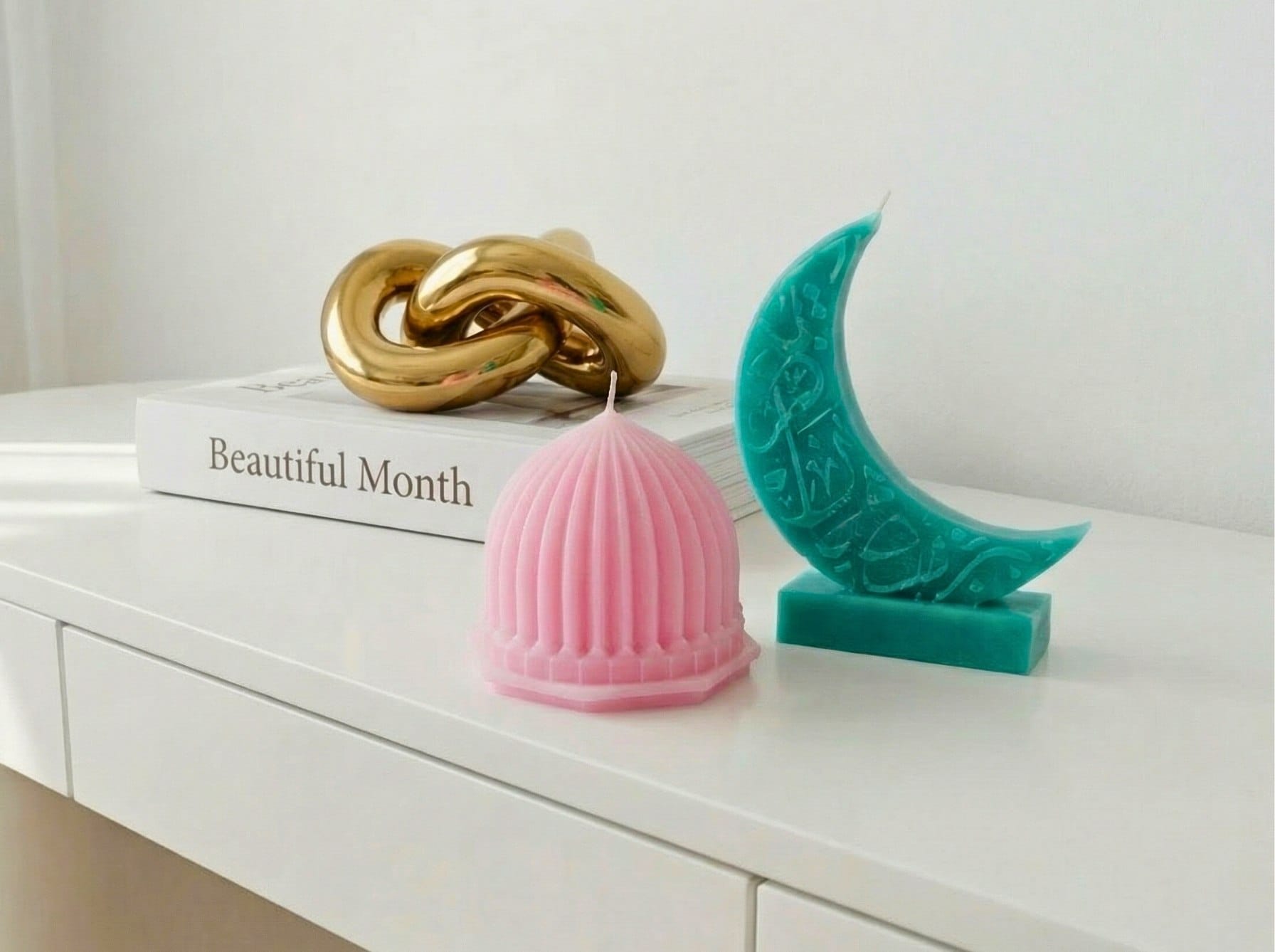
If you are looking for more Ramadan activities for kids and creative ideas for the home, you can explore our Ramadan collection.
Bringing Islamic geometric design into everyday life
Once you start building Islamic geometric patterns yourself, you begin noticing them everywhere, in textiles, packaging, architecture and interior details.
If you enjoy exploring pattern in a hands-on way beyond LEGO, our Islamic geometric stamp set was created with that same spirit.
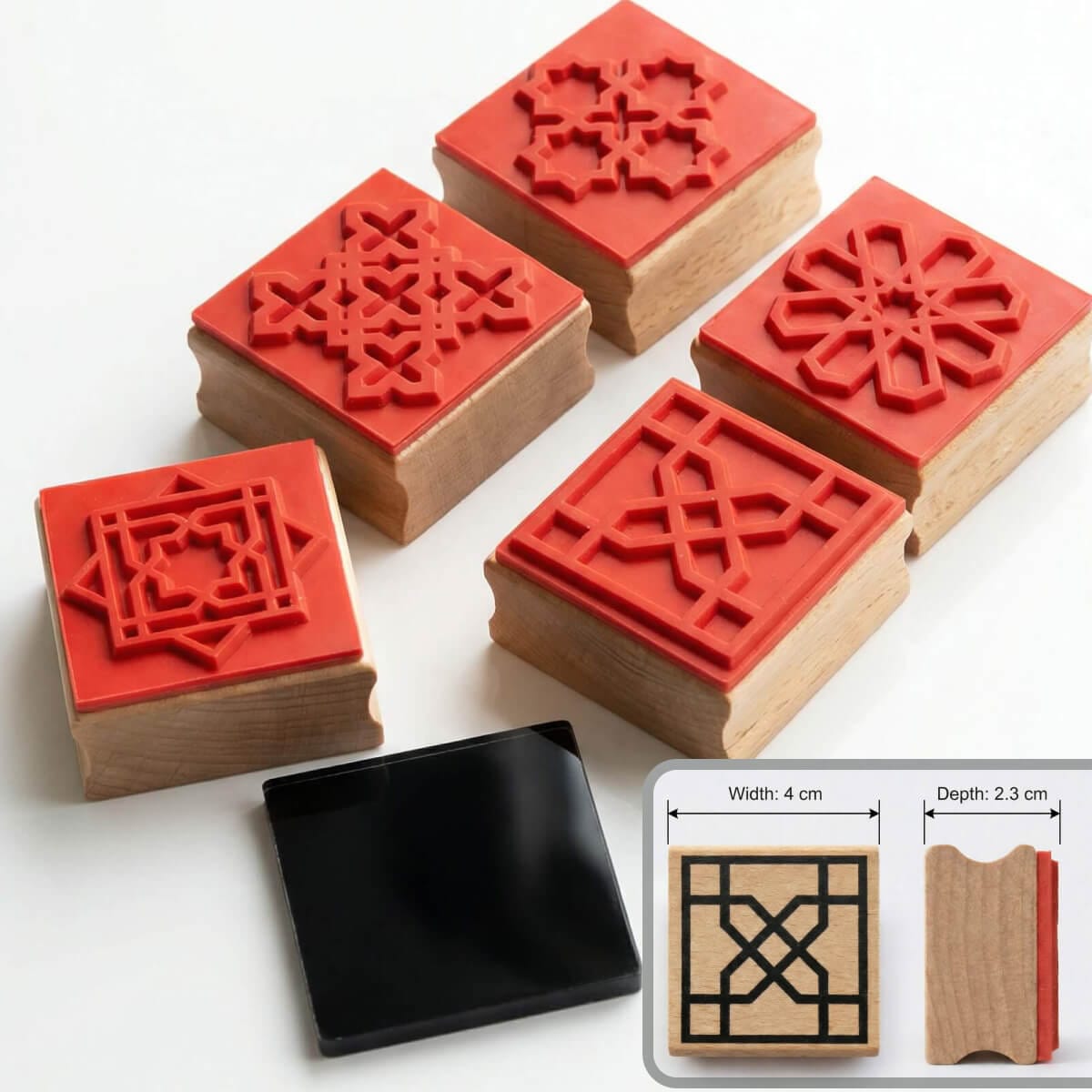
Islamic geometric pattern stamp set
A reusable set of 5 Islamic geometric rubber stamps with an ink pad, designed for year-round creative use.
Inspired by traditional tile motifs, the stamps allow you to create repeating designs on paper, gift wrap, journals or fabric. Just like the LEGO tile activity, they encourage rhythm and structure, but with even more flexibility.
It becomes less about a single craft and more about learning to live with pattern.
And perhaps that is the enduring strength of Islamic art. It is not only something preserved in historic mosques. It is something that can shape everyday life at home.