

Finding meaningful Islamic activities for kids at home can sometimes be a challenge. Many Muslim families want activities that are both creative and connected to culture, but also simple enough to prepare in an afternoon.
One beautiful source of inspiration comes from Islamic geometric patterns. These repeating designs have decorated mosques, manuscripts, tiles, textiles and architecture for centuries. Beyond their beauty, they are also naturally engaging for children: patterns invite colouring, observation and play.
With a few printed sheets, some colouring pencils or markers, and a pair of scissors, geometric patterns can easily turn into a range of creative activities that children genuinely enjoy.
It works beautifully as a quiet afternoon craft, a homeschool art activity, or a simple Ramadan activity for children.
In this post, you will also find printable pattern sheets you can download for free. The tiles can be used in several simple ways, colouring, matching patterns, creating small mosaics, or playing memory games.
Want to start the activity right away?
Why geometric patterns fascinate children
Children are naturally drawn to patterns.
Repetition helps them recognise shapes, notice symmetry and develop visual memory. A pattern becomes almost like a puzzle — something the eye wants to understand and complete.
Islamic geometric art is especially suited for this kind of exploration. Instead of images of people or animals, traditional Islamic design often focuses on lines, stars, polygons and repeating structures that expand outward in harmony.
For children, these designs feel almost magical: simple shapes suddenly become intricate patterns.
A geometric colouring activity inspired by Islamic art
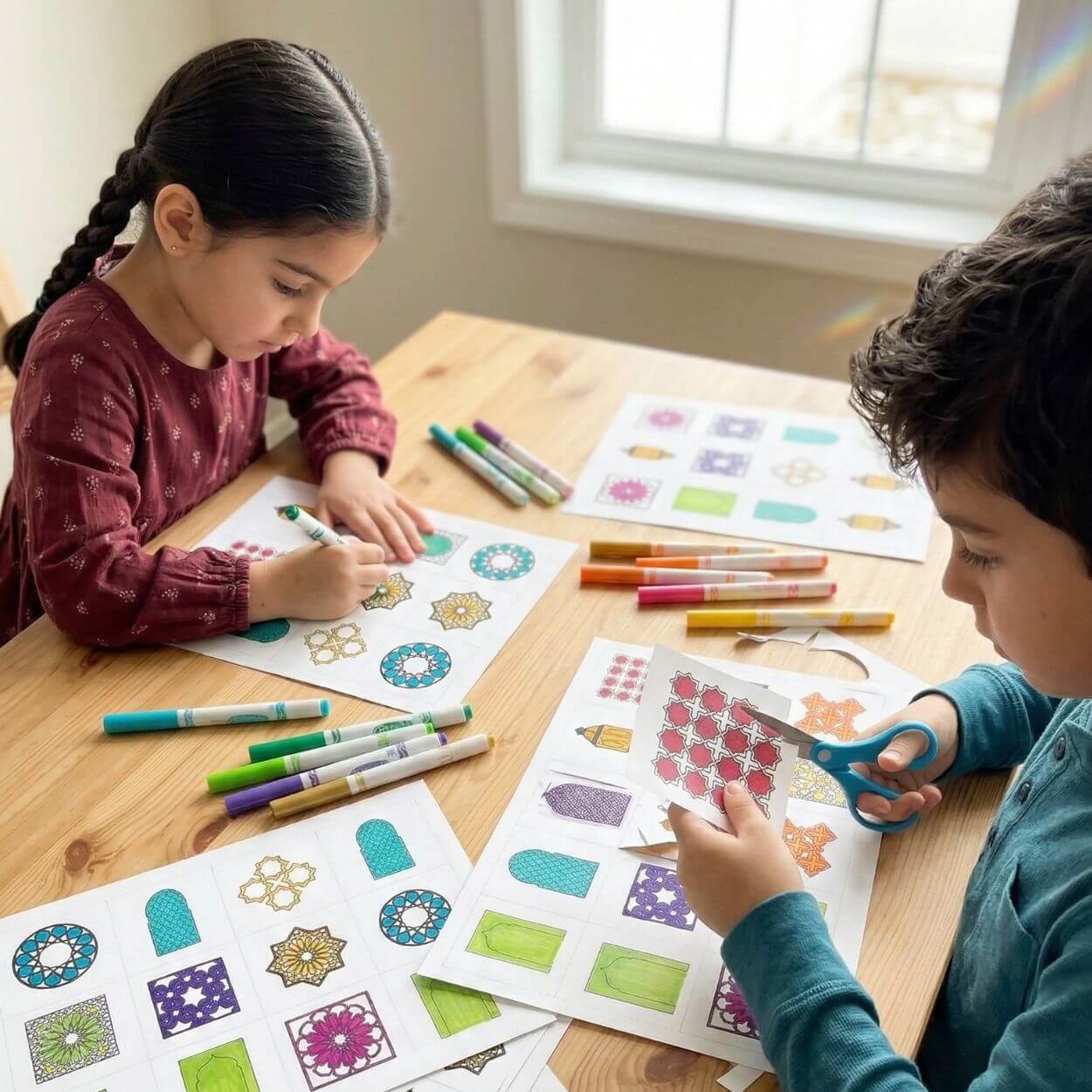
This simple activity invites children to colour and explore geometric patterns inspired by traditional Islamic design.
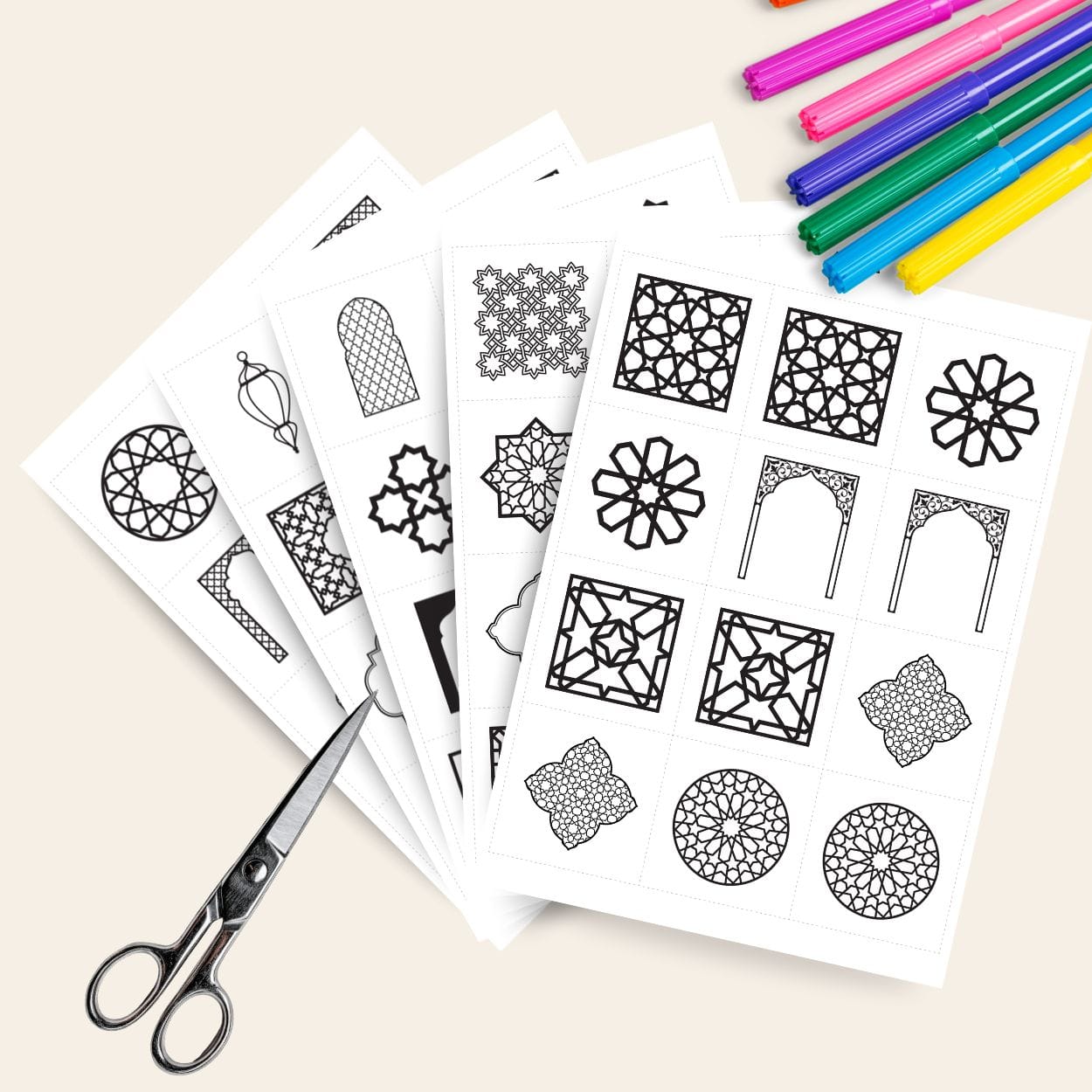
In this post, you can download a set of printable geometric pattern sheets designed for colouring, cutting and creative play.
The printable sheets include a collection of geometric tiles that children can:
• colour in their own way
• cut into individual squares
• mix and arrange into patterns
• use for matching or memory games
Some children will enjoy carefully colouring symmetrical shapes. Others may prefer experimenting with colours and patterns more freely. Both approaches work beautifully.
Because each tile is separate, the activity can grow into different kinds of play, sorting shapes, matching pairs, or simply building colourful pattern arrangements. We have plenty of ideas for you in this post.
How to prepare the activity
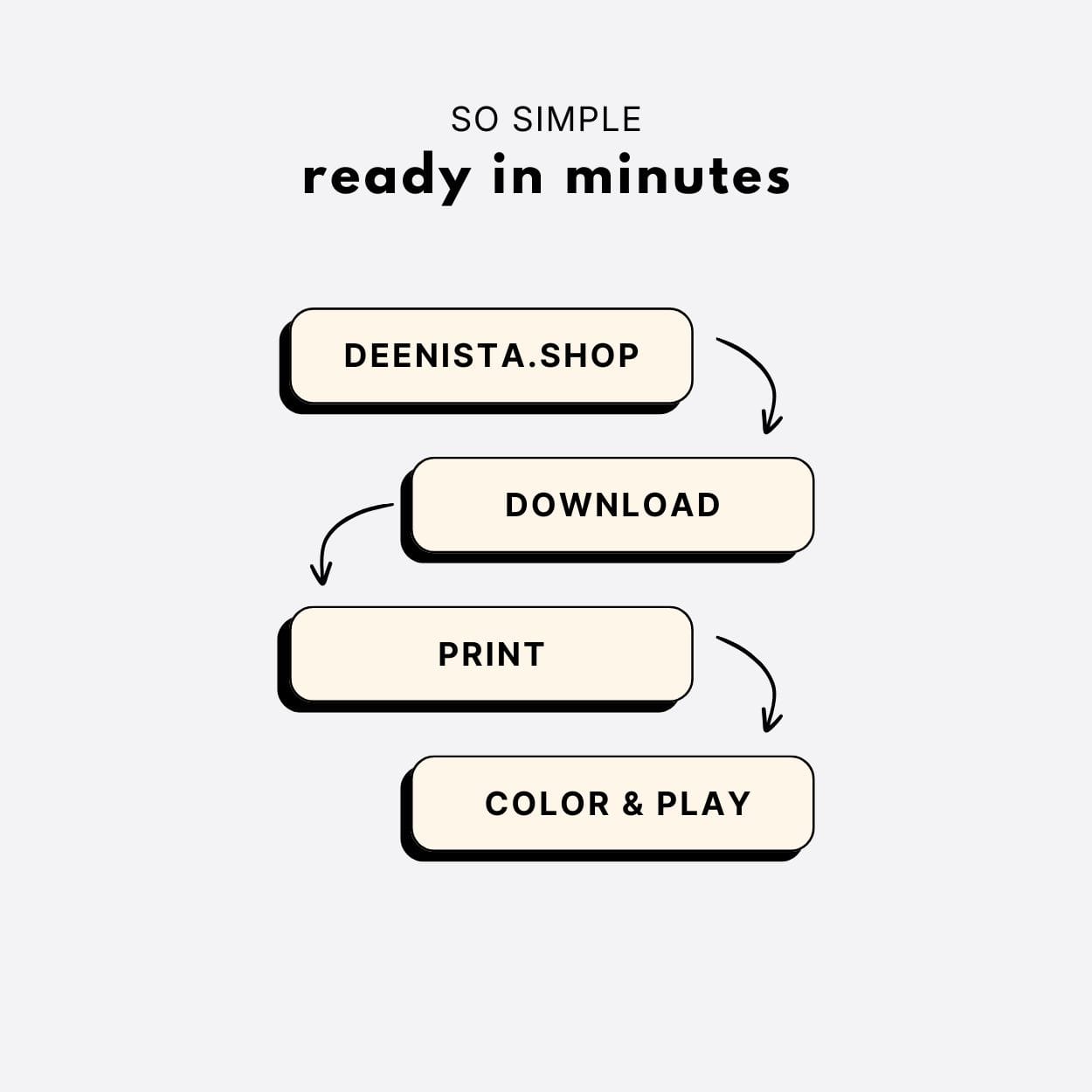
Preparing the activity is very simple. Readers of Deenista can download the printable for free using the code GEOMETRYJOY.
1. Download the printable
Go to Deenista.shop, add the Islamic geometric printable to your cart, and enter the code GEOMETRYJOY at checkout.
2. Print the pages
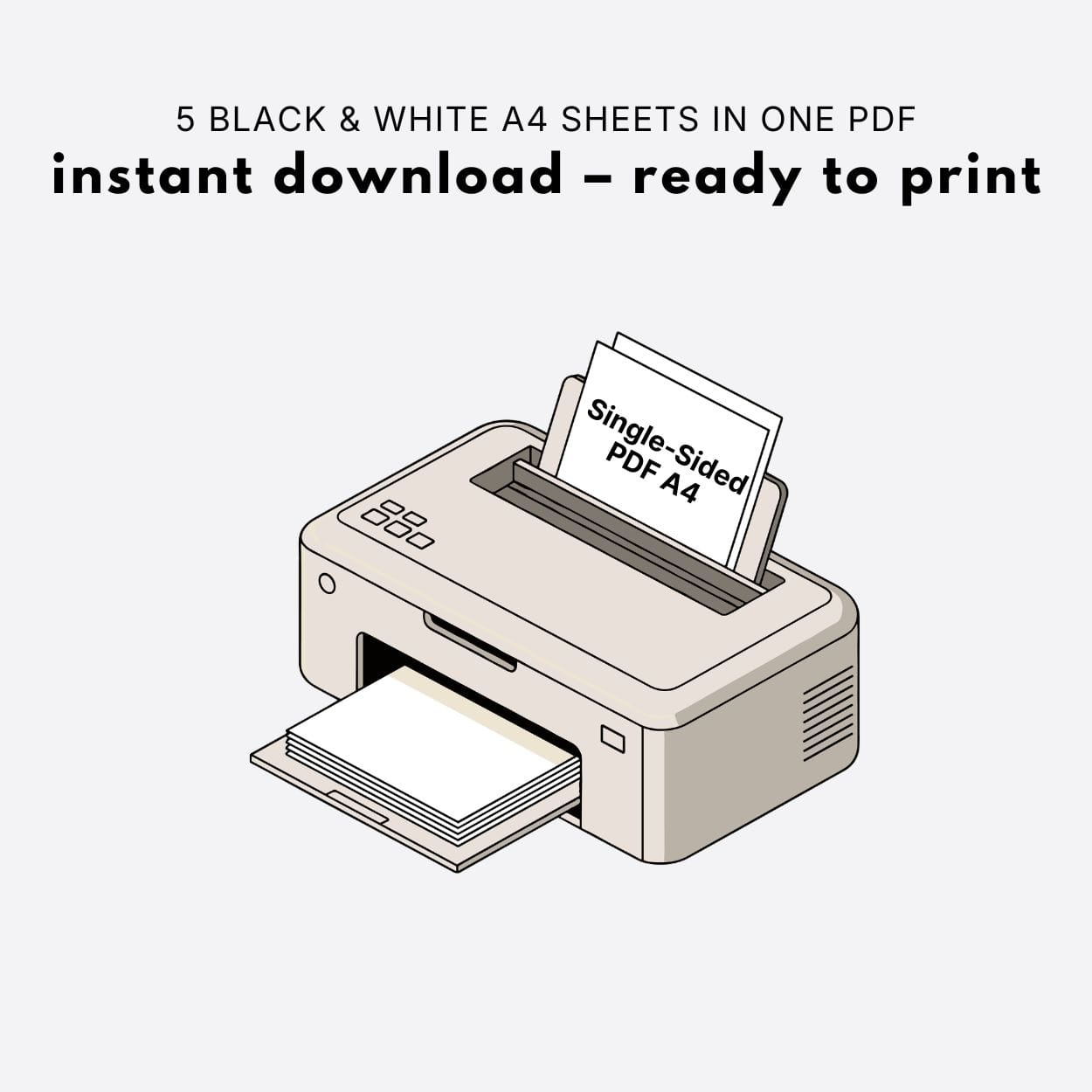
Print the sheets on regular A4 paper or slightly thicker paper if you prefer a sturdier feel.
3. Colour the patterns
Children can colour the geometric designs with pencils, markers or crayons.
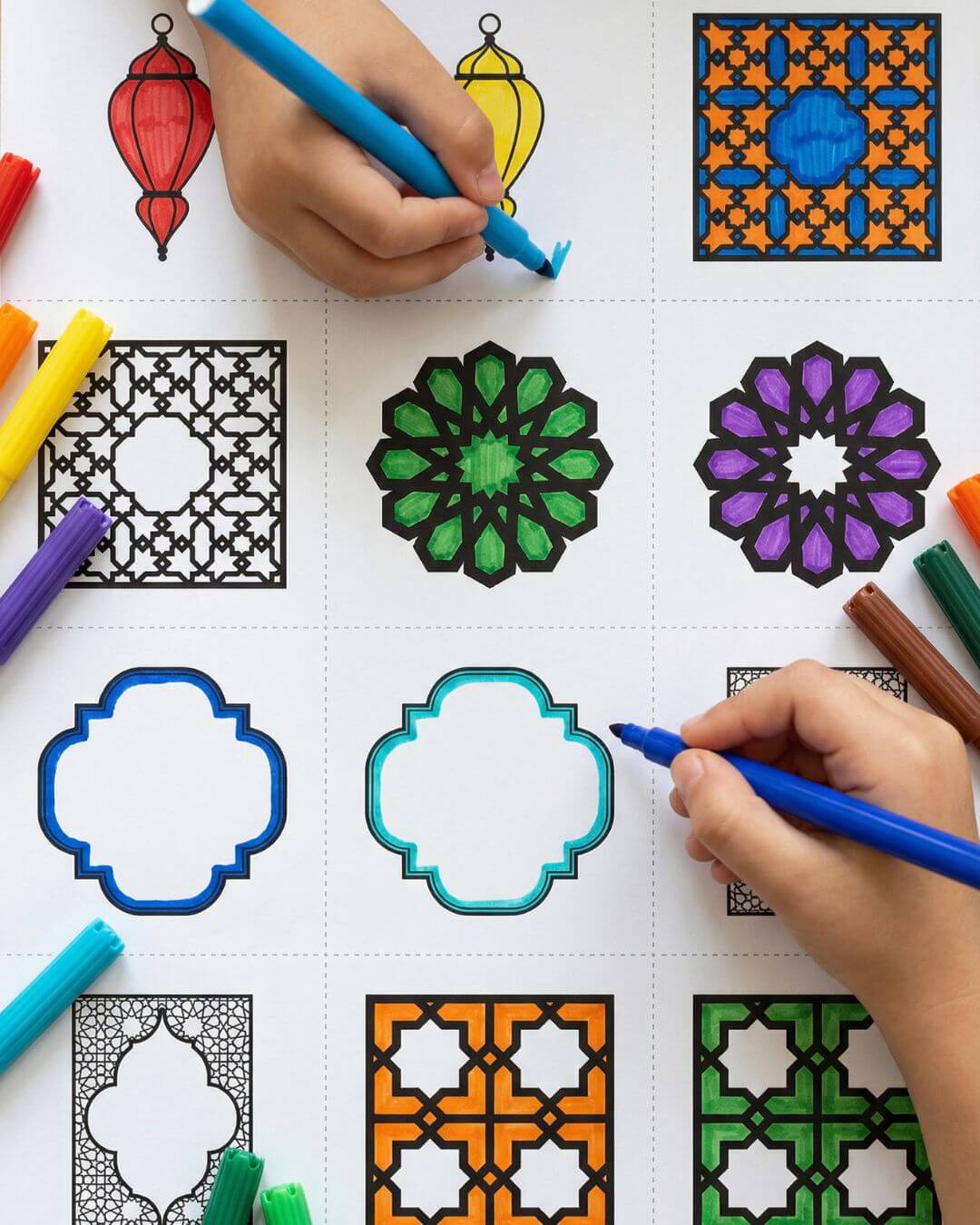
4. Cut the squares
Once coloured, cut the sheets into individual squares.
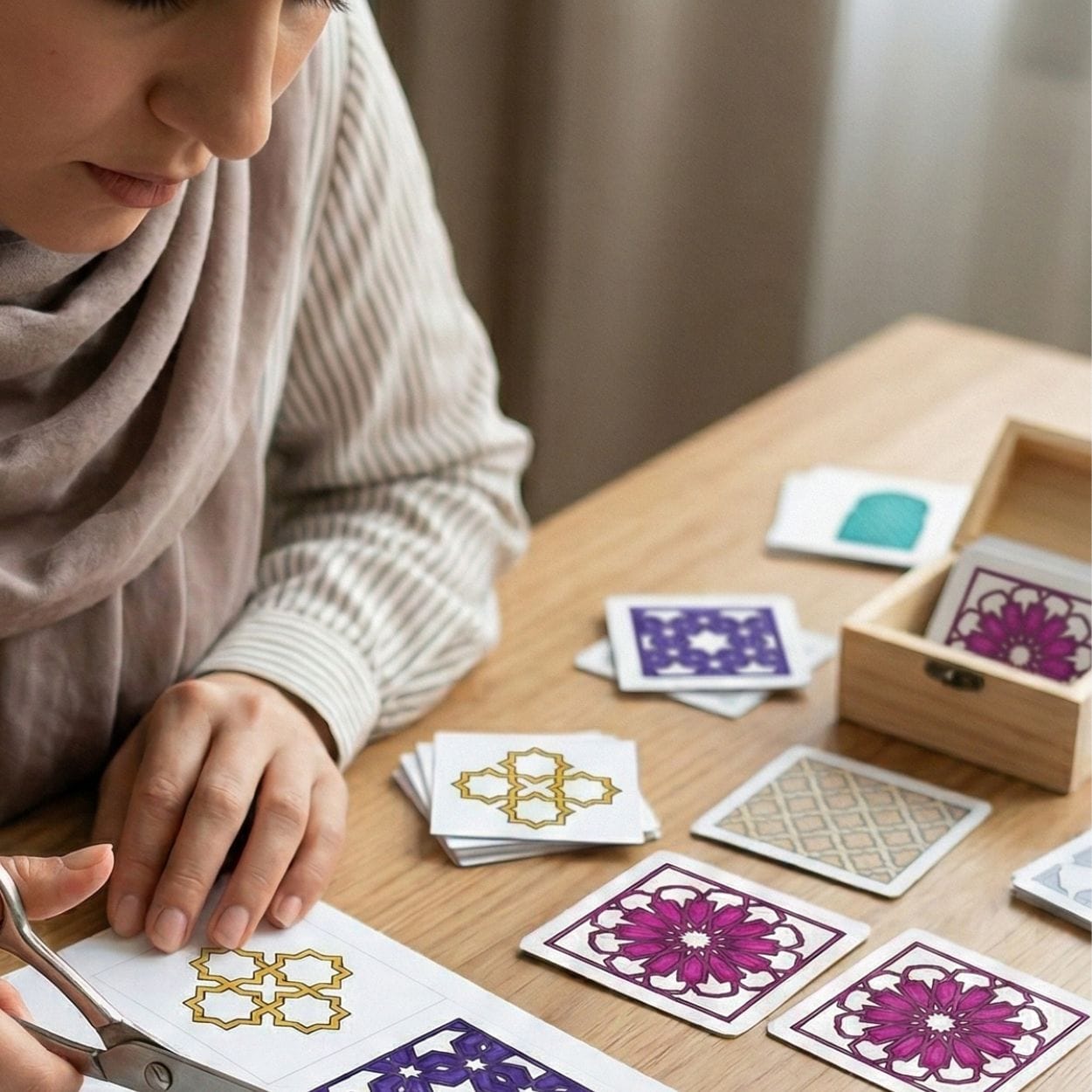
5. Play and explore
The tiles can be used in many different ways once they are cut out. Children often invent their own games, but here are a few simple ideas to begin with:
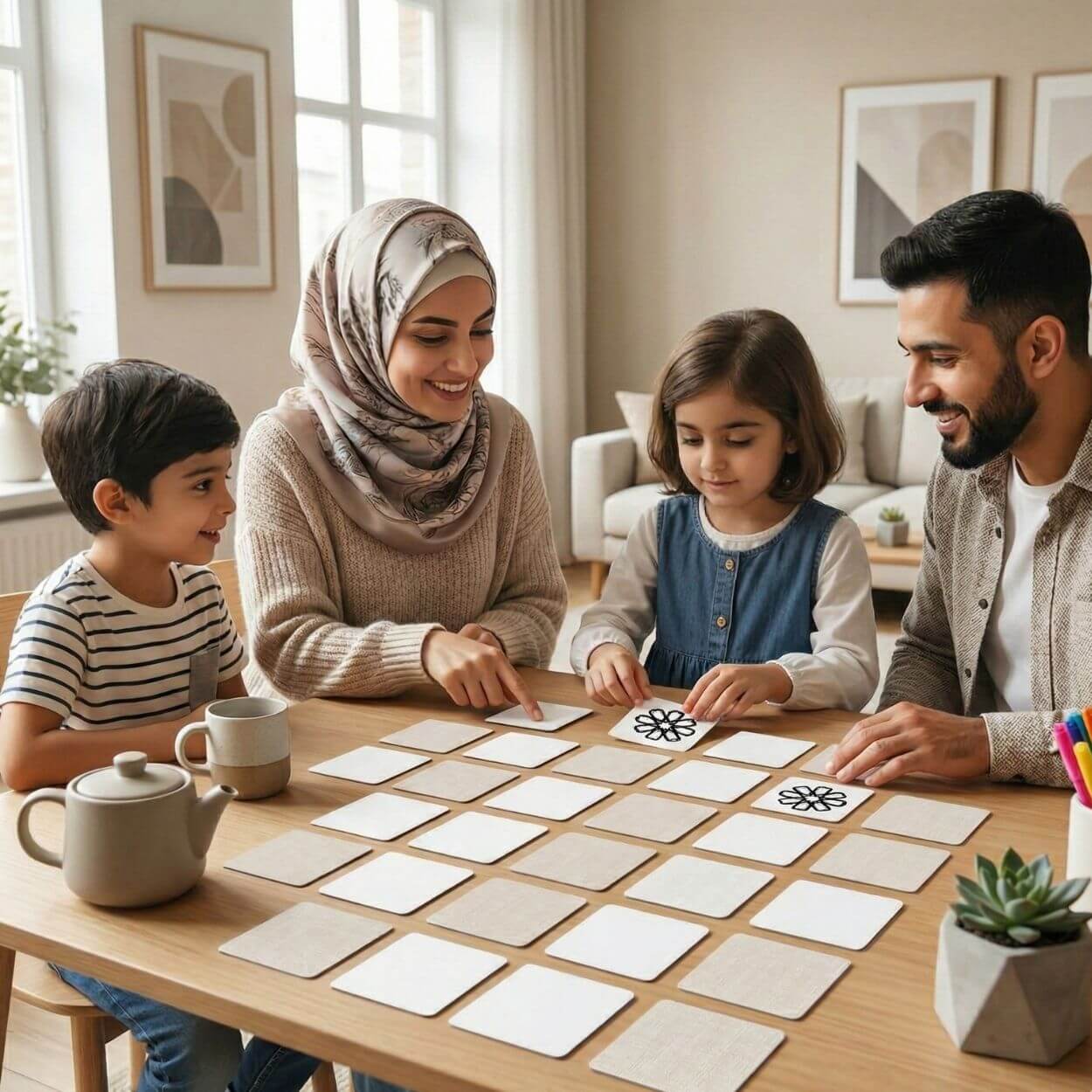
Playing a simple memory game
Turn the tiles face down and take turns flipping two cards at a time to find matching pairs.
Completing pattern sequences
Another fun activity is creating repeating sequences. Arrange several tiles in a row and leave one space empty. Children can look at the pattern and guess which tile should come before or after.
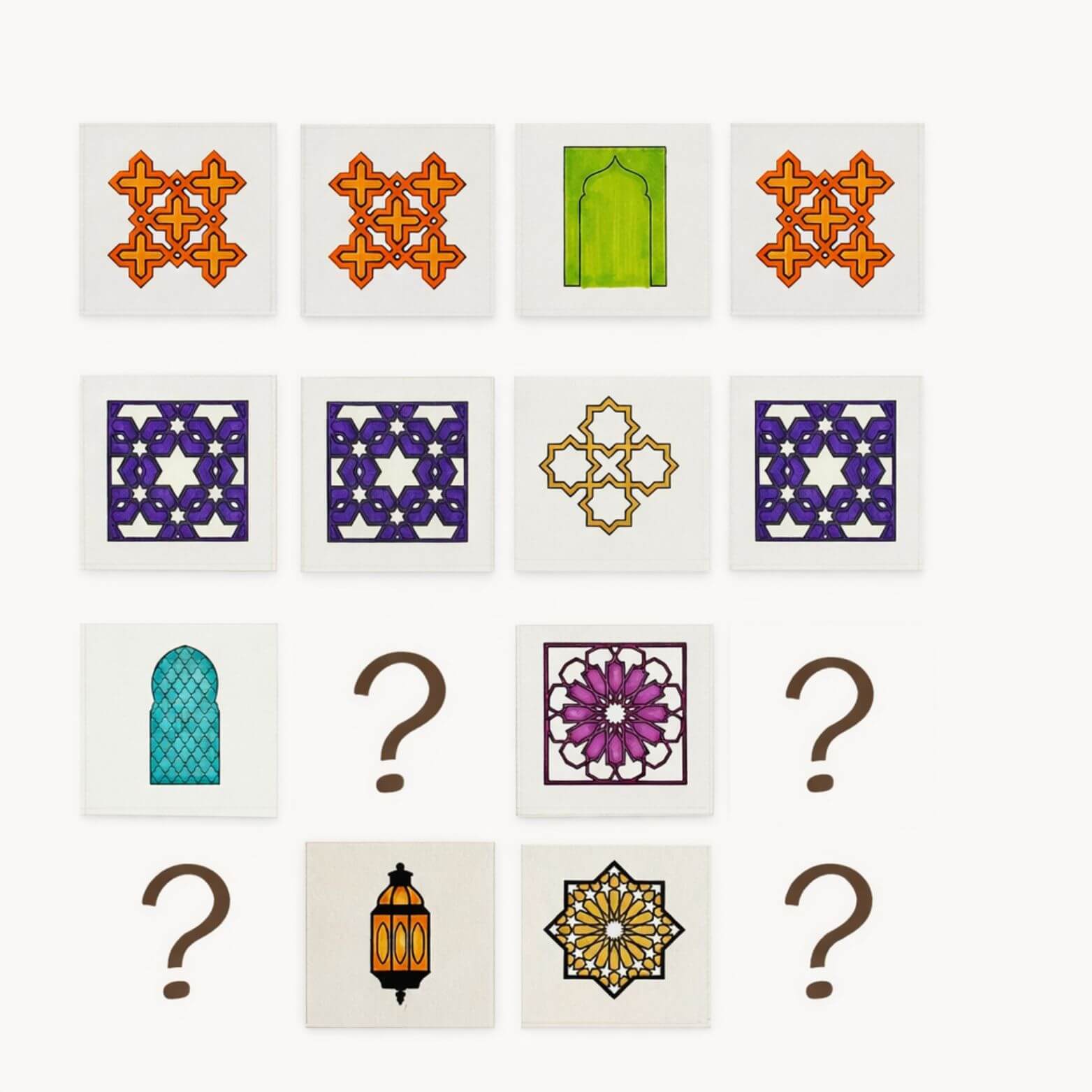
Matching identical patterns
Place the tiles face up and ask children to find and group identical patterns together.
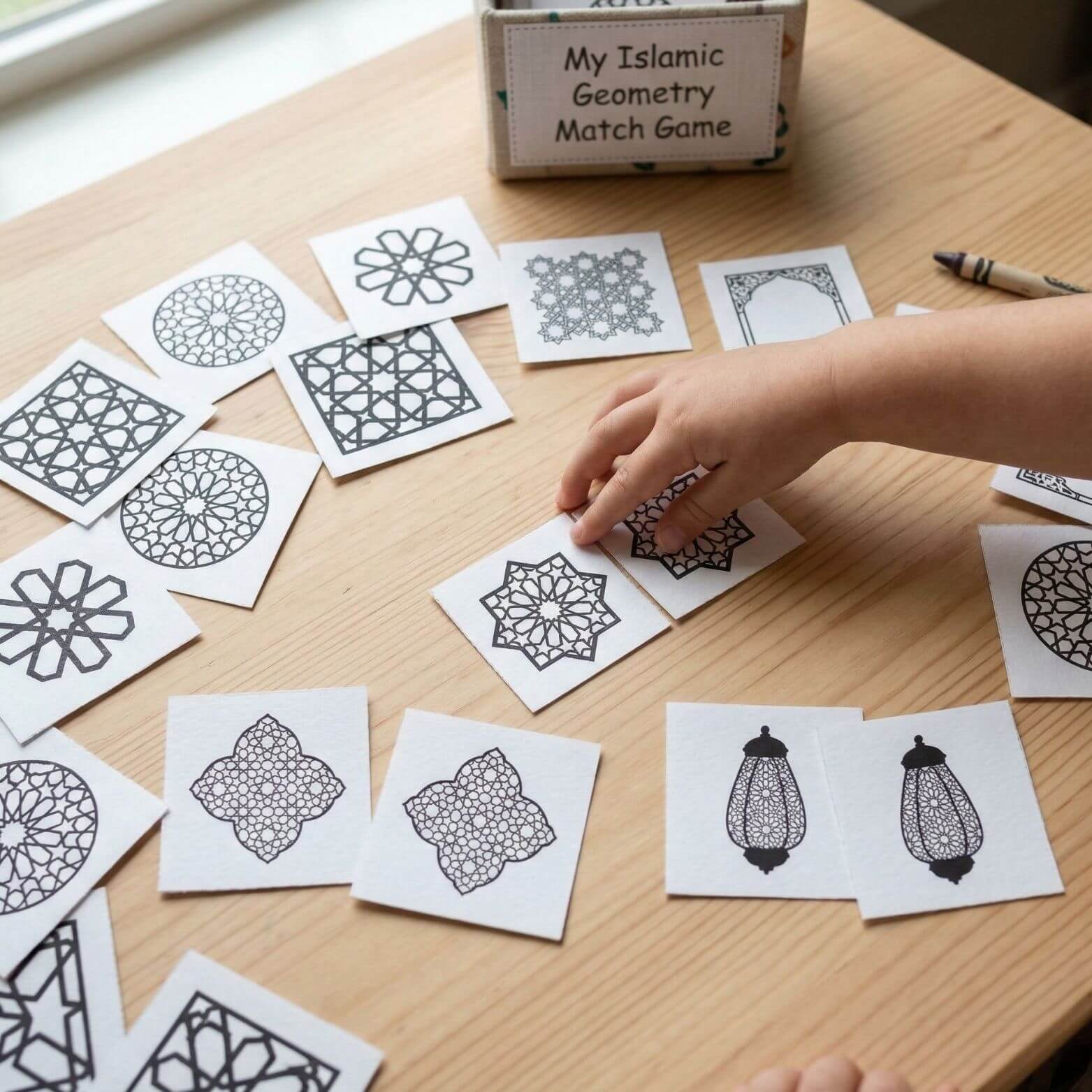
Creating small mosaics
Tiles can also be arranged next to each other to form colourful geometric mosaics. Children can experiment with symmetry, shapes and colour combinations.
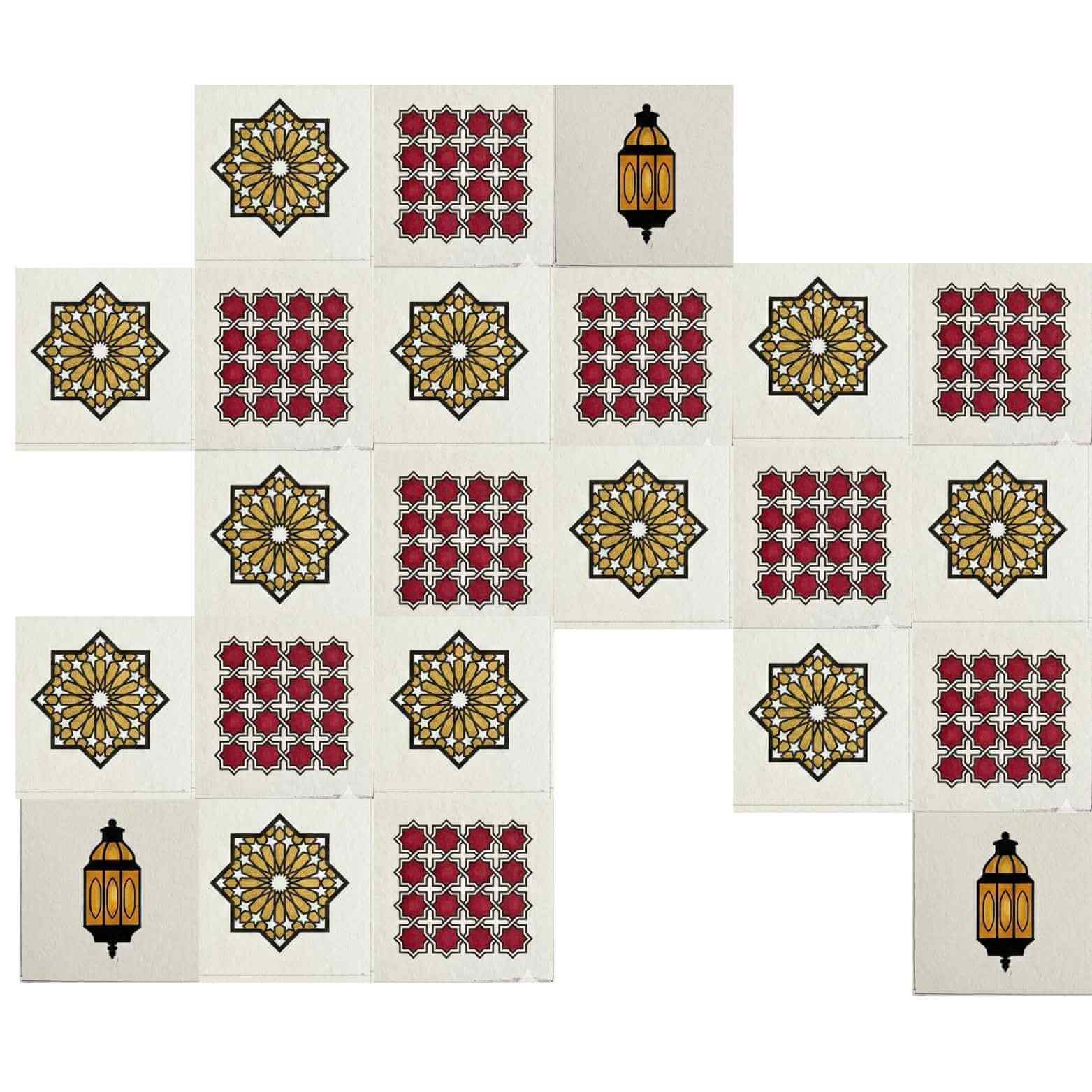
The beauty of geometric design is that it invites experimentation. There is no single correct result.
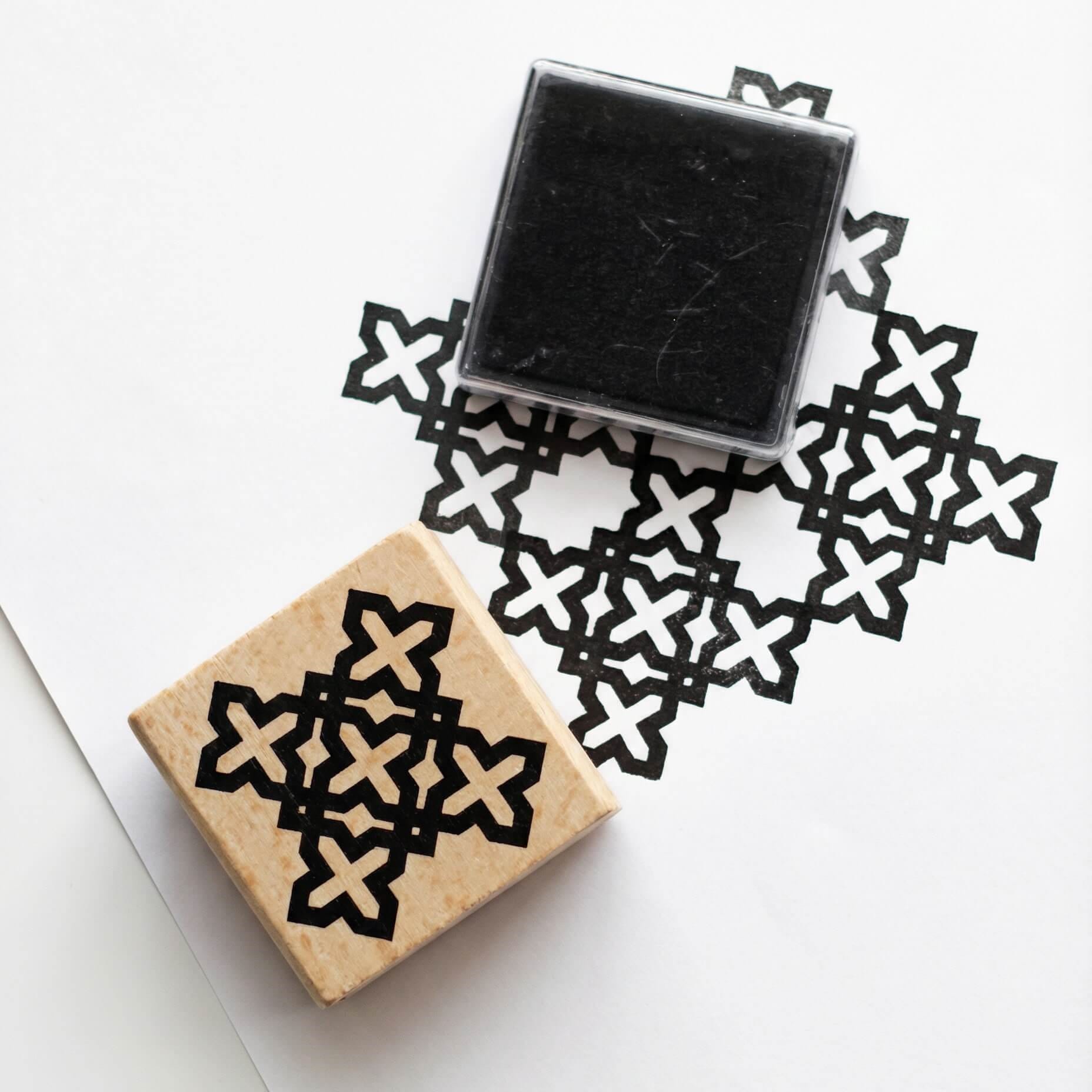
For older children, you can also try creating a simple Islamic geometric art project at home, using basic shapes and repeating patterns.
Introducing children to Islamic geometric art
Activities like this are also a gentle way to introduce children to one of the most recognisable visual traditions in Islamic culture.
Geometric ornament has appeared across the Islamic world for over a thousand years. Artists and craftsmen developed complex patterns using only simple mathematical principles — circles, grids and repeating shapes.
These designs can be found on:
• mosque tiles
• carved wood screens
• illuminated manuscripts
• textiles and carpets
• architectural decoration
By colouring and playing with geometric patterns, children begin to notice how shapes connect and repeat. It becomes a playful introduction to a long artistic tradition.
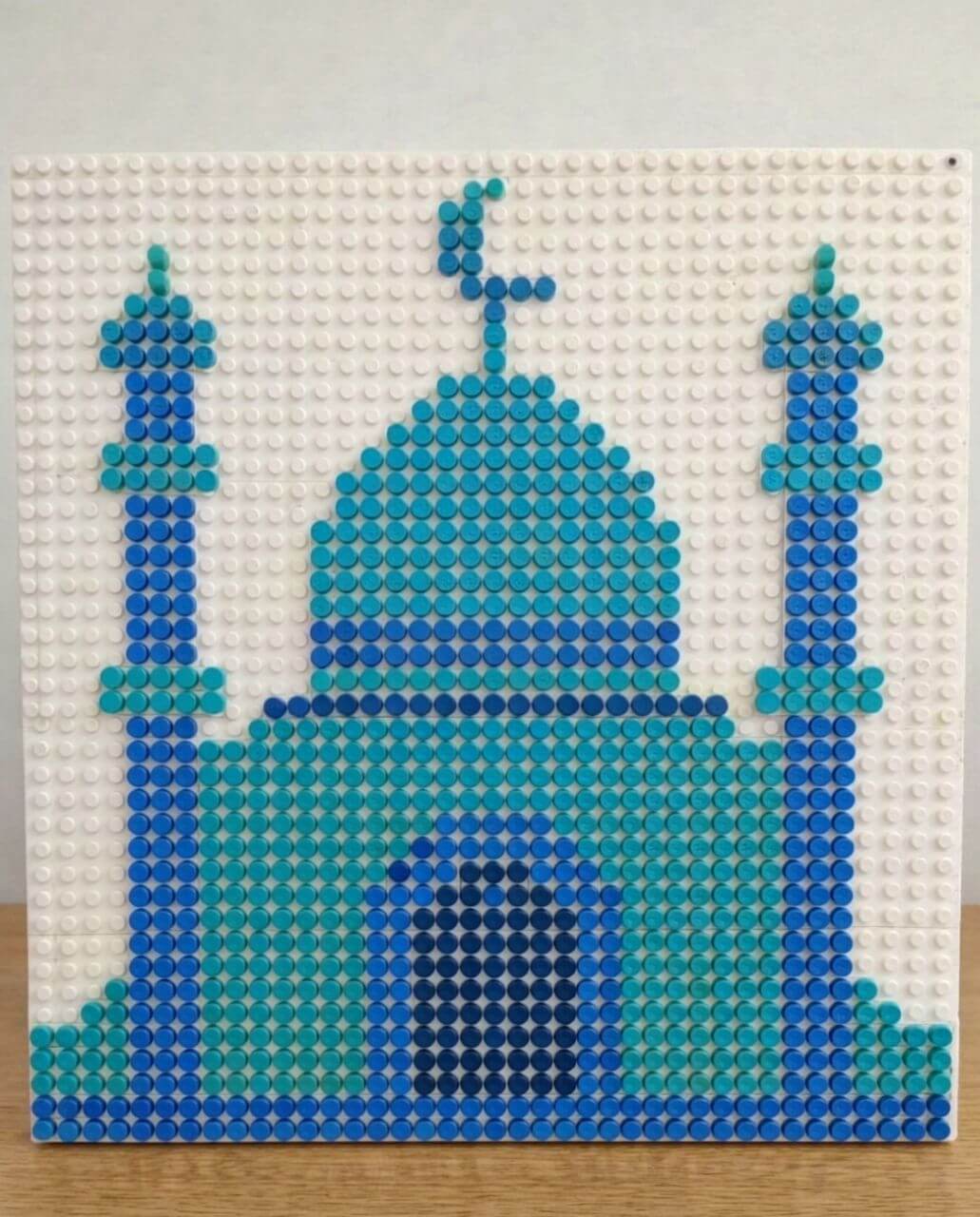
If your children enjoy building patterns, you might also like our LEGO mosque tile activity inspired by Islamic geometric art.
A printable geometric activity for kids
If you would like to try this activity at home, you can download the Islamic geometric colouring printable created for Deenista.
The printable includes multiple pages of geometric pattern tiles designed for colouring, cutting and creative play.
It is a simple activity that works well for:
• quiet afternoons at home
• weekend creative time
• Ramadan activities for children & families
• classroom or homeschool use
You can explore the printable here:
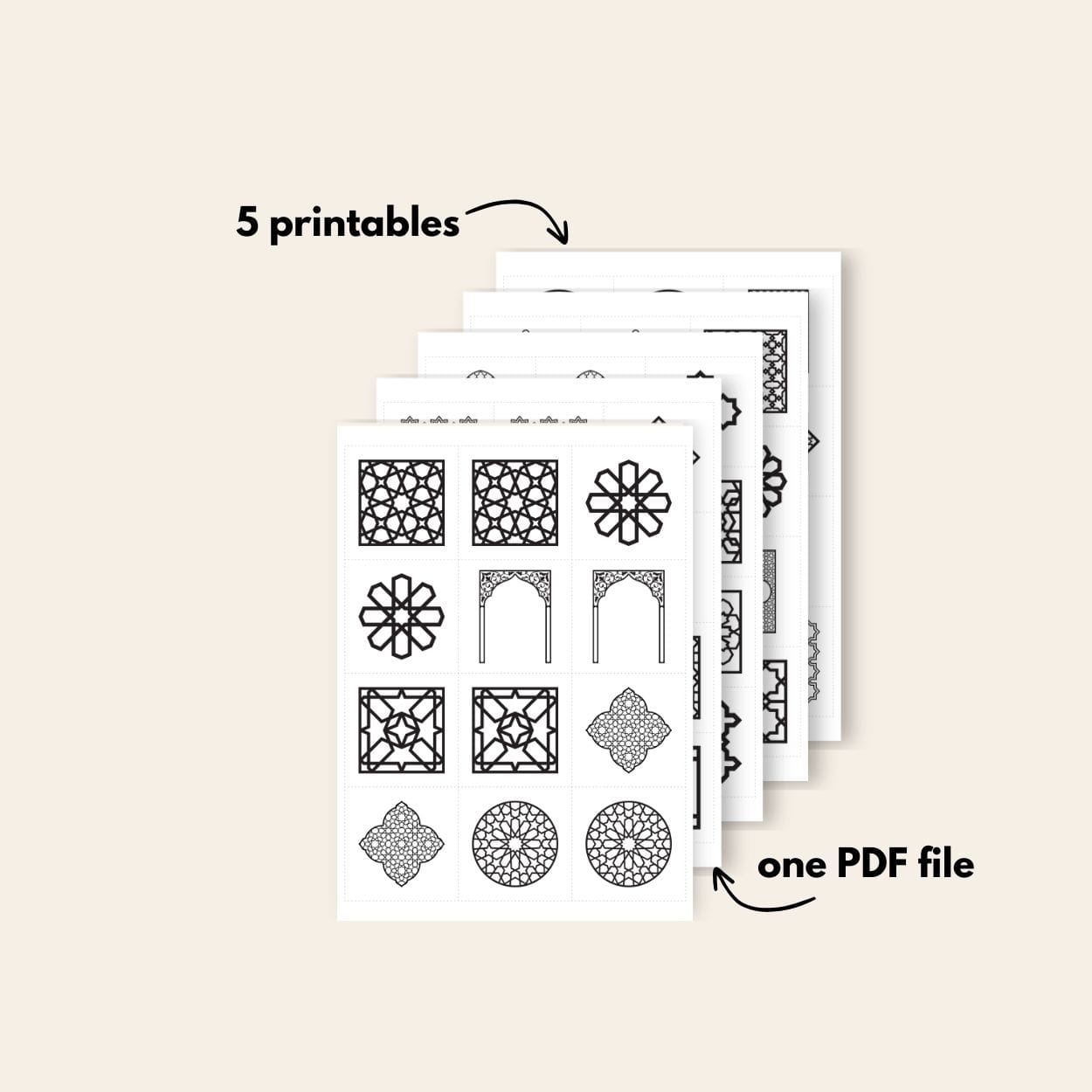
Islamic geometric memory game printable
A printable set of Islamic geometric pattern tiles designed for colouring, matching games and creative play.
Includes 60 cards (30 matching pairs) ready to print on A4 paper.
Use code GEOMETRYJOY at checkout to download it for free.
Feel free to share this post with another family who might enjoy the activity too.
Creativity through simple patterns
Some of the most enjoyable activities for children are often the simplest ones. A few sheets of paper, a handful of colours and a pattern to explore can turn into an hour of quiet creativity.
Islamic geometric patterns offer exactly that: beauty, rhythm and endless variation — all starting from simple shapes.
And sometimes the smallest patterns can open the door to discovering a much larger artistic world.
If you enjoy thoughtful activities like this, you can explore more ideas in the Muslim Living section on Deenista.