

Saffron is everywhere these days: stirred into Danish pastries, folded into biscotti, infused in gelatos, and added to all kinds of “golden” recipes. But what most people don’t realise is how little we actually know about the ingredient we use so confidently. Real saffron is one of the most labour-intensive crops in the world, harvested by hand, flower by flower, in a process that has barely changed for thousands of years. At the same time, the market is filled with cheap imitations, low-grade mixes, and greenhouse-grown saffron that simply doesn’t have the taste or character of the real thing.
This post explains what saffron truly is, where it comes from, how to recognise genuine saffron, and exactly what separates real saffron from fake.
Why real saffron matters
Before learning how to test saffron, it helps to understand why real saffron is valuable in the first place.
The saffron crocus (Crocus sativus) was first cultivated in regions such as Iran, Central Asia, and parts of the Eastern Mediterranean. Its presence appears in:
- cave pigments in Iran
- Minoan frescoes in Crete
- early Persian and Greek medical and botanical texts
These cultures didn’t treat saffron merely as a spice. It stood for celebration, purity, healing, and hospitality, a luxury created by delicate labour and specific climates.
Why saffron is compared to gold
Each saffron flower holds only three red stigmas, and they must be picked by hand at dawn.
To produce 1 kilogram of real saffron, you need:
- around 150,000–200,000 flowers
- trained workers
- the right soil, altitude, and climate
This slow, precise work cannot be automated. That is why real saffron has always been expensive, and why fake saffron exists.
How to tell real saffron from fake
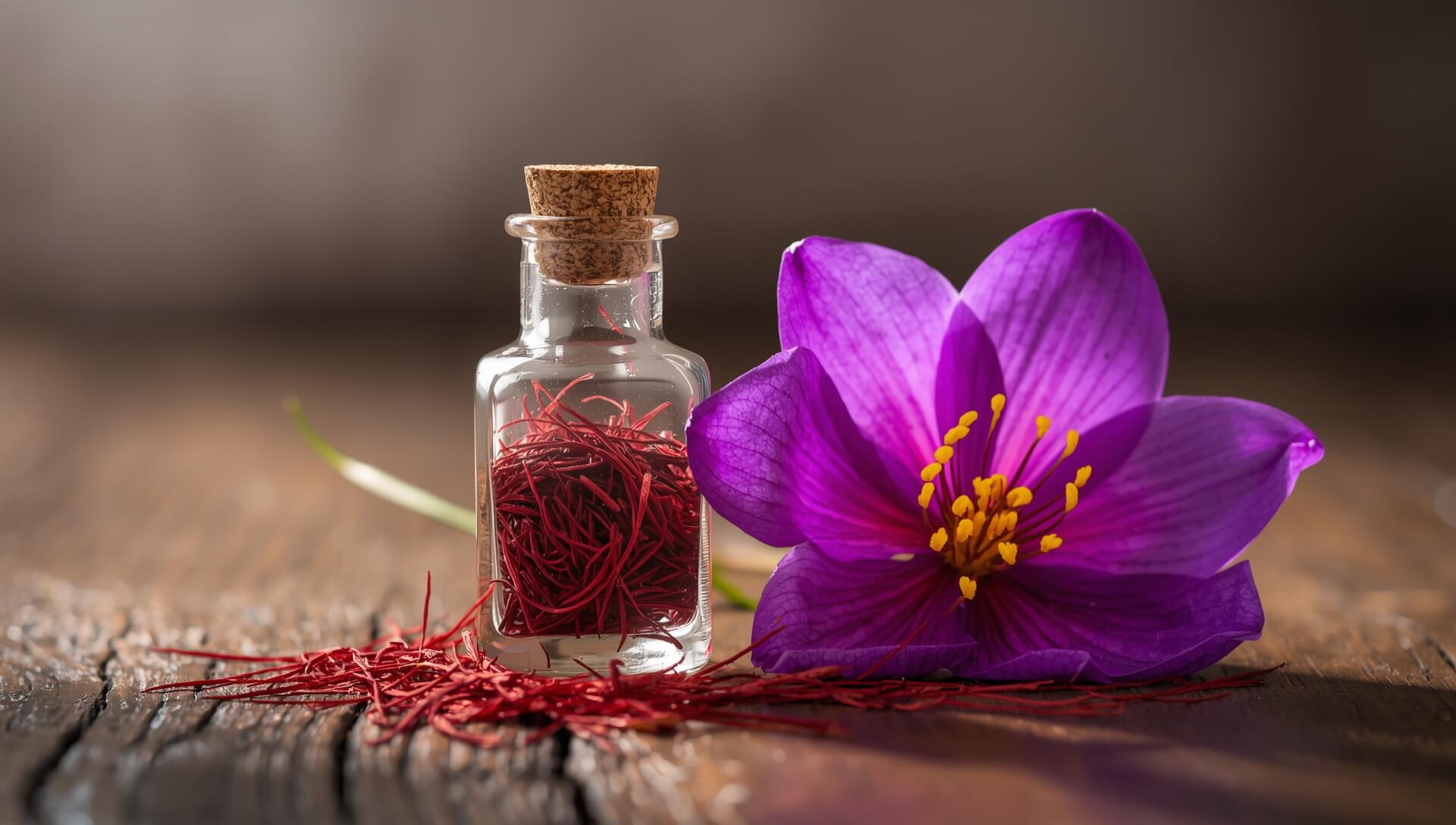
This is the heart of the topic, and the reason most people click. The market is full of safflower, turmeric, dyed fibres, and weak or mixed saffron sold as “pure.”
These simple tests help you recognise real saffron immediately.
1. Look closely at the threads
- Real saffron: trumpet-shaped threads, slightly wider at one end
- Fake saffron: straight fibres, frayed ends, or petal-like pieces
Shape is one of the strongest indicators.
2. The water test: slow colour vs instant colour
Real saffron releases colour slowly.
- It turns water a warm golden shade over 5–10 minutes
- The thread remains red, it does not lose its colour
Fake saffron:
- Colours water bright yellow instantly
- The threads become pale or white, showing they were dyed
This is the easiest home test.
3. The smell test
Real saffron has a complex aroma:
- earthy
- slightly sweet
- warm and floral
Fake saffron often smells:
- weak
- chemical
- or like nothing at all
Real saffron’s scent is unmistakable once you know it.
4. The price tells the truth
Real saffron is never cheap. If the price looks too good to be true, it always is.

Are you new here and want to understand why we write about cultural roots and authenticity, you can read the story behind Deenista here.
Greenhouse saffron: real, but not equal
Greenhouse-grown saffron has become common, especially in countries without traditional climates for saffron. While technically saffron, it often has:
- weaker aroma
- lower crocin levels (colouring strength)
- reduced depth of flavour
The chemical compounds that give saffron its colour, taste, and fragrance; crocin, picrocrocin, and safranal, develop best in natural climates. Greenhouses cannot replicate centuries of soil and weather conditions.
It’s real saffron, but not traditional saffron.
Why people end up buying fake saffron
Three simple reasons:
- Lack of knowledge: most people don’t know what saffron should look or smell like.
- Misleading packaging: many mixes are sold as “pure saffron.”
- Low prices: people assume they’ve found a “deal.”
Educating yourself is the only protection.
Traditional tricks to make the most of your saffron
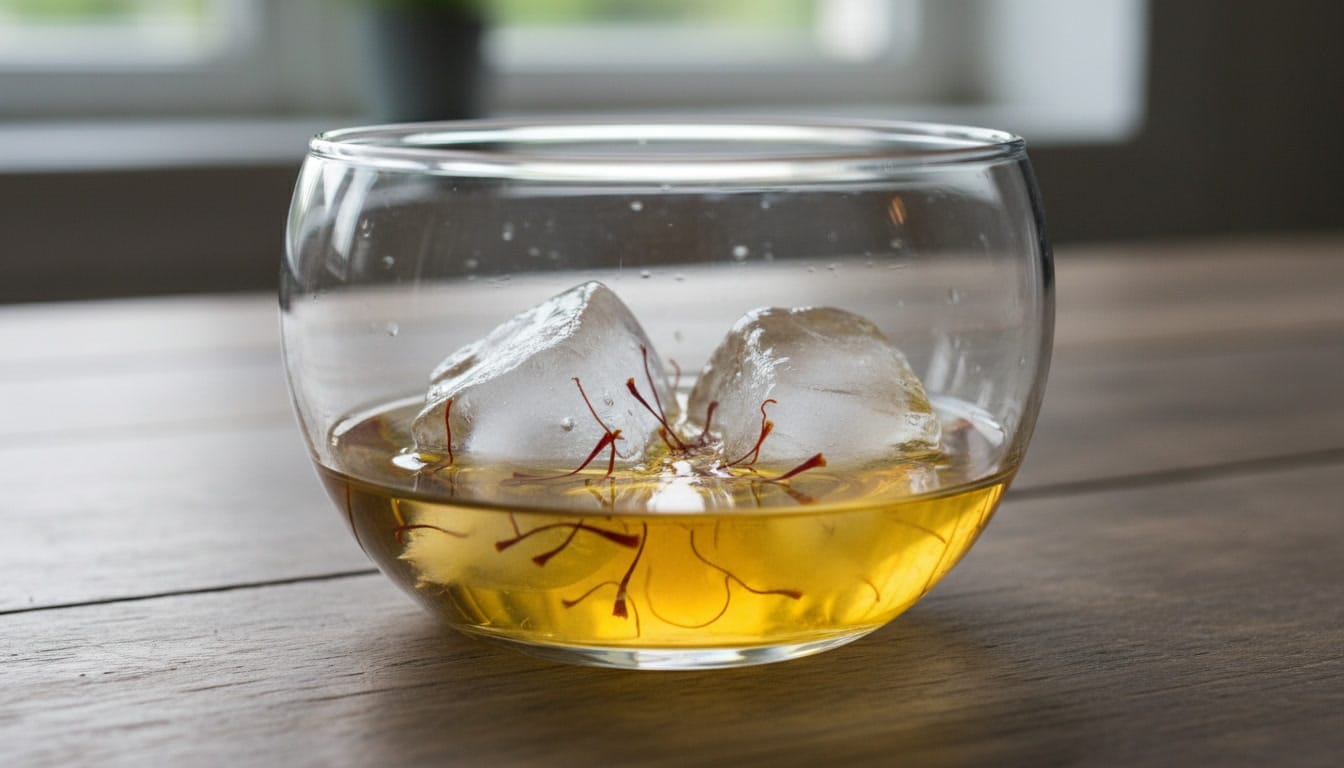
There is a simple method, passed down in many families, that brings out far more colour and aroma from saffron than the usual “mix with hot water” technique.
You take 2/3 the amount of saffron your recipe calls for, place the threads in a small bowl, and add two ice cubes on top. As the ice melts slowly, the saffron releases its colour and fragrance gently, without any heat damaging its delicate compounds.
The result is deeper in colour, richer in taste, and noticeably more aromatic, and you use less saffron to achieve more.
Most people assume saffron must be steeped in hot water, but ice extraction works better. The slow melt pulls out the crocin and safranal in a cleaner, more controlled way, making this a very efficient way to honour a precious ingredient.
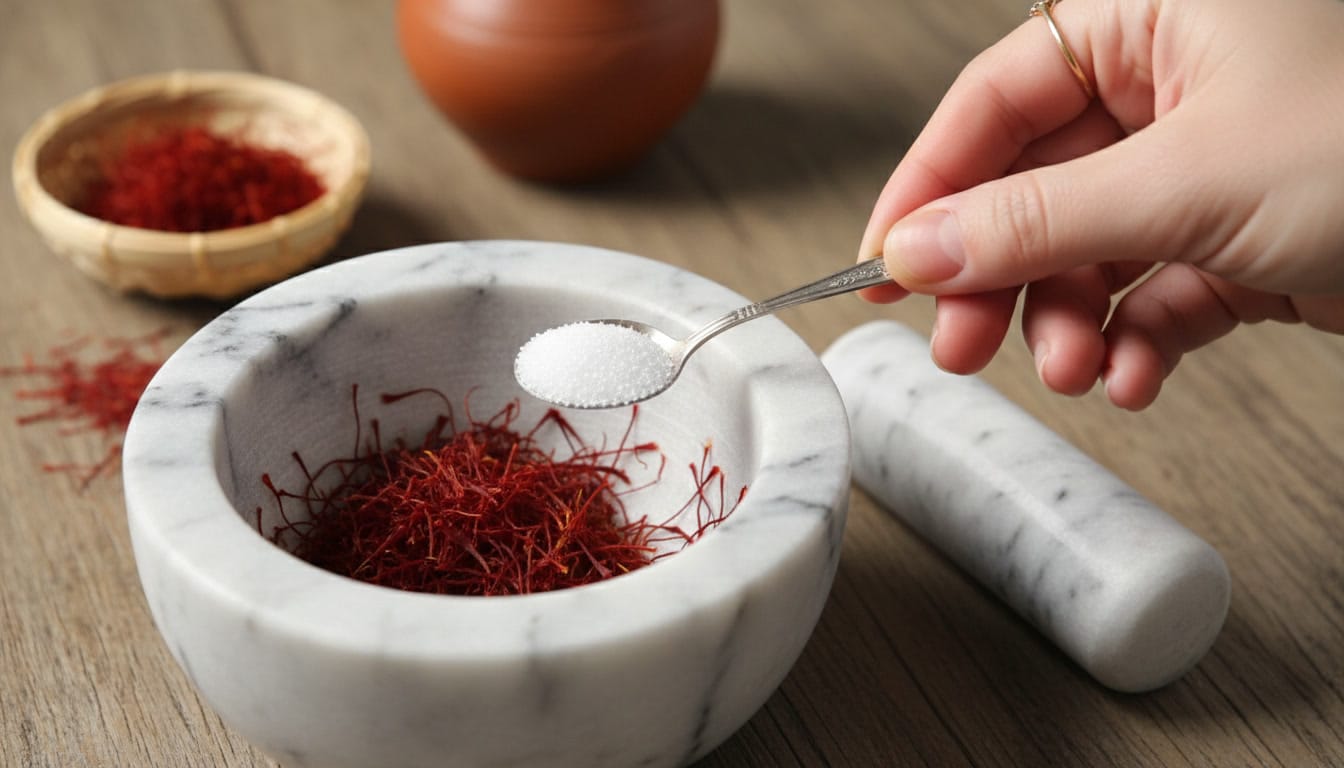
Another helpful trick for grinding saffron in humid climates: In humid cities, saffron threads often become slightly soft and difficult to grind. A simple traditional solution is to add a small pinch of sugar to the threads before grinding.
FAQ
These questions come up often for anyone trying to understand real vs fake saffron, how to test saffron at home, and what true saffron should look and smell like.
Is safflower the same as saffron?
No. Safflower petals look reddish but have no saffron aroma or colouring strength.
Can turmeric be sold as saffron?
Yes, often in powdered form. Turmeric is bright yellow and inexpensive.
Why does my saffron turn water yellow immediately?
It’s most likely dyed or mixed with artificial colour.
Is powdered saffron real?
It can be, but powder is the easiest form to adulterate. Thread form with the characteristic trumpet shape is safer.
Does real saffron expire?
After 2–3 years, its aroma and colouring power naturally fade. But keeping it cool and dry place helps prolong its quality.
Is it better to grind saffron in a marble or brass mortar?
Marble is usually the better choice for saffron. It has a naturally heavy, slightly textured surface that grips the threads and helps you grind them into a fine, even powder without creating heat. Marble also doesn’t react with saffron’s delicate compounds, so the aroma stays pure.
Brass mortars work, but the metal surface is smoother, which makes the threads slip, and the friction can create mild warmth that may reduce saffron’s fragrance.
In short: marble gives a cleaner, finer, more aromatic result.
Final thoughts: choose your saffron with intention
Whether you’re baking lussekatter, flavouring pastries, or making slow-cooked dishes, the difference between real and fake saffron is noticeable. A few real threads can transform a dish; fake saffron gives nothing but colour.
Knowing how to recognise genuine saffron protects both your cooking and the traditions behind this extraordinary ingredient.
Real saffron is more than a spice, it is a craft, a history, and a heritage worth honouring.

If you enjoy this kind of content and want to read more pieces on heritage, craftsmanship, and meaningful traditions, you’re welcome to join our email list. Subscribers receive new posts first, along with occasional reflections and behind-the-scenes updates.


