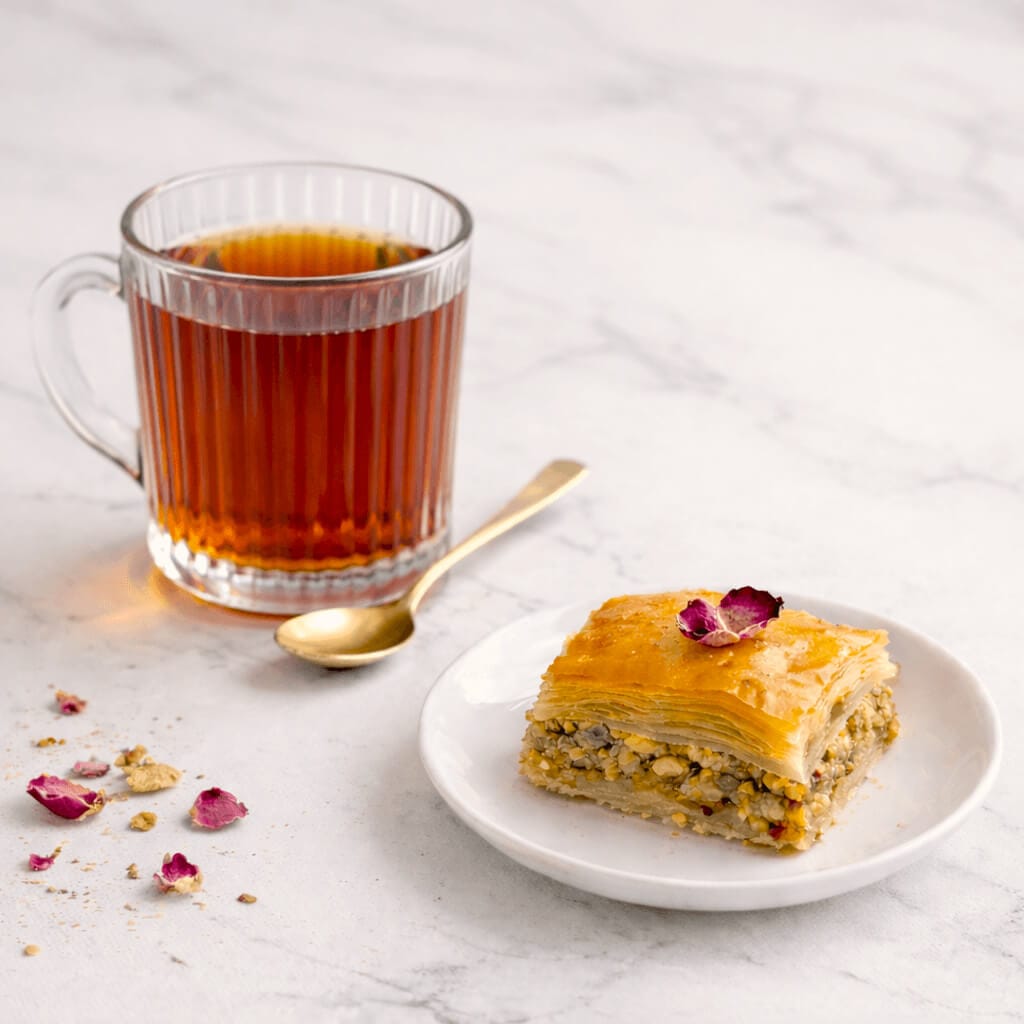

Baklava is one of those desserts most of us grew up with, usually soaked in sugar syrup and served on special occasions. It’s rich, sweet, and instantly recognisable. In many homes, it’s also the dessert people reach for during Ramadan, often in very small pieces.
This version uses honey instead of sugar syrup and a dash of rosewater for that cooling floral taste; a simpler, healthier baklava made with honey rather than refined sugar.
Honey has a long place in Islamic tradition and is mentioned in the Quran as a source of healing. It also works well in practice. Used carefully, it sweetens the baklava without overpowering the pastry, which makes it especially suitable for Ramadan, when heavy desserts can feel too much after fasting.
This is a familiar dessert, adjusted slightly so it fits how and when it is usually eaten.
Quick links
What you will need to make honey baklava
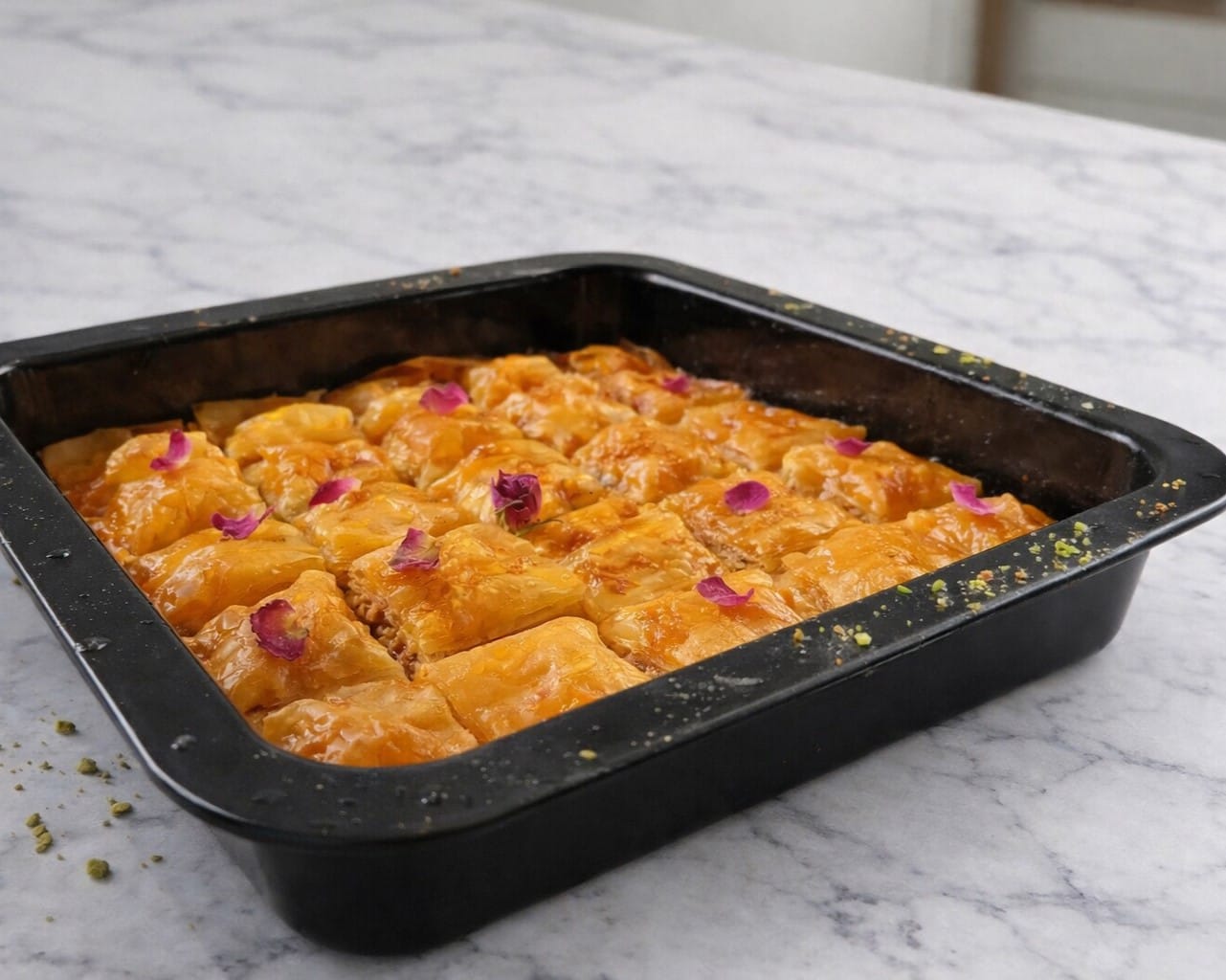
The baklava shown is baked in a small square tray, approximately 25 × 25 cm (10 × 10 inches), yielding about 25 small pieces.
(EU + US measurements)
- Phyllo dough: 12–16 sheets
(depending on sheet size and how crisp you like the layers) - Butter, melted: 75 g / 5½ tbsp
- Almonds and pistachios (or any other preferred nuts such as walnuts or cashew nuts), finely chopped: approx. 120–150 g / 1 to 1¼ cups total
- Cinnamon or cardamom: a small pinch
- Good-quality liquid honey: approx. 120 ml / ½ cup
(Use less for a lighter sweetness. If the honey is too thick, add a little water and warm gently, do not boil.) - Rosewater: approx. 1–3 tsp (optional)
You don’t need large amounts of honey. This version works best when the sweetness stays measured and the nut filling remains balanced.
Baklava is a flexible dessert. The exact amount of phyllo, nuts, butter, and honey depends on how thin you prefer the layers and how rich you like the filling. Adjust the layers and sweetness to suit your taste. This recipe is meant as a guide rather than a fixed formula.
How to make honey baklava
- Preheat the oven to 175°C / 350°F, using top and bottom heat (no fan).
- Lightly butter a baking dish.
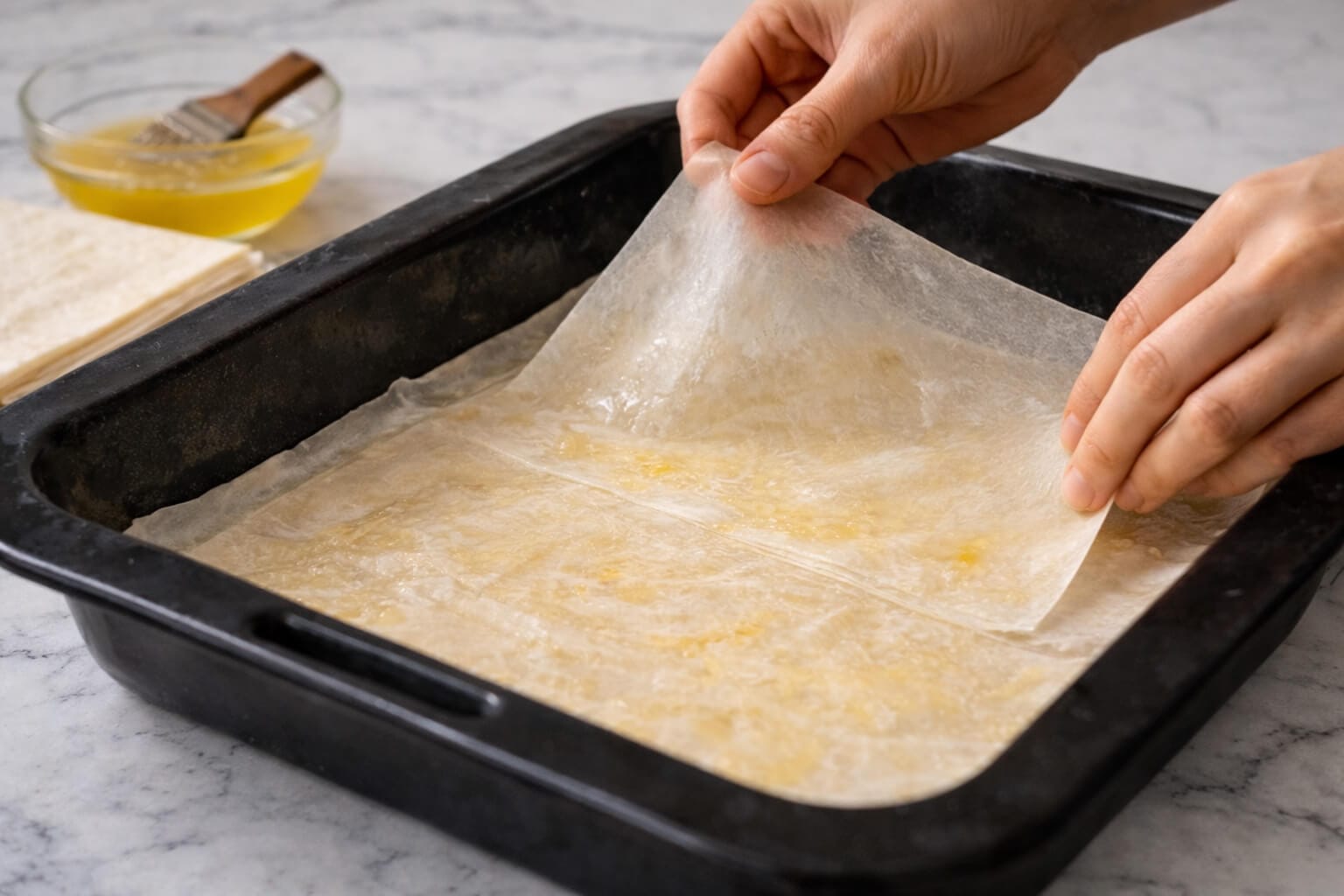
- Layer 5–6 sheets of phyllo on the bottom, brushing each layer lightly with butter before adding the next sheet.
Thaw the phyllo dough according to manufacturer's directions. Keep sheets covered while working, as they dry quickly. Any unused phyllo can be wrapped tightly and frozen again.
- Add a layer of chopped nuts mixed with cinnamon (if using).
- Top with 8-9 more sheets of phyllo, again brushing lightly with butter between each sheet. Finish with a few extra sheets on top for a crisp, golden surface.
- Cut the baklava into squares or diamonds before baking.
- Place the baking dish in the middle position. Bake until golden and crisp.
- Warm the honey gently until it loosens. Do not boil.
- Pour the honey-rosewater mix evenly over the hot baklava.
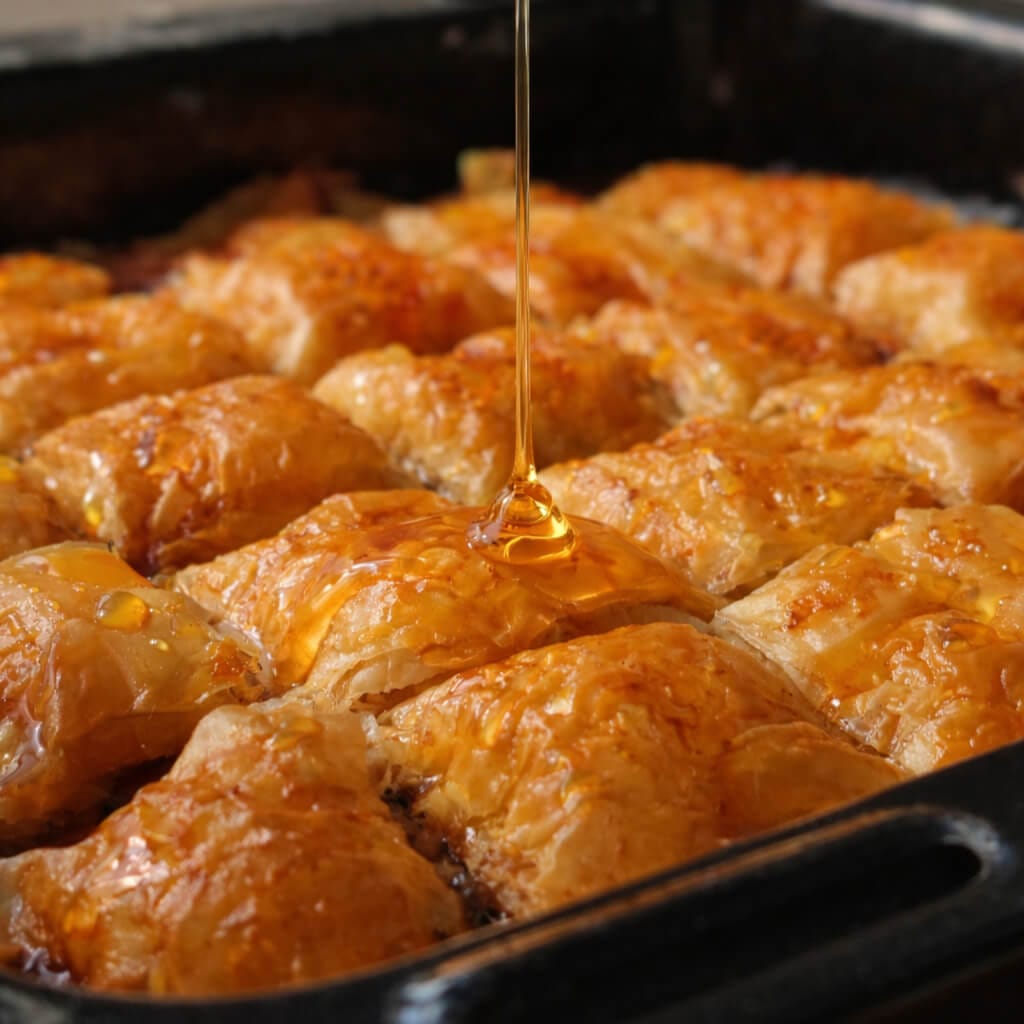
- Let it rest before serving so the honey can absorb properly.
- Decorate using dried rose petals for a gentle visual and flavour accent.
Using the right honey
Honey has been used for centuries as both a natural sweetener and a healing food. For this recipe, raw or organic honey without added glucose syrup works best. If possible, locally sourced honey tends to have a rounder flavour.
Honey adds depth rather than sharp sweetness. It allows the flavours of nuts and butter to come forward instead of being drowned in sugar.
Honey is specifically mentioned in the Quran in Surat an-Nahl, where a drink produced by bees is described as containing healing for people (16:69). In prophetic medicine, honey is frequently recommended, and modern research has shown that raw honey has antibacterial properties and can support things like soothing coughs and wound healing when used appropriately.

If you’d like to read more about the role of honey in Islam and health, we explore this in more detail in our guide to health and Islam.
Why this works well for Ramadan
After fasting, very sweet desserts can feel heavy quickly, even in small portions. Using honey instead of sugar syrup keeps the sweetness calmer and easier to enjoy.
The addition of rosewater plays a role here too. Especially in warmer climates, rosewater is known to have a cooling effect. It’s not only about flavour; it’s associated with balance, lightness, and relief after heat and fasting. This is why this honey-rose baklava feels particularly suited to Ramadan.
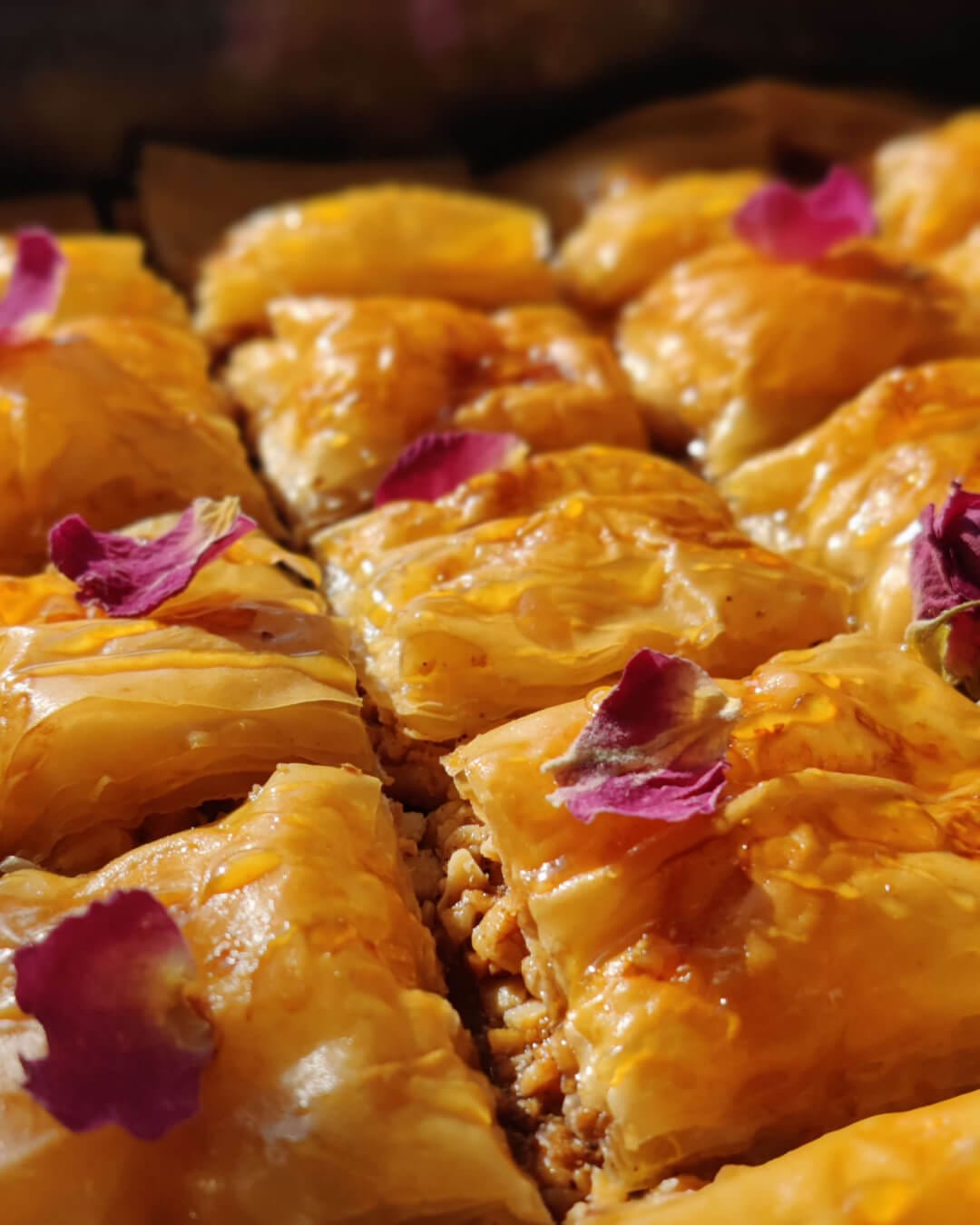
Practically, this version of baklava is easy to portion, familiar in flavour, and doesn’t overwhelm at the end of a meal. One piece feels enough, which is often exactly what you want after iftar
Serve simply, with tea on the side, and enjoy in small portions, maybe with a scoop of vanilla or saffron ice-cream.