
Why we choose simple DIY projects during Ramadan
At Deenista, we return to simple DIY projects because they align with the core discipline of Ramadan: restraint.
Ramadan is a time for intentionality. Creating an object by hand, especially with children, gently shifts the focus from consumption to production. It becomes an exercise in using time and attention rather than simply buying more.
Working with concrete requires a specific pace. You mix, you pour, and you wait. For a child, this process becomes a lesson in patience (Sabr) and in the physical reality of making. The resulting candleholder is not just decoration. It is a functional object for the home, shaped through shared effort.
DIY project overview
| Project detail | Description |
|---|---|
| Difficulty | Easy, beginner-friendly |
| Time | ~15 mins active time (plus curing) |
| Material | Fine decorative concrete |
| Style | Minimalist, geometric |
| Occasion | Ramadan & everyday use |
What you need for this concrete candleholder DIY
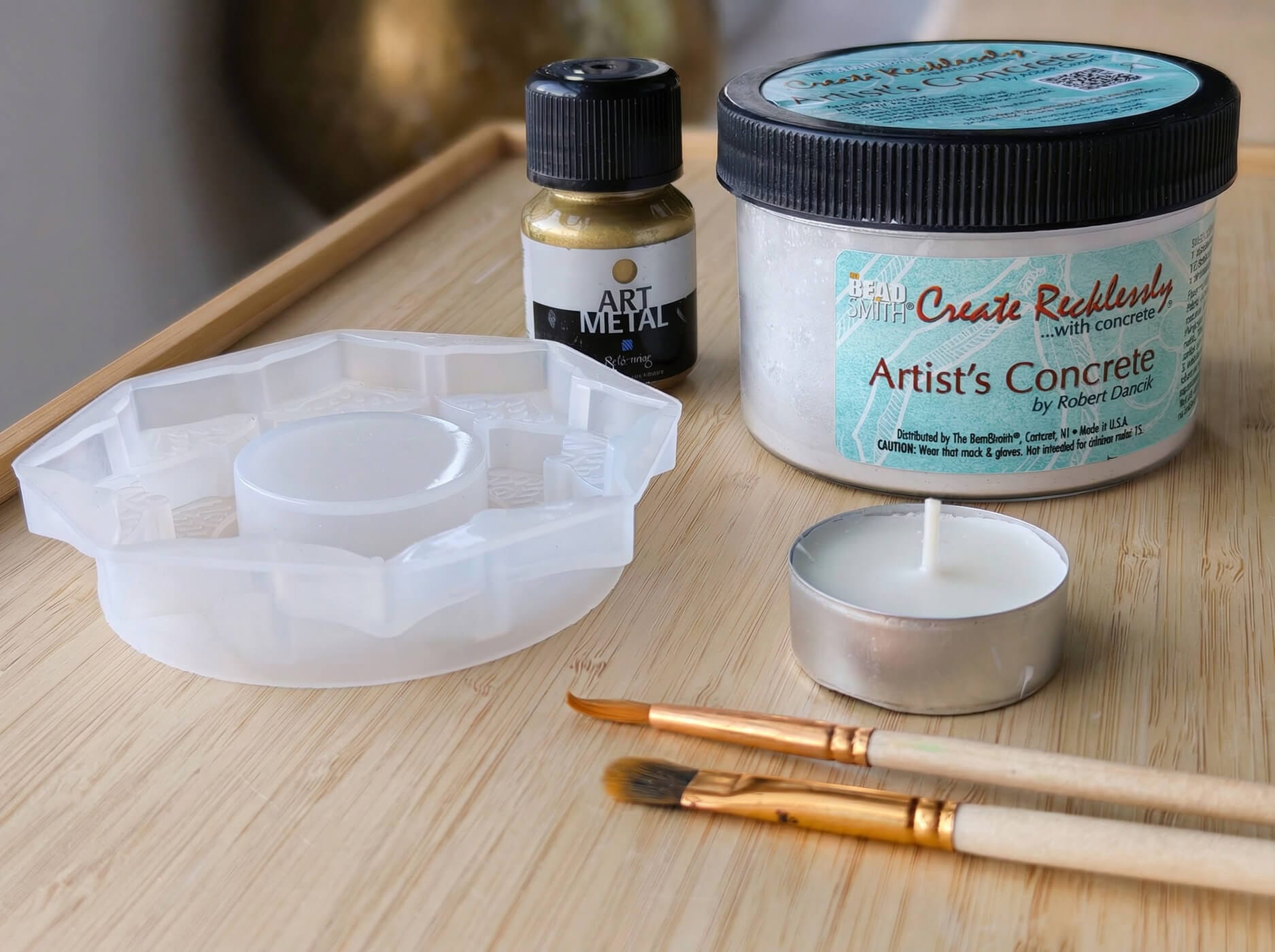
This project uses a fine decorative concrete suitable for indoor crafts. Many craft or hobby stores offer concrete powder designed for small decorative objects and detailed molds.
Materials
- Fine decorative concrete powder
- Cool tap water
- Silicone mold with a geometric or Islamic-inspired shape
- Tealight candle
- Disposable cup for mixing
- Spoon for measuring
- Optional: gold acrylic paint and a fine brush for decorative details
How to make a concrete candleholder at home
Step 1: Mix the concrete
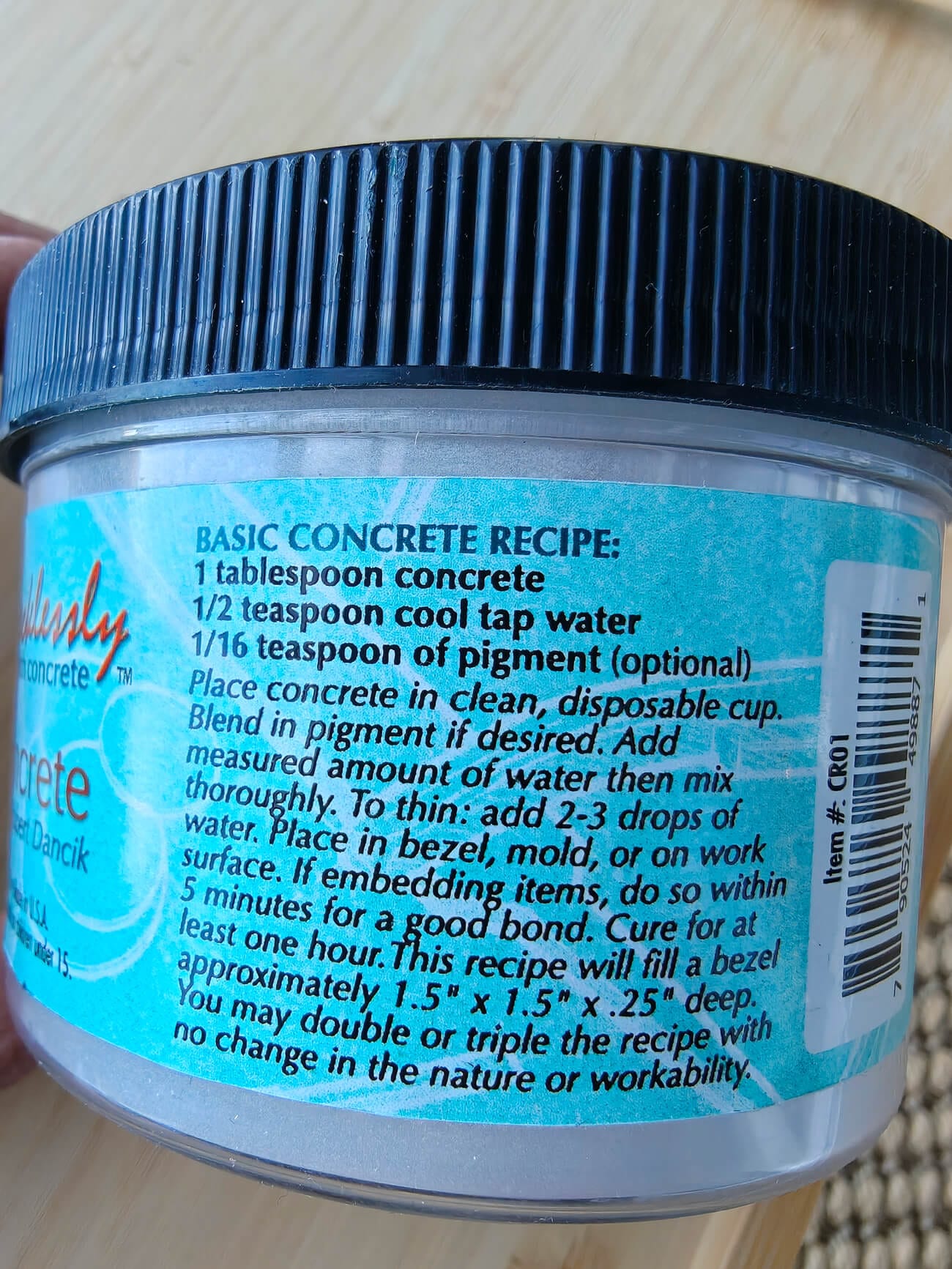
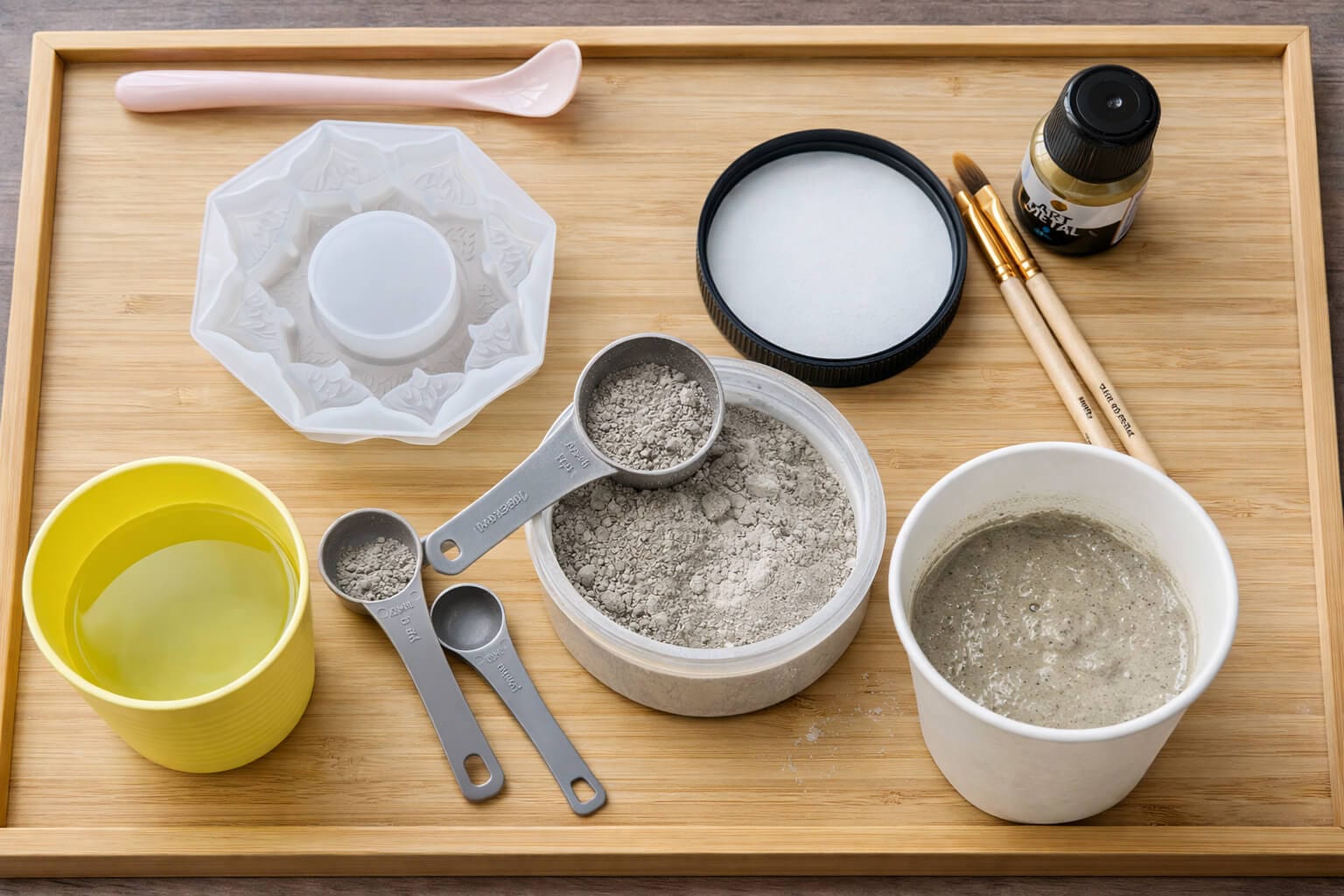
We used a fine decorative concrete mix (cement-based), blended with water according to the instructions on the package. You may add a small amount of extra water if needed to achieve a smoother consistency that flows more easily into detailed areas of the mold.
Mix slowly until the texture feels even and smooth.
Step 2: Pour into the mold
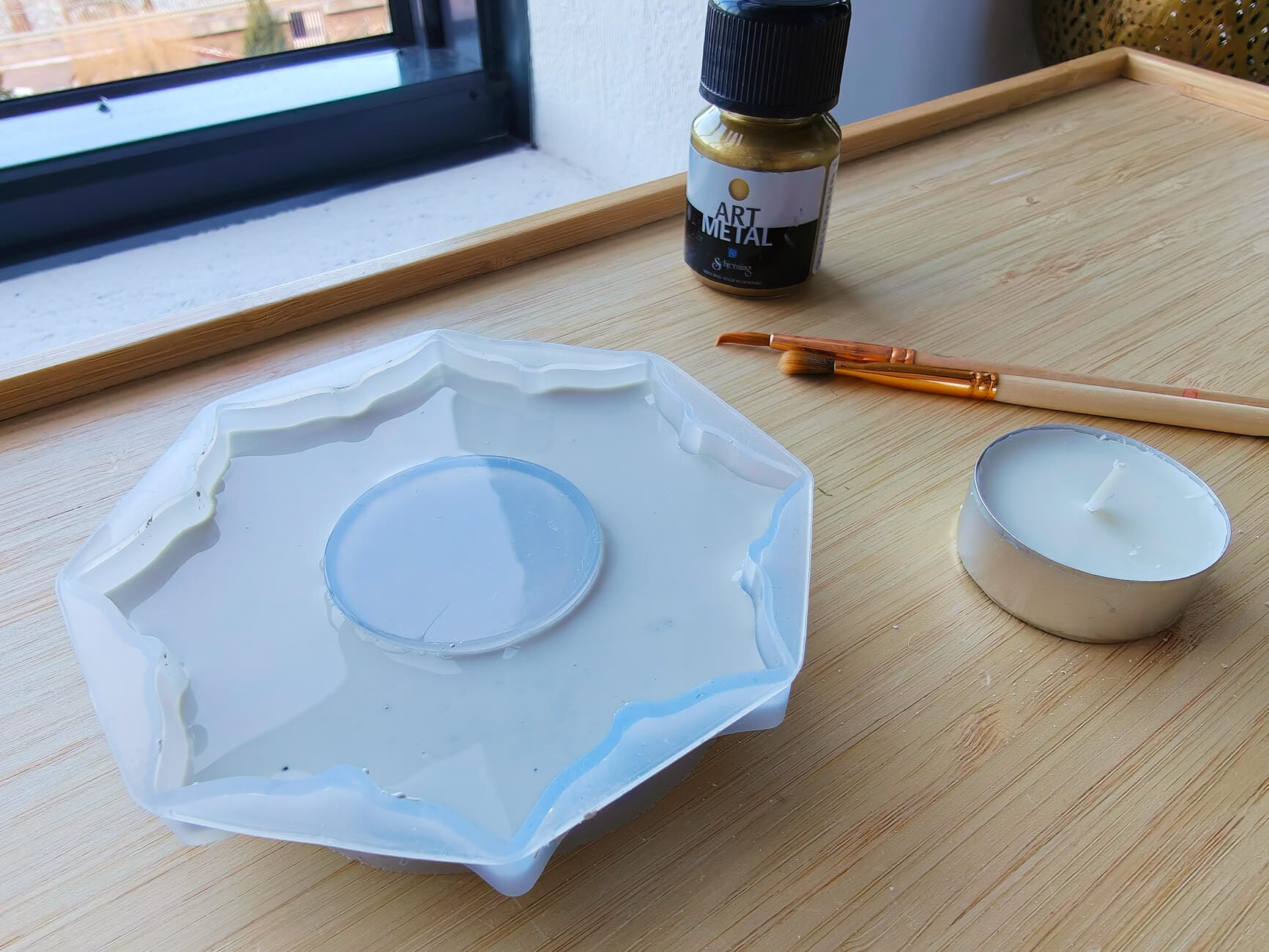
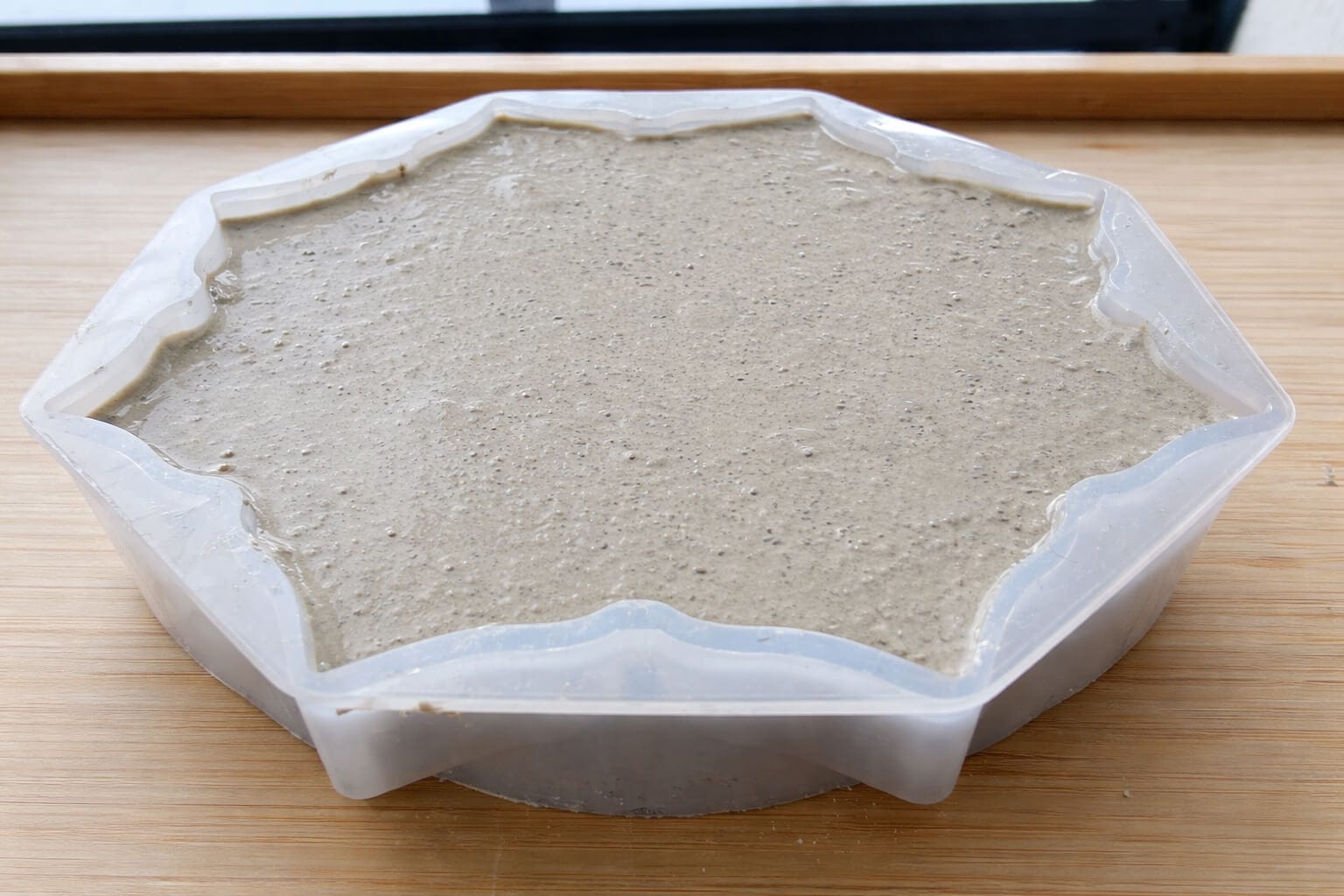
Geometric silicone mold filled with wet concrete for a handmade candleholder DIY
Carefully pour the concrete into your silicone mold, working slowly to avoid trapping air.
Make sure that you fill the silicone mold all the way to the top so that the round circle in the middle is also covered (see the pictures for reference).
Once filled, gently tap the mold using your fingers. This helps release air bubbles and results in a cleaner surface. This step was one of the most enjoyable parts for my child.
Step 3: Let it cure
Allow the concrete to cure according to the instructions on the package. Most decorative concrete mixes set fairly quickly, but allow enough time for the piece to hold its shape properly before removing it from the mold.
Step 4: Remove from the mold
Once fully cured, gently remove the candleholder from the mold. At this stage, the raw concrete finish already feels complete and calm.
Step 5: Optional decorative painting
For added detail, you can paint selected areas using gold paint. I chose gold to highlight parts of the geometric pattern and add warmth.
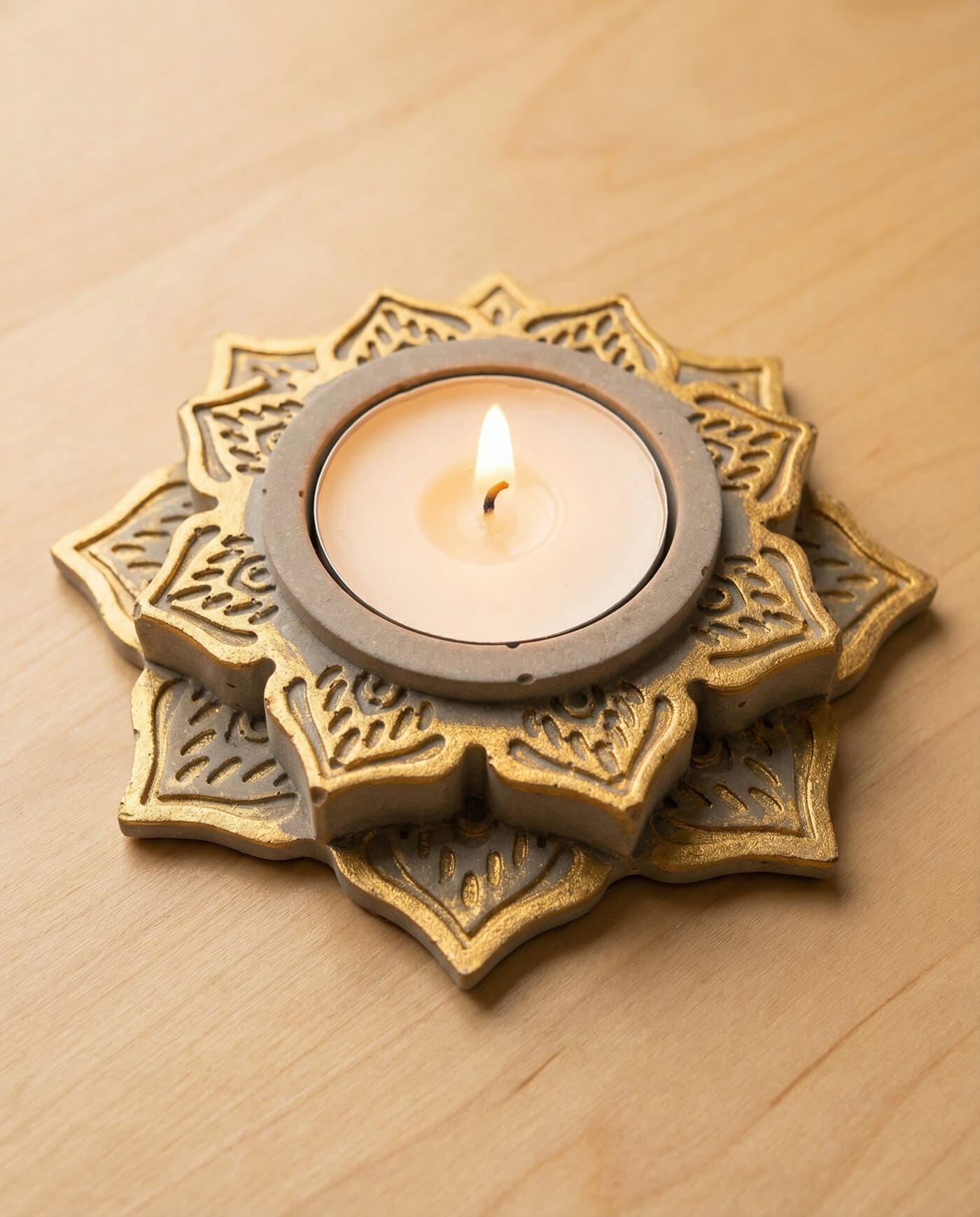
This step is optional. The candleholder is beautiful both painted and unpainted. Each version creates a different look and atmosphere.
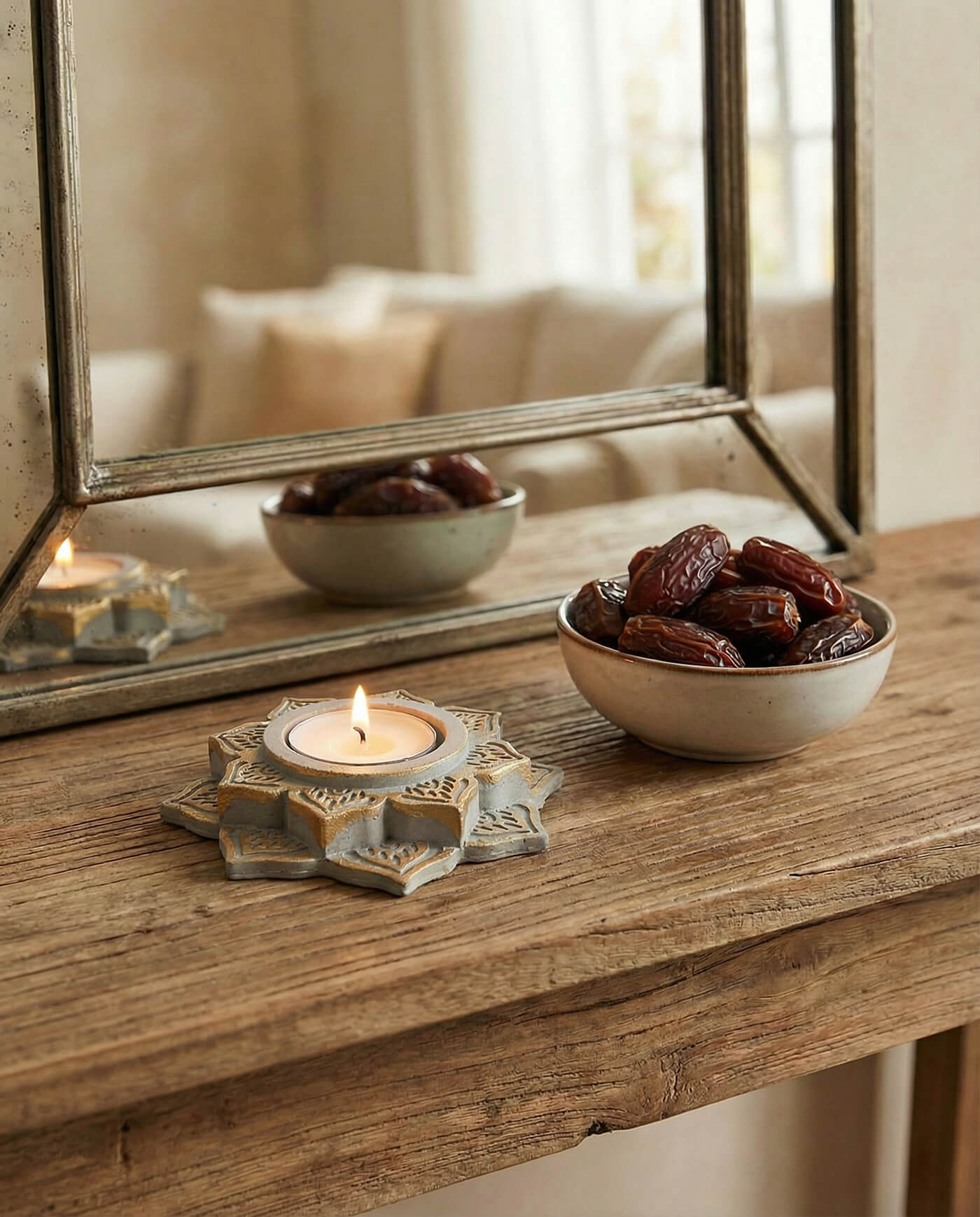
A minimal Ramadan look, inspired by Scandinavian calm
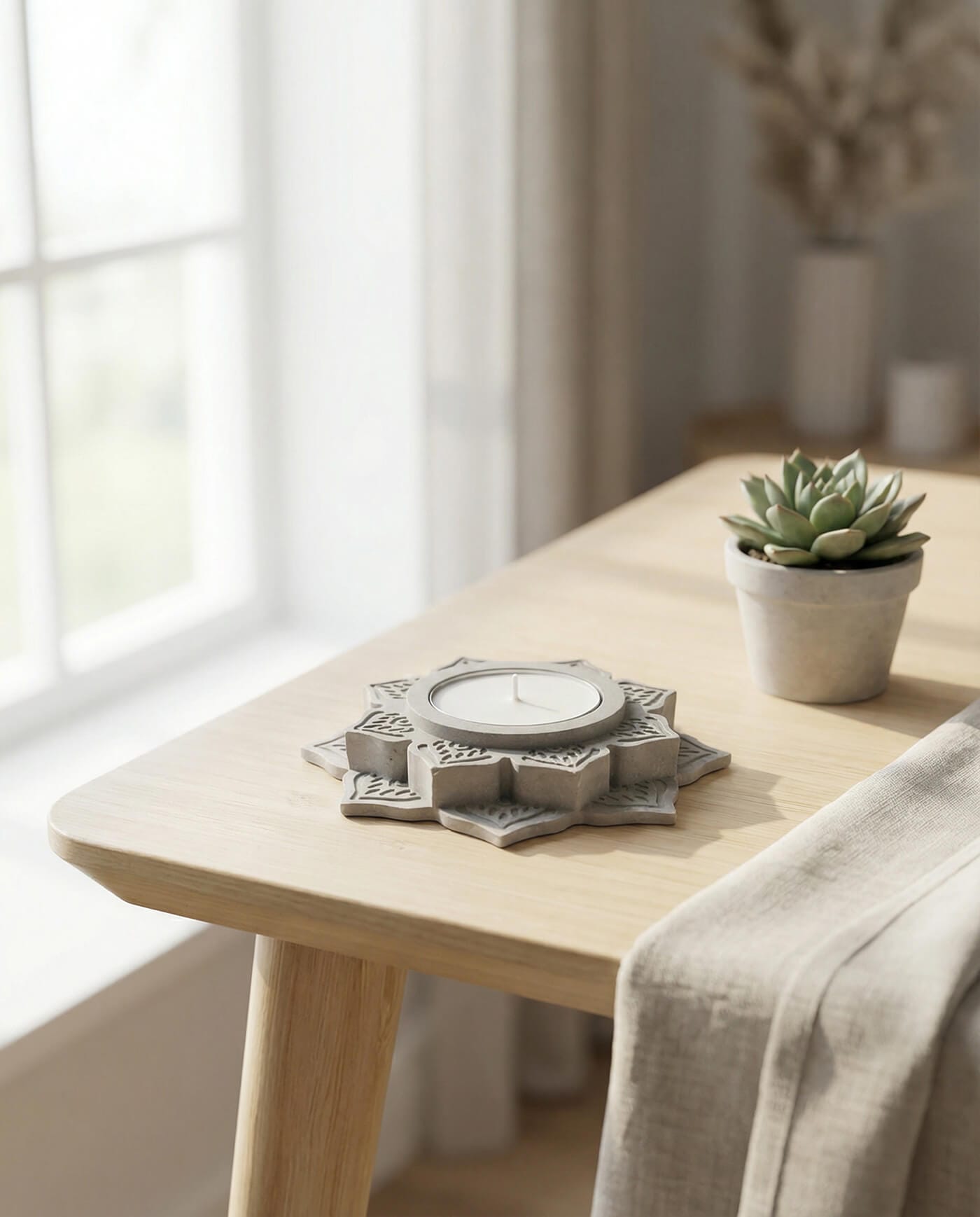
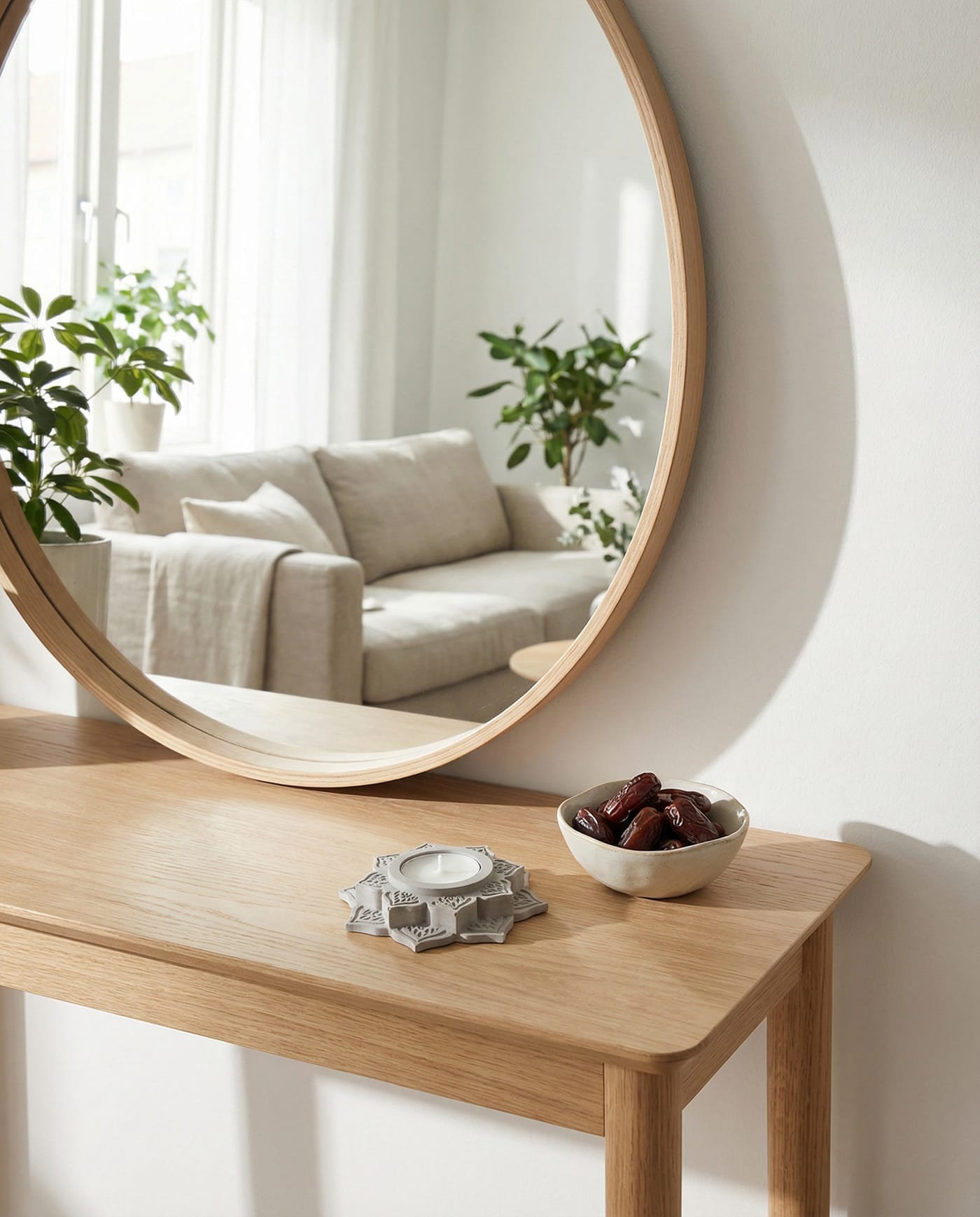
Minimal Ramadan decor with a concrete candleholder
At Deenista, we often choose to stop before adding more.
For this candleholder, we intentionally kept the styling minimal. Natural wood, soft daylight, and a single object placed with care.
This approach reflects both a Scandinavian design sensibility and the rhythm of Ramadan. Less visual noise. Fewer objects. More space for presence. The concrete’s raw surface and geometric form stand on their own, without decoration or excess.
The same piece can feel ceremonial or everyday, depending on how it is placed. That flexibility is what we value most.
Below, the candleholder styled in a minimal, Scandinavian-inspired home setting.
Light, reflection, and the meaning of noor in Islam
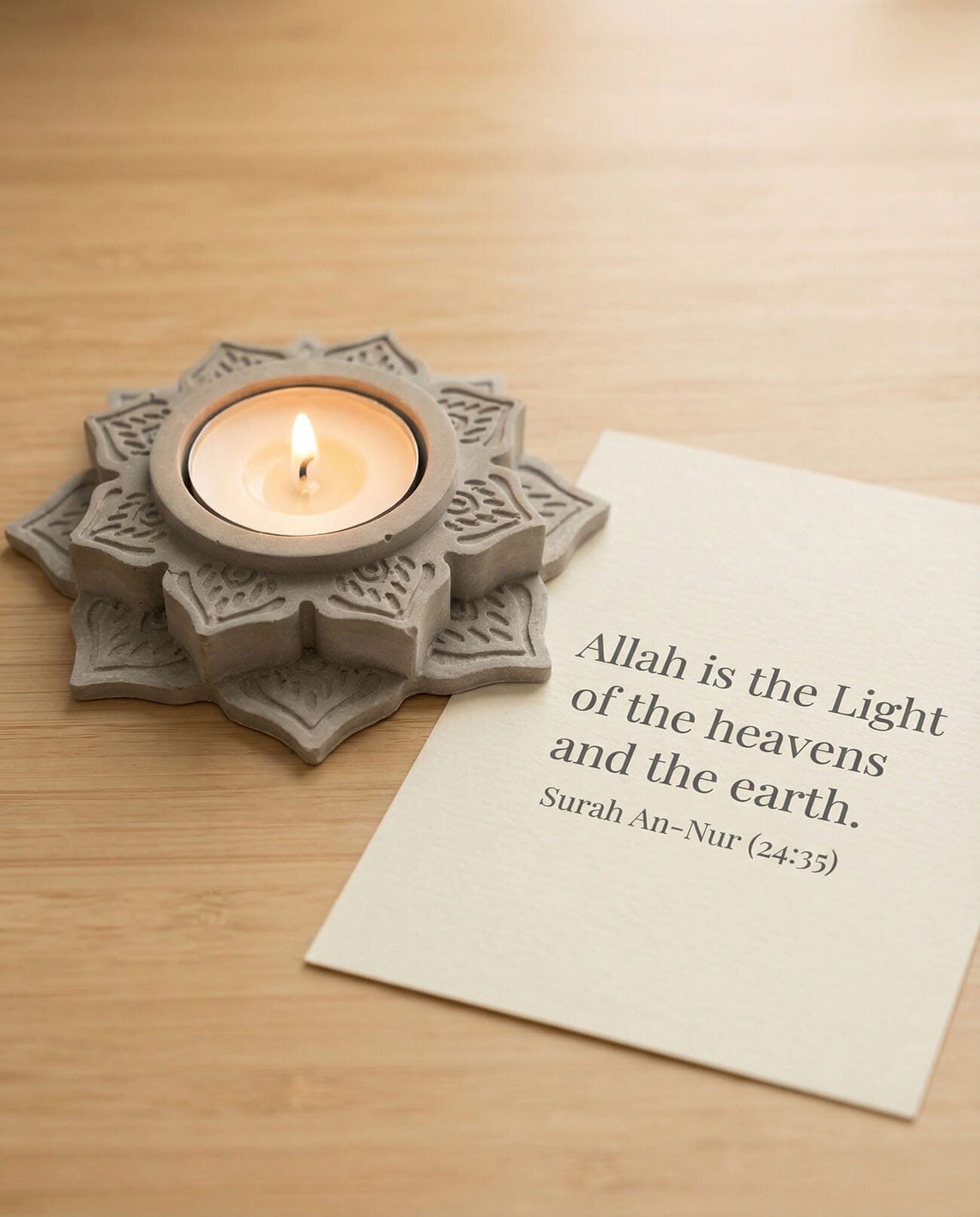
Light holds deep symbolic meaning in Islam. The word noor (nūr) means light, but it also represents guidance, clarity, and divine presence.
One of the most well-known Qur’anic verses reflects this symbolism:
Surah An-Nur (24:35), Ayat an-Nur
Arabic:
اللَّهُ نُورُ السَّمَاوَاتِ وَالْأَرْضِ ۚ مَثَلُ نُورِهِ كَمِشْكَاةٍ فِيهَا مِصْبَاحٌ ۖ الْمِصْبَاحُ فِي زُجَاجَةٍ ۖ الزُّجَاجَةُ كَأَنَّهَا كَوْكَبٌ دُرِّيٌّ يُوقَدُ مِنْ شَجَرَةٍ مُبَارَكَةٍ زَيْتُونَةٍ لَا شَرْقِيَّةٍ وَلَا غَرْبِيَّةٍ يَكَادُ زَيْتُهَا يُضِيءُ وَلَوْ لَمْ تَمْسَسْهُ نَارٌ ۚ نُورٌ عَلَىٰ نُورٍ ۗ يَهْدِي اللَّهُ لِنُورِهِ مَنْ يَشَاءُ ۚ وَيَضْرِبُ اللَّهُ الْأَمْثَالَ لِلنَّاسِ ۗ وَاللَّهُ بِكُلِّ شَيْءٍ عَلِيمٌ
English translation:
Allah is the Light of the heavens and the earth. The example of His light is like a niche within which is a lamp. The lamp is within glass, the glass as if it were a brilliant star, lit from a blessed olive tree, neither of the east nor of the west, whose oil would almost glow even if untouched by fire. Light upon light. Allah guides to His light whom He wills.
Placing a candle in the home during Ramadan can serve as a quiet reminder of this meaning, without excess or display.
A final note from Deenista
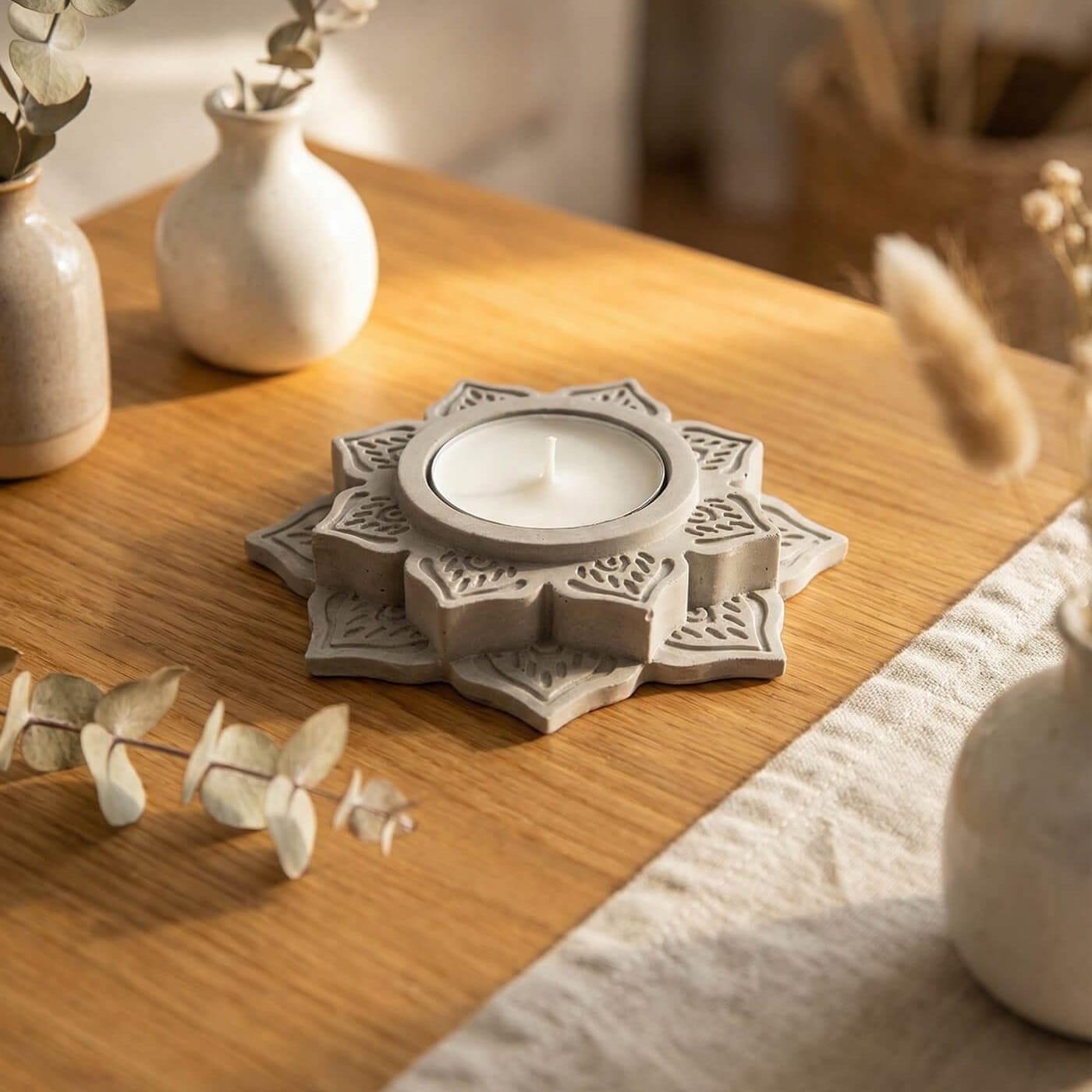
This DIY is not about perfection.
It is about presence. About creating something simple with care. About choosing meaning over accumulation.
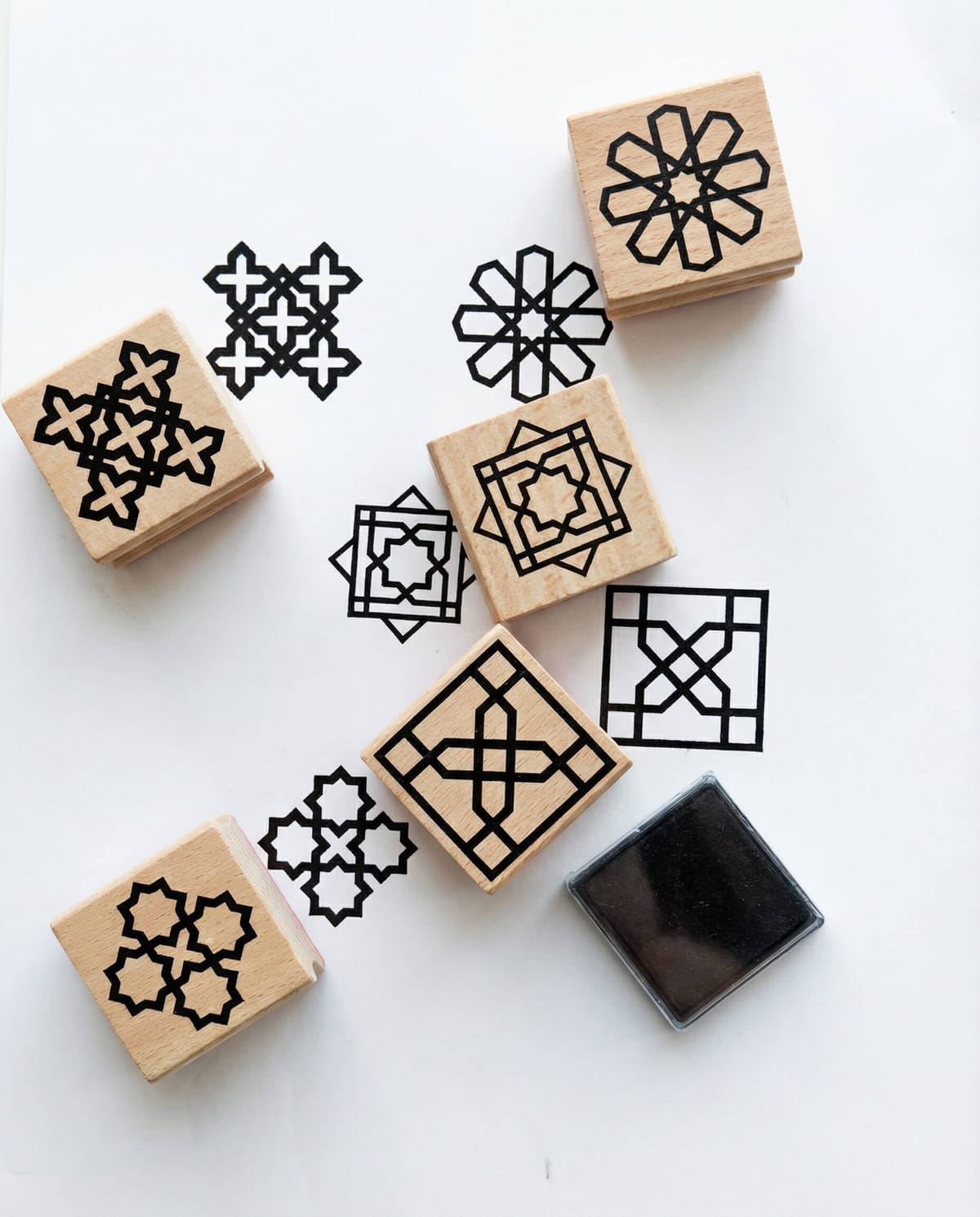
If you enjoy working with geometric forms, you may also like our DIY stamp set inspired by Islamic geometry. The same visual language appears across materials, from concrete to paper.
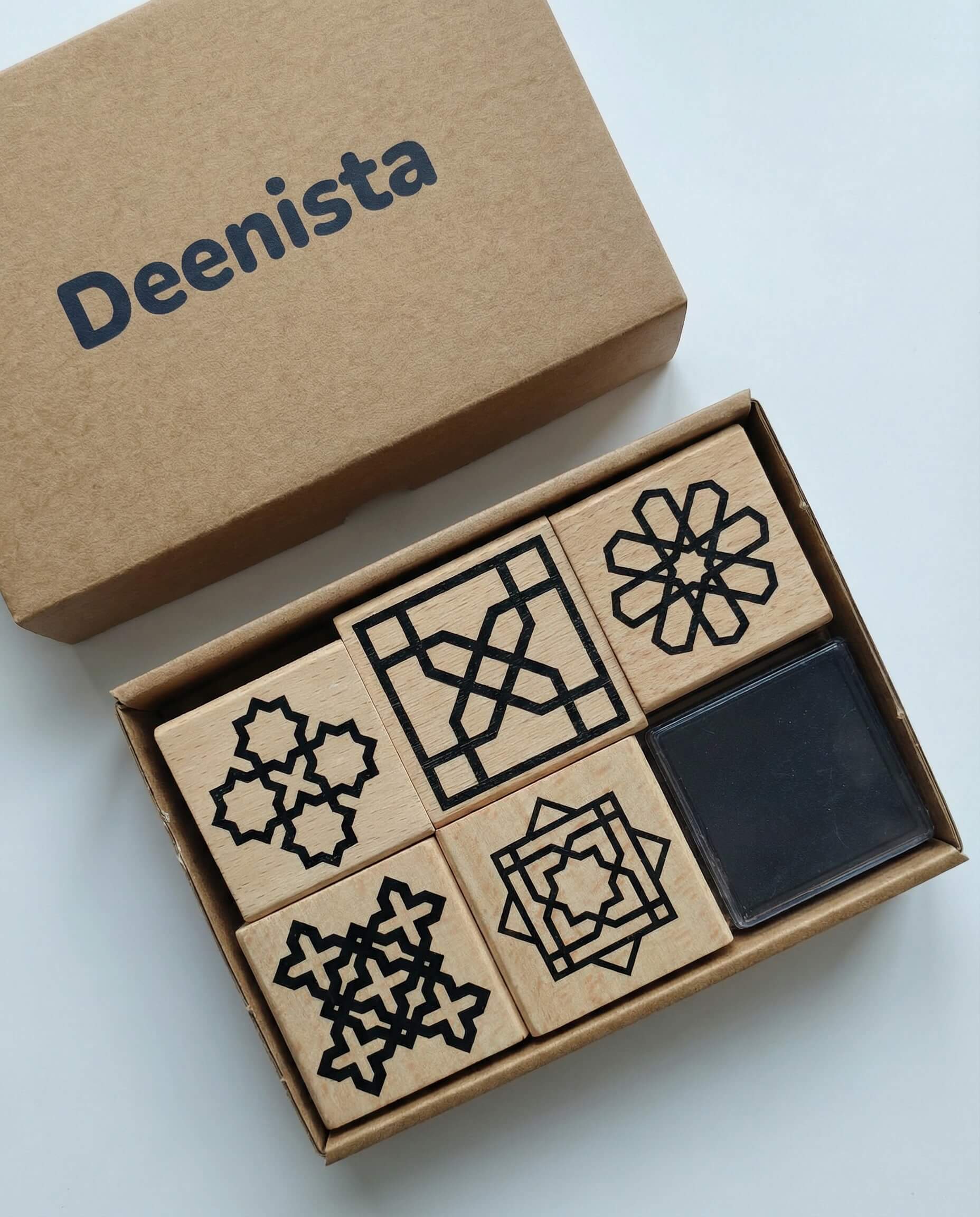
Islamic geometric pattern stamp set
With one set, you can create Islamic geometric artworks, decorate paper and journals, design Eid Mubarak cards, or add pattern to napkins, tissue paper, and disposable table covers for Ramadan gatherings. You can even create your own Ramadan Calendar!
You can explore the stamp set here and see how one geometric form can take many expressions.
 Neda A.