

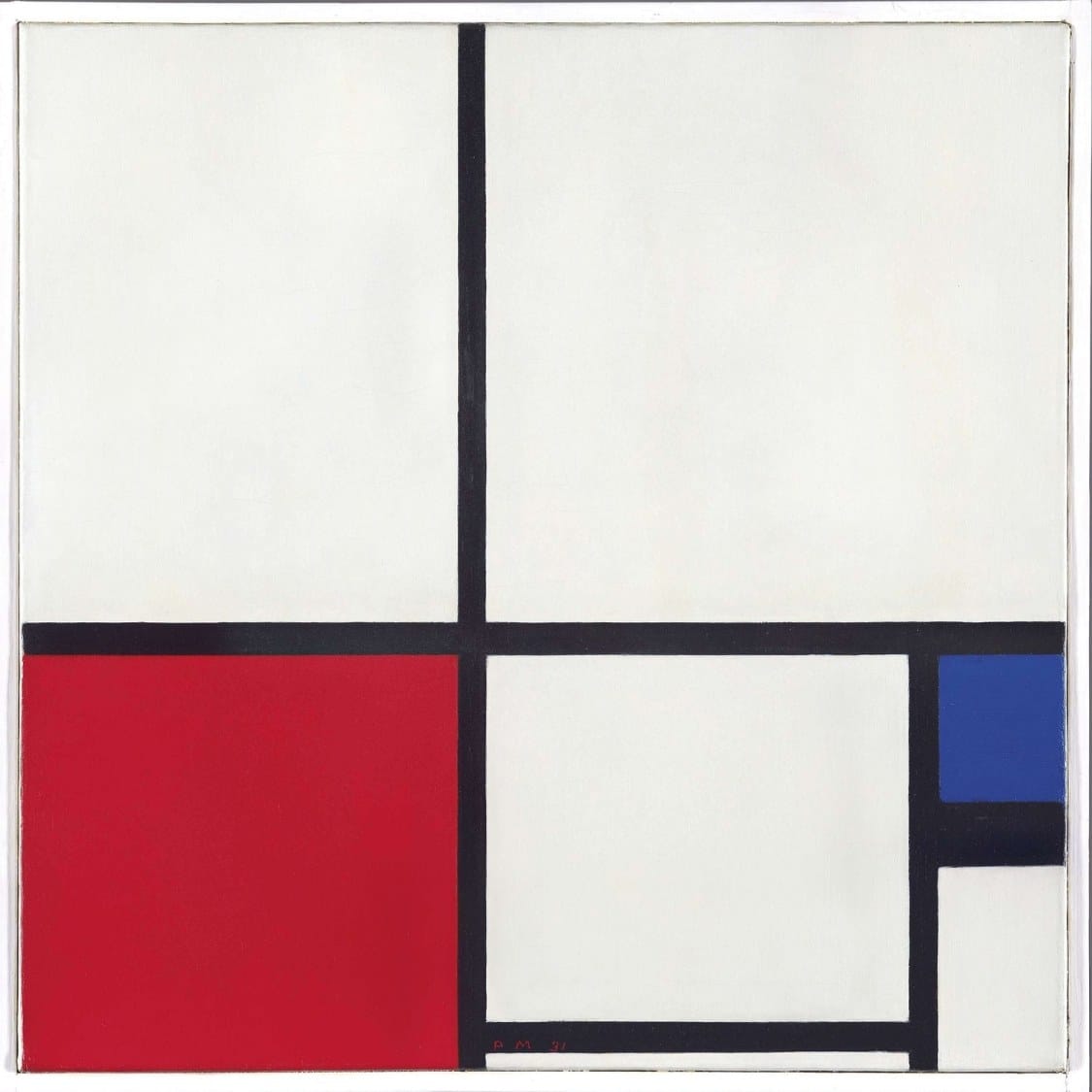
This project is a practical way to explore geometry, repetition, and colour using simple materials. It takes inspiration from Mondrian’s use of structure and primary colours, combined with the logic of Islamic geometric patterning.
The same technique can be used to create wall art, gift wrap, postcards, or Ramadan and Eid paper goods. One method, many outcomes.
What you’ll need for this geometric pattern DIY
- Acrylic paper, thick drawing paper, or light cardstock
- A geometric stamp (Islamic patterns or square-based motifs work best)
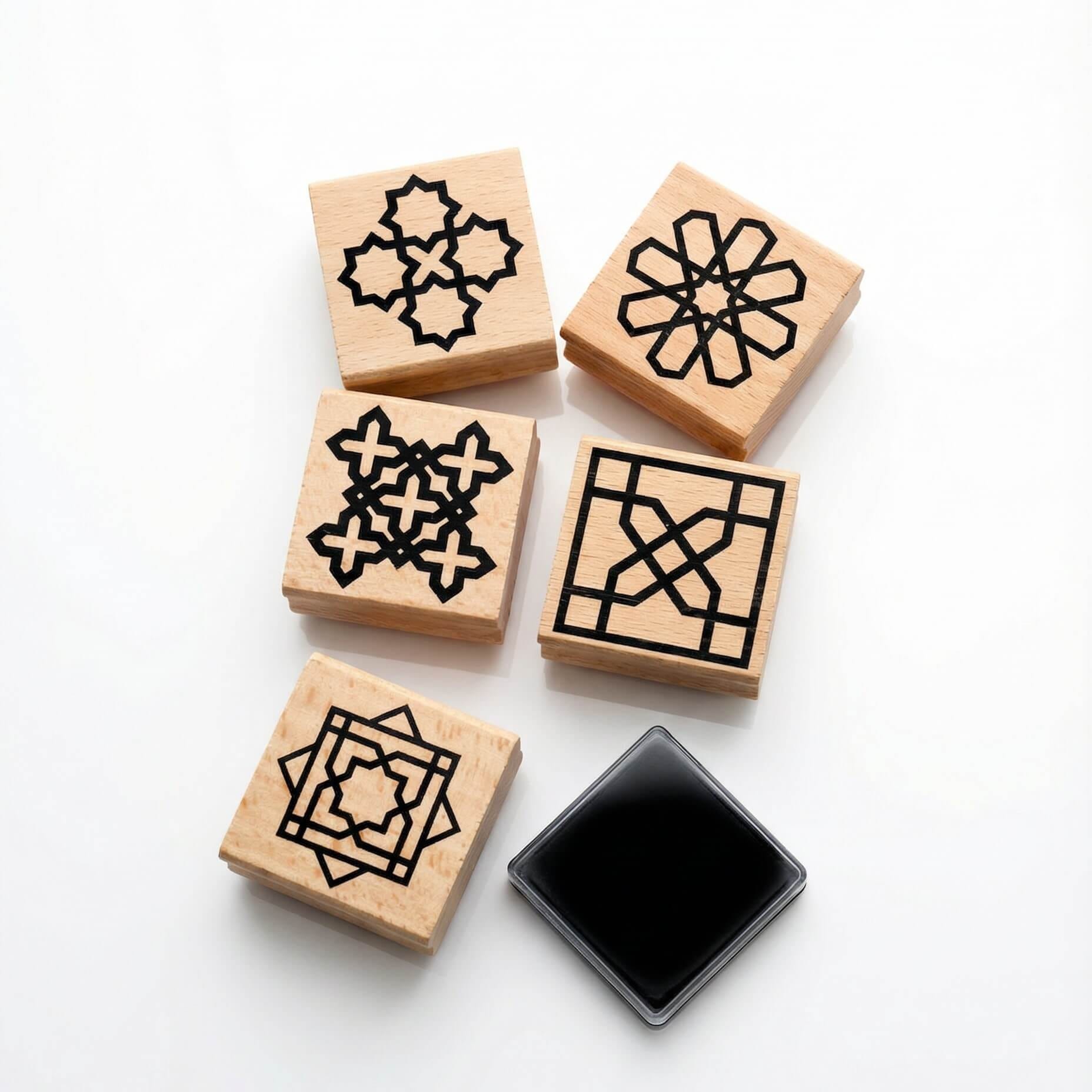
Islamic geometric pattern stamp set
This set of Islamic geometric pattern rubber stamps is designed to be used again and again, across seasons, occasions, and creative projects. Rather than serving a single purpose, the stamps invite reuse, from everyday art-making to Ramadan and Eid preparations.
- Black ink pad
- Acrylic paint or acrylic paint markers (red, blue, yellow, black)
- Ruler (optional)
- Masking tape
- Paper towel or scrap paper for testing
Step 1: stamping a repeating geometric grid
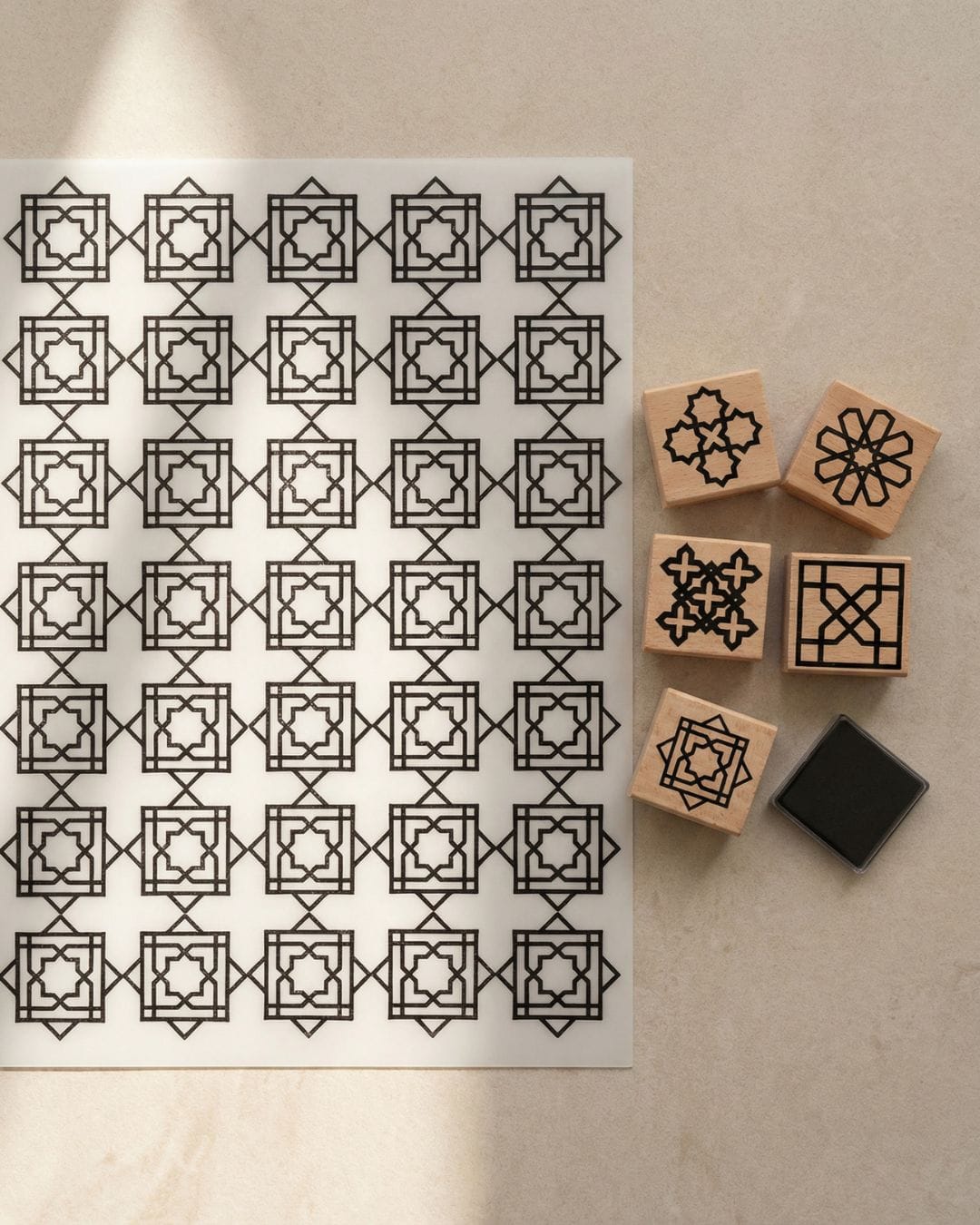
Begin by stamping your chosen geometric pattern repeatedly across the page. Work slowly from the top of the paper downward to avoid smudging the ink.
You can:
- Align the stamp edge-to-edge for a structured, grid-based composition
(use a ruler and light pencil marks if you want straighter lines) - Slightly rotate or offset the stamp for a looser, more organic rhythm
- Connect motifs so the geometry feels continuous rather than isolated
Keep the repetition consistent. The structure matters more than perfection.
Let the ink dry fully before moving on.
Step 2: choosing colours (Mondrian-inspired composition)
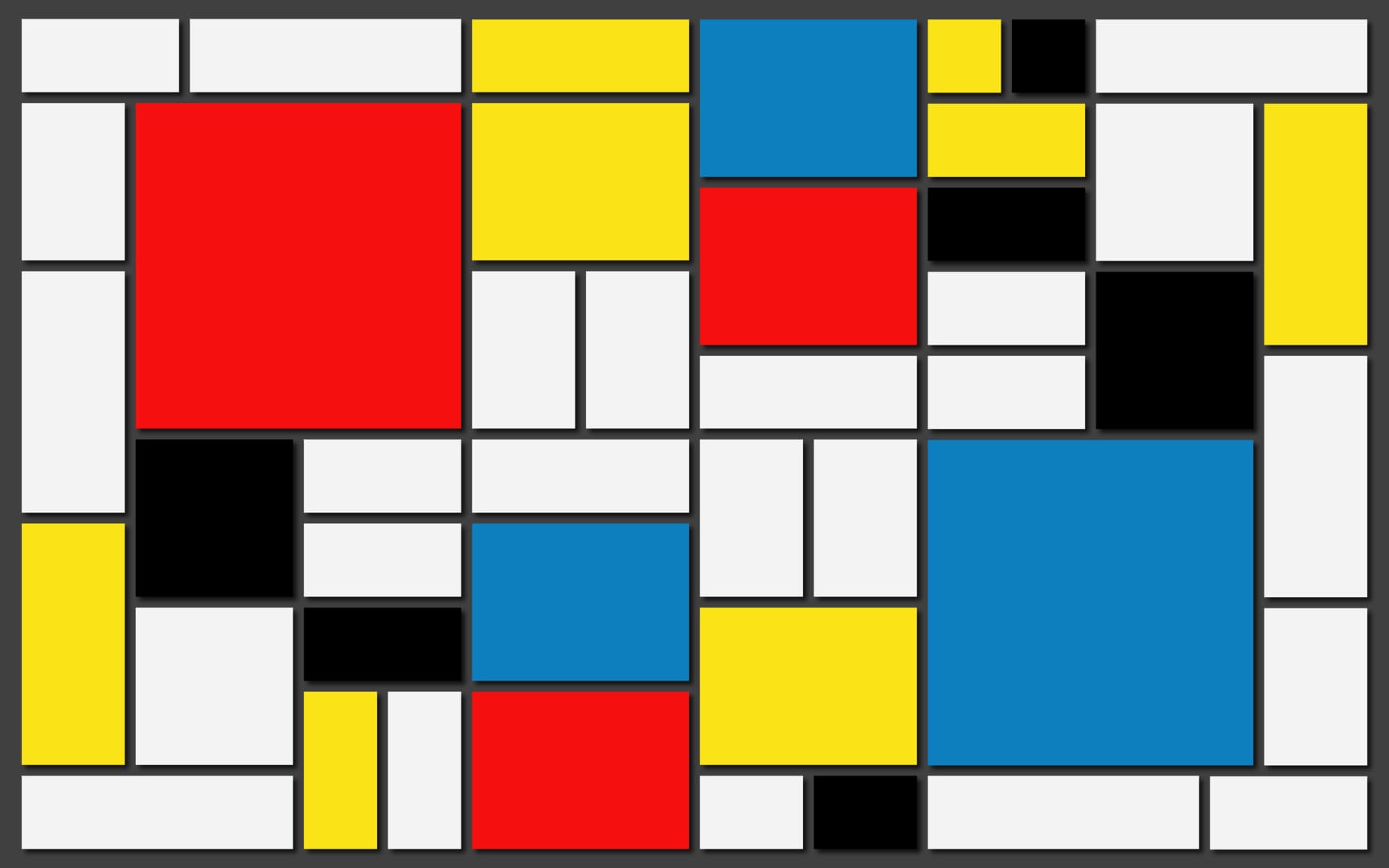
Before adding paint, pause.
Mondrian’s work is defined by restraint. Most areas remain white. Only selected shapes carry colour.
Choose a small number of areas to fill:
- Some central shapes
- A few intersecting forms
Avoid colouring every section.
The balance between filled and empty space is what gives the piece clarity and its Mondrian-like tension.
Step 3: filling geometric shapes with colour
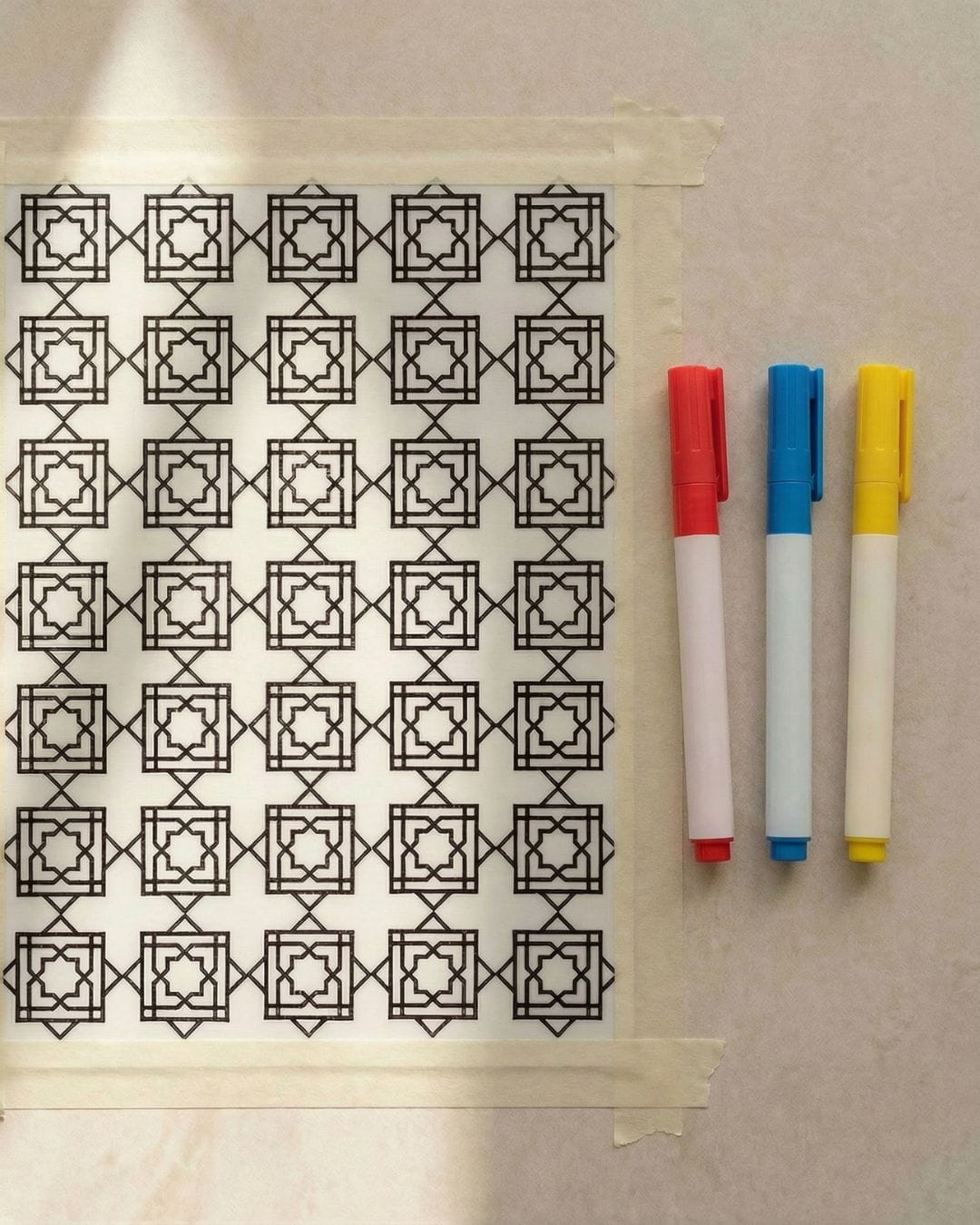
Use acrylic paint or acrylic markers to fill selected shapes with:
- Red
- Blue
- Yellow
You can also leave some shapes black or uncoloured.
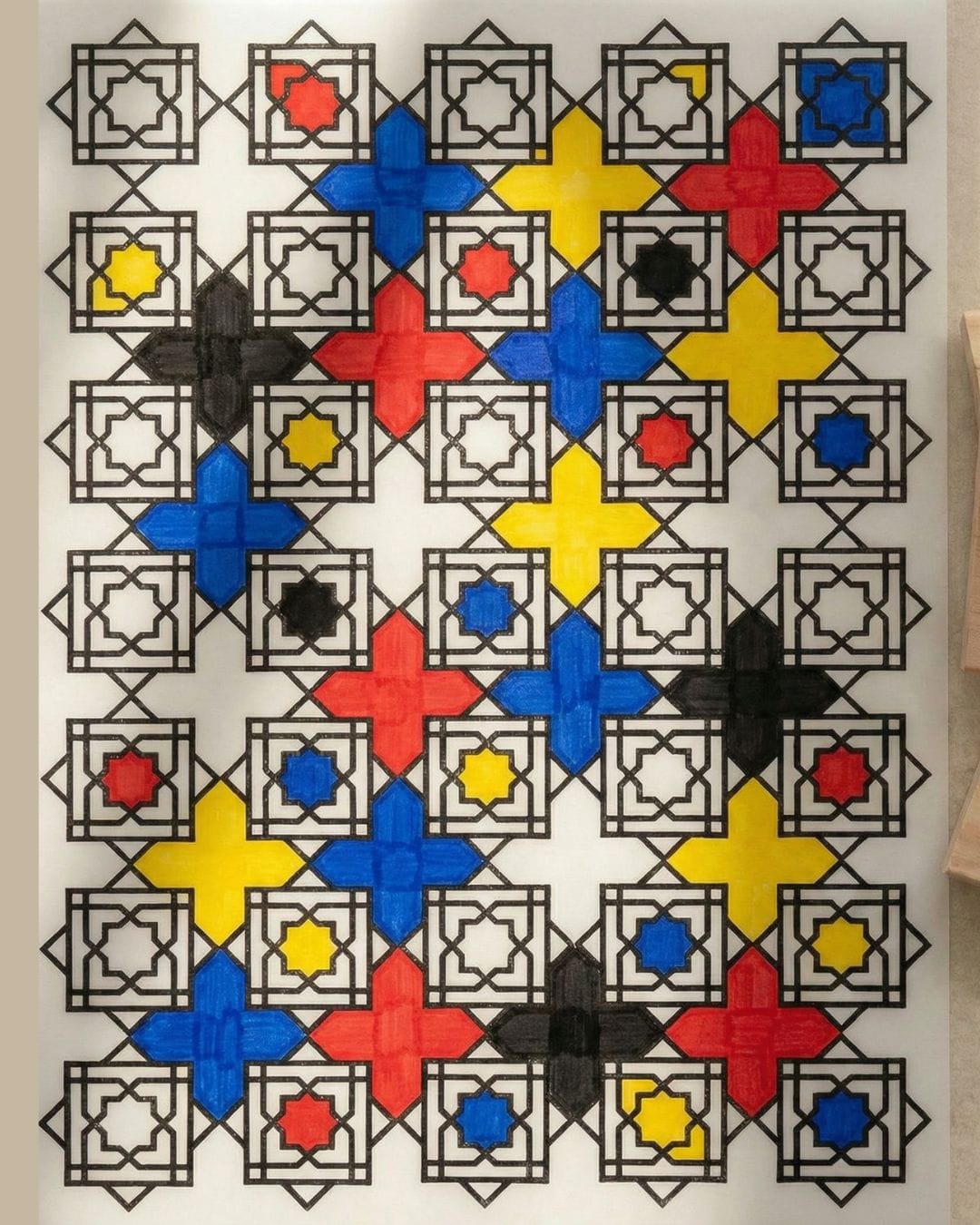
Do not outline or trace the shapes again. Let the stamped geometry remain visible and dominant. Brush strokes and marker texture are welcome — they add a handmade quality.
Allow the piece to dry flat.
Step 4: using your geometric pattern diy as wall art, gift wrap, or Eid paper goods
Once complete, decide how you want to use the artwork.
As wall art
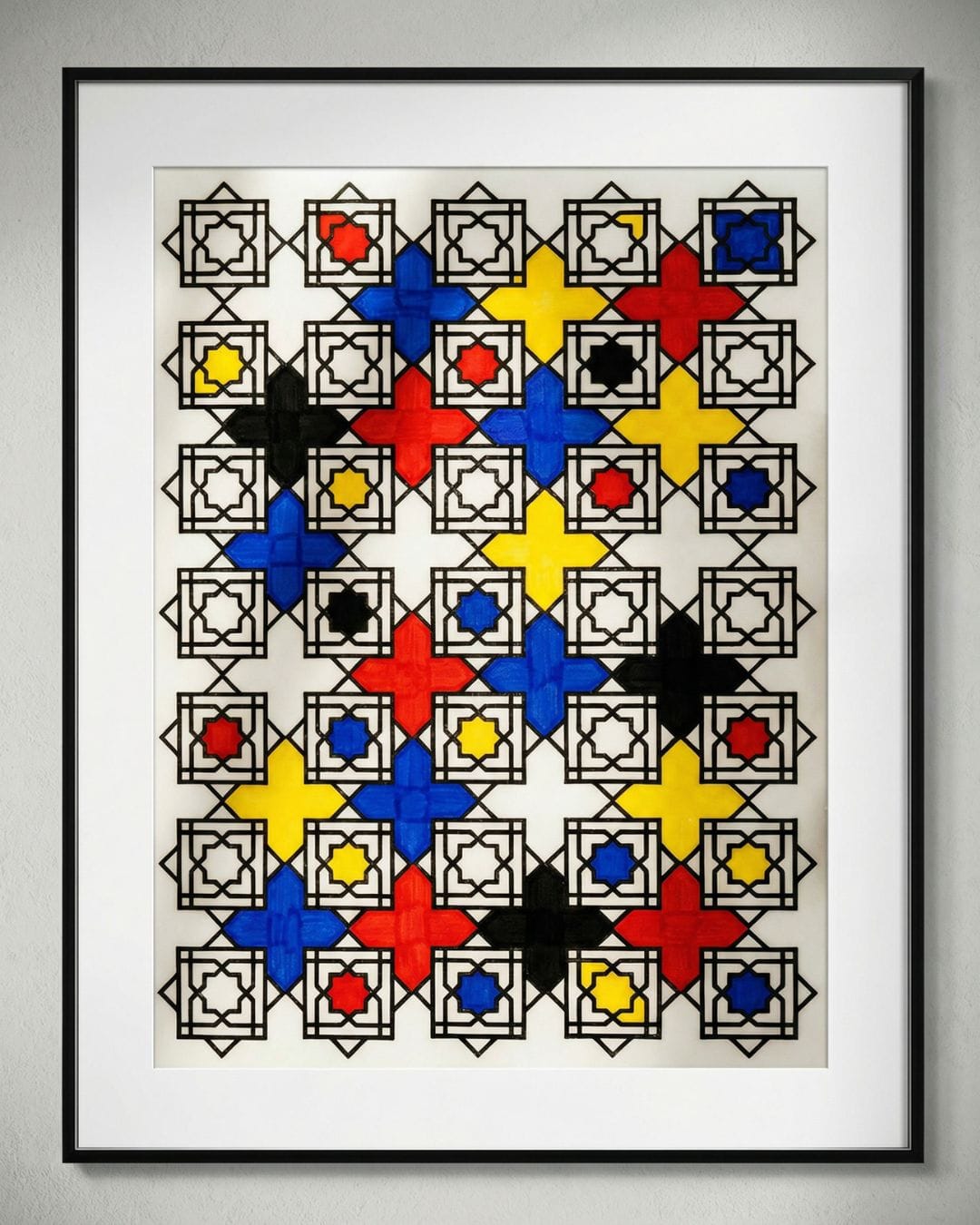
Trim or mount the piece on a backing and frame it simply. White space around the artwork enhances the geometry.
As gift wrap or postcards
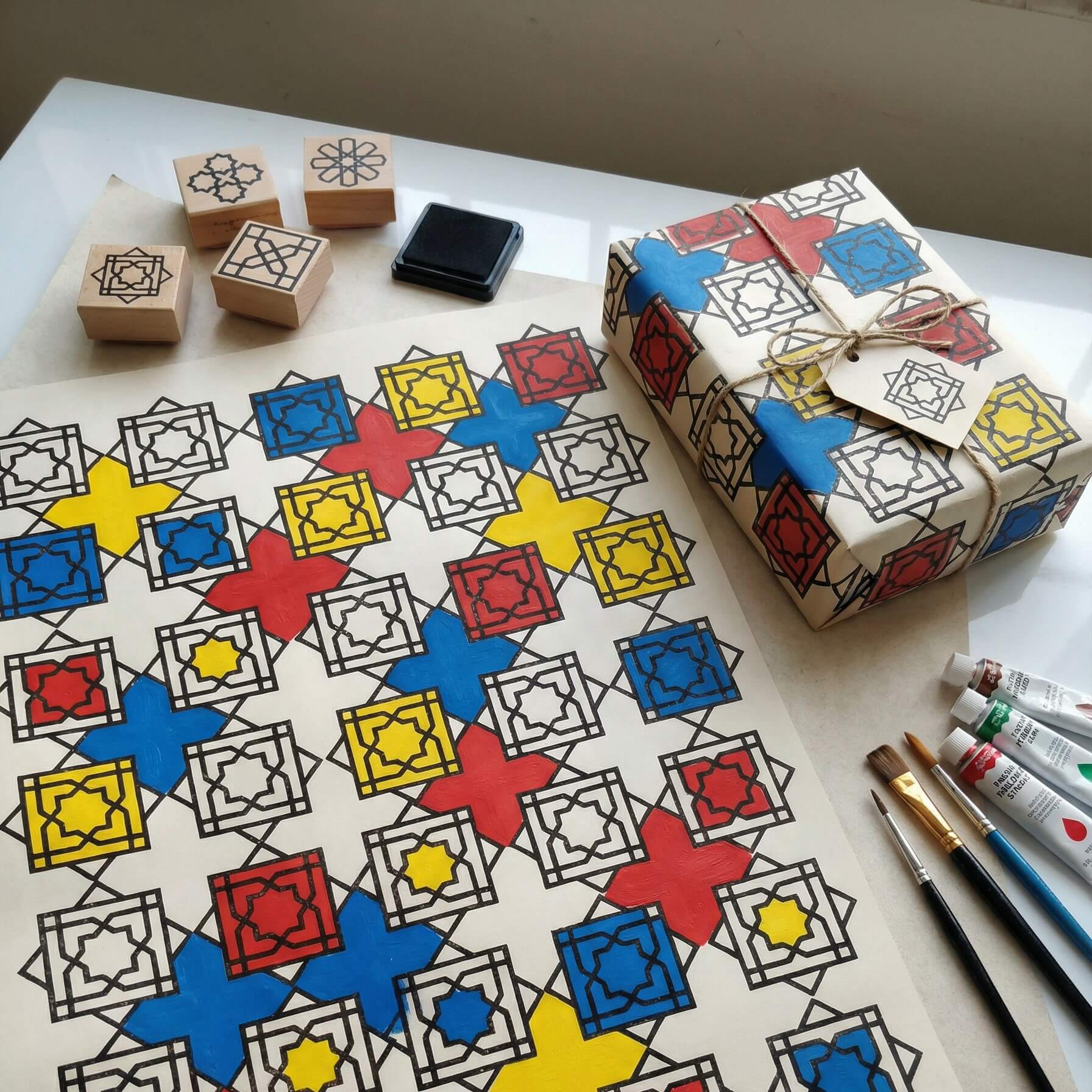
You can use other geometric stamp designs to create gift wrap or postcards. You can also choose use different Mondrian color combinations inspired by his many unique yellow, black, and blue compositions. In this gift-wrap version, we left out black to give the pattern a softer, different feel.
For Ramadan or Eid
For this version, we chose a different geometric stamp pattern and repeated it in the same way, creating a continuous surface. Once the ink had dried, we filled selected shapes with colour.
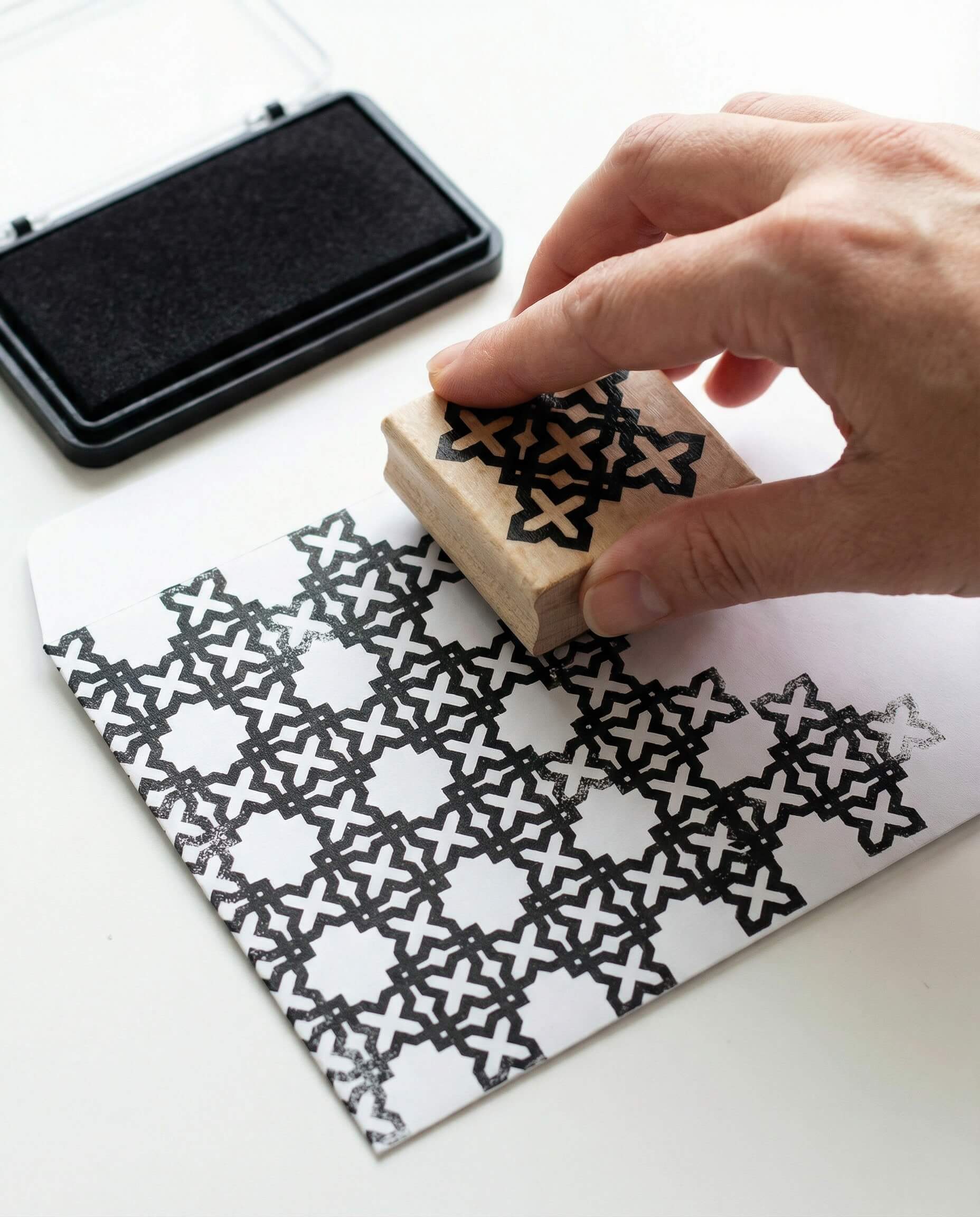
This piece was inspired by a Mondrian composition using blue, red, and black only, deliberately leaving out yellow. That limited palette helps the geometry feel calm and considered rather than decorative.
Some shapes are left empty, others are filled. There is no fixed outcome and no way to do it wrong. The structure holds everything together.
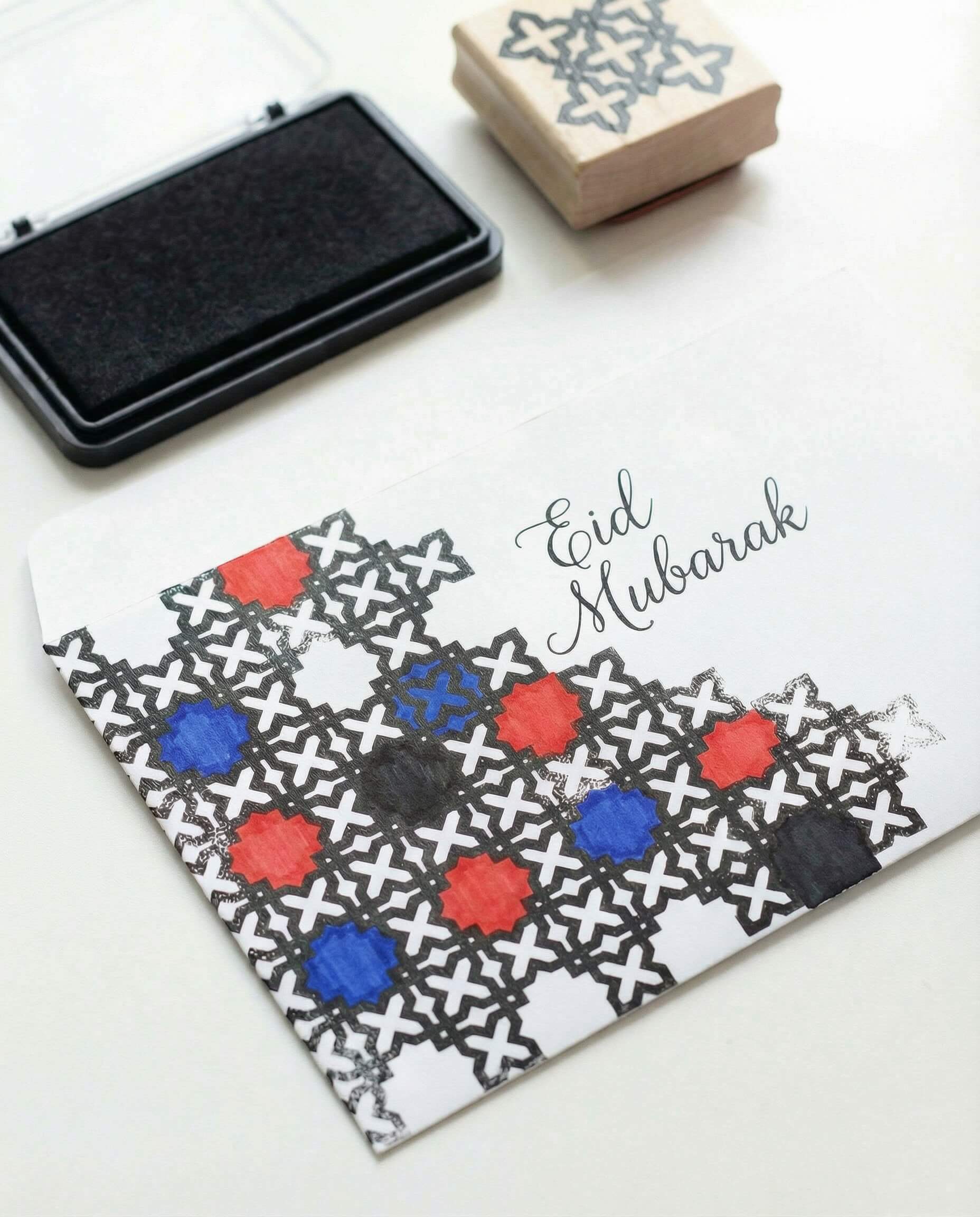
This approach works well for Eid money envelopes, greeting cards, or small wrapped gifts. The geometry connects naturally to Islamic visual language while leaving space for personal expression.
A note on variation
You can repeat this process endlessly:
- Change the stamp
- Change the spacing
- Change how much colour you allow
The method stays the same. The outcome changes.
That is the strength of geometric systems, they hold identity while allowing expression.
From process to artwork and then back to process: Mondrian reimagined
If you’re interested in how this approach connects to contemporary art and cultural influence, you can read the earlier post exploring Mondrian reimagined. What began as a conceptual question gradually became a finished artwork, and only later, a DIY process.
 Neda A.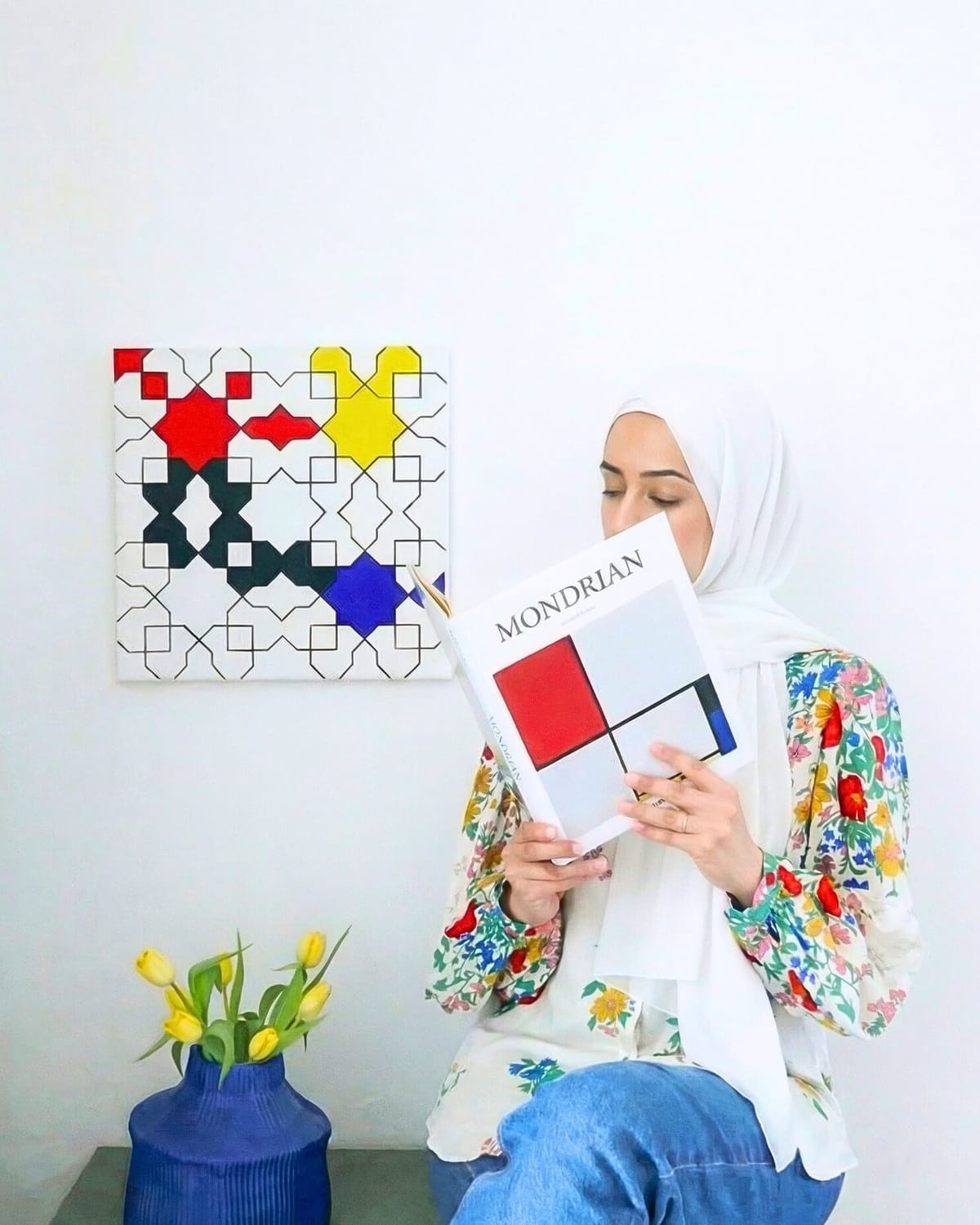
The artwork Mondrian reimagined grew out of this idea of seeing the world from another perspective. Once Neda A. completed the piece, it felt important to translate that thinking into something more accessible, a way for households to engage with the same ideas through making.
You can explore the wall art that started this creative journey here:
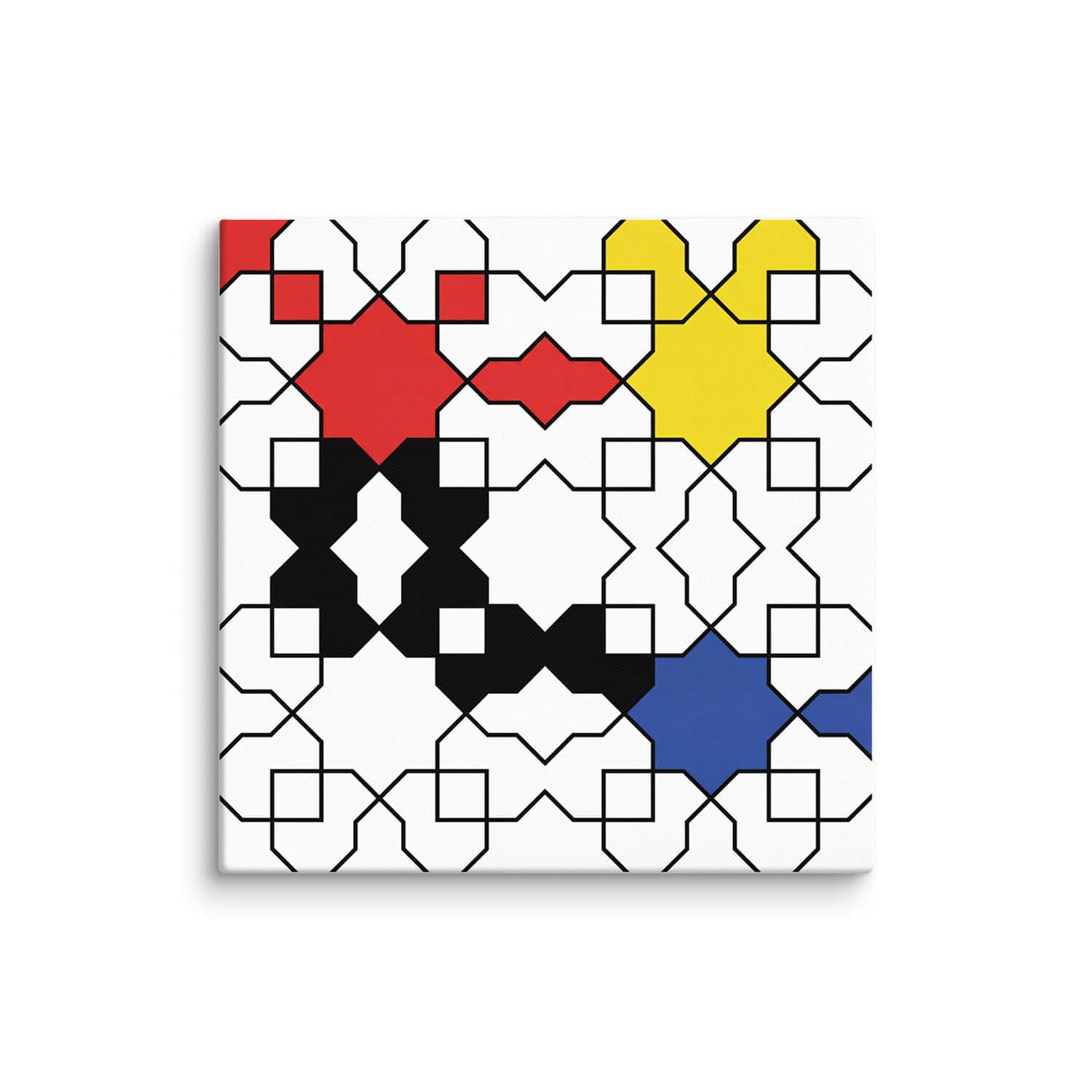
Mondrian Reimagined
Mondrian Reimagined is a modern geometric study of balance, structure, and primary form.


