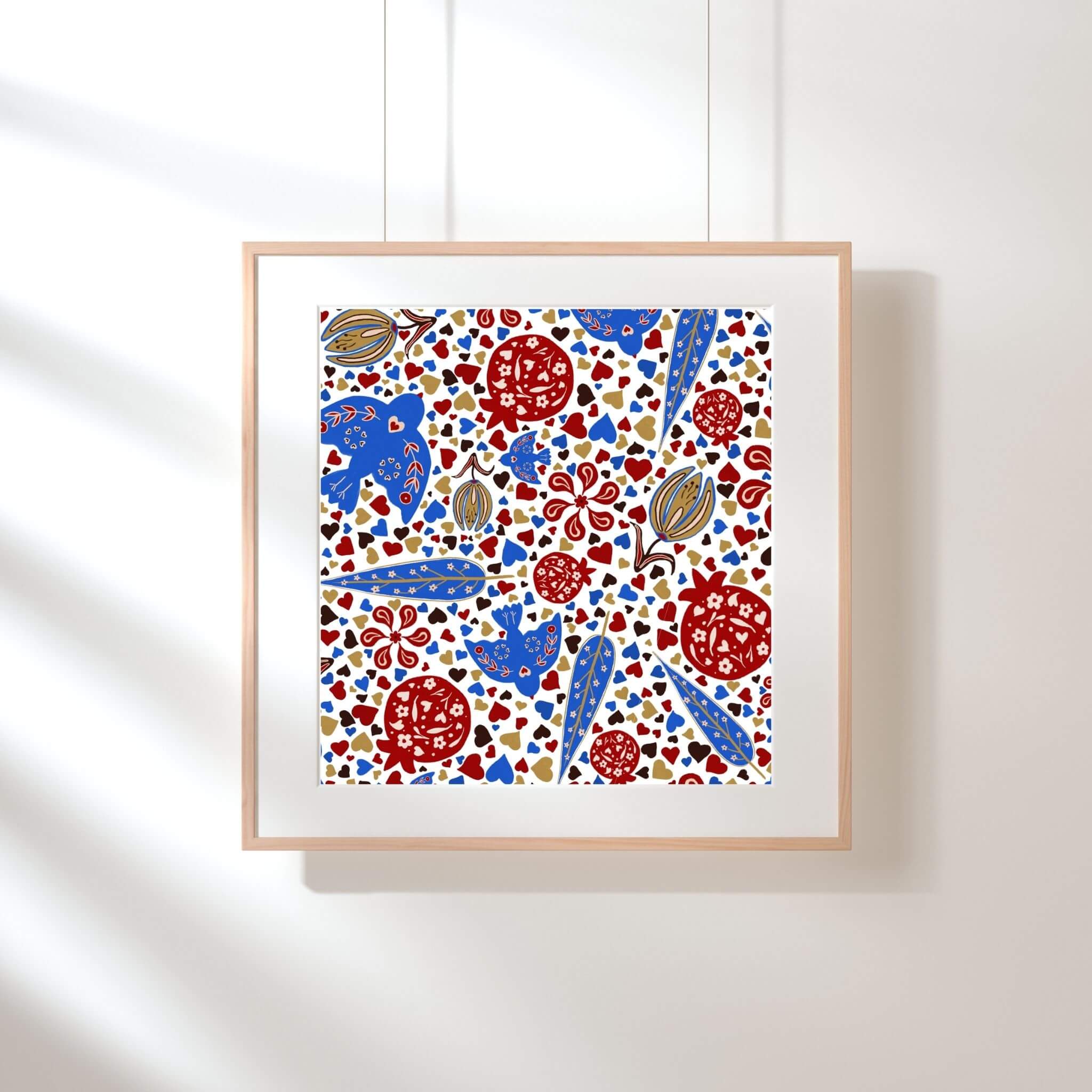

There is a reason so many hearts keep returning to the words of Jalāl al-Dīn Rūmī, century after century. His language is simple, but what it touches is anything but simple: longing, loss, love, and the soul’s journey back to its Creator.
In this post, we look at the deeper meaning behind this famous Rumi quote, explore its original Persian wording, and later share how it inspired a piece of artwork rooted in Islamic–Persian symbolism.
Who was Rumi?
Jalāl al-Dīn Rūmī (1207–1273) was a Persian Muslim scholar, jurist, poet, and Sufi teacher.
He was born in Balkh (in today’s Afghanistan) and later lived and taught in Konya (in today’s Türkiye).
He began as a respected religious scholar, giving sermons and legal opinions. His life changed profoundly after meeting Shams of Tabriz, a wandering dervish who became his beloved friend and spiritual mirror. Their intense companionship, and then Shams’ sudden disappearance, transformed Rumi from a scholar of words into a poet of burning longing.
From that pain came some of the most important works of Islamic spiritual literature:
- the Mathnawi, often called “one of the greatest works of Persian spiritual literature”
- the Divan-e Shams, a collection of ecstatic poems
- and many letters and discourses to his students and community
He remained, throughout his life, a Muslim teacher rooted in Quran, prophetic tradition, and the inner work of the heart.
How Rumi travelled beyond borders
Today, you’ll find Rumi’s lines on mugs, notebooks, Instagram captions and yoga studio walls. Many people who quote him have never opened the Mathnawi and may not even know he was a Muslim scholar.
On one hand, this shows how universal some truths are. The ache of the human heart, the longing to be seen and loved and held by Something greater – this doesn’t belong to one culture only.
On the other hand, it is easy to pull Rumi’s words out of context and turn them into vague “feel good” quotes. The risk is that we keep the poetry but lose the depth: the surrender to God, the serious work on the self, the responsibility that comes with love.
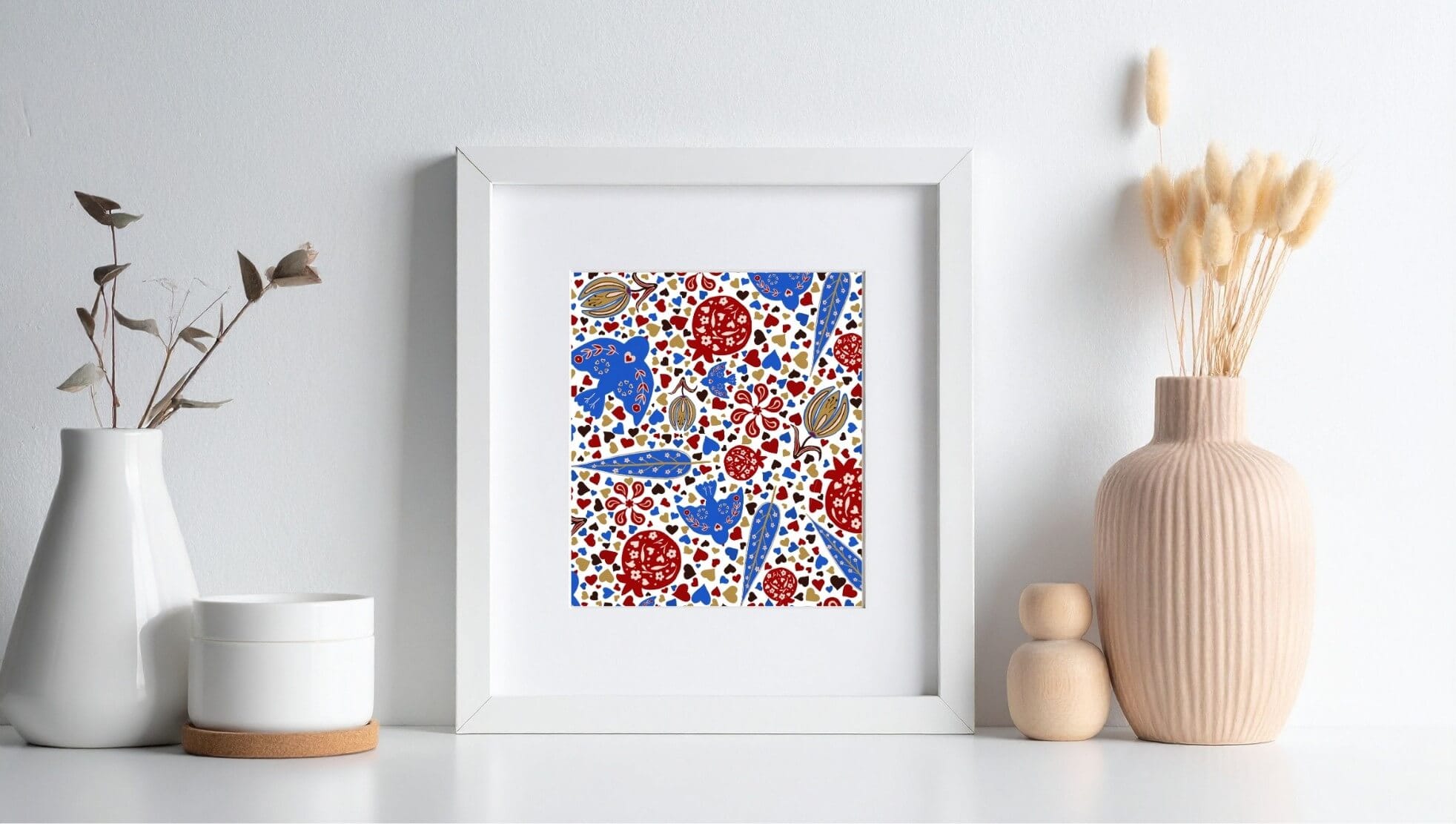
The Seeker's Garden (Limited Edition)
Bring a sense of warmth and heritage into your home with this Rumi-inspired artwork. The pomegranate (رُمّان) — a Quranic symbol of blessing, abundance, and renewal — is illustrated here alongside blue birds, hearts, and floral details in a clean, contemporary style.
The quote: “What you seek is seeking you”
This is the line that inspired the collection:
“What you seek is seeking you.”
This quote while so short, has many profound hidden messages that we will take a look at:
Your longing is not random
Our deeper longings are often the most honest parts of us:
- wanting meaning
- wanting a cleaner, simpler life
- wanting more presence with God
- wanting love that feels safe and kind
Rumi reminds us: your real longings are not accidents. The very fact that you long for something higher may itself be a sign that there is something higher, already turning towards you.
In Islamic language, we might say:
- Your fitrah (innate nature) is remembering where it came from.
- The One who created you is the One who placed these deeper questions and desires in you.
So when you feel that quiet ache – “There has to be more than this” – instead of pushing it away, Rumi is inviting you to listen to it. That ache might be your soul being called home.
It’s not just about positive thinking
The modern world has turned this quote into a kind of manifestation slogan:
“Think about something and it will come to you,” sometimes labelled as “karma” in modern language.
That is not what Rumi meant, and it is not how Islamic spirituality works.
In our tradition, there is a balance:
- You seek – with intention, dua, action, effort.
- Allah opens doors – sometimes the ones you asked for, sometimes better ones, sometimes doors you didn’t even know existed.
“What you seek is seeking you” is not a promise that we will always get what we want. It’s a reminder that when your seeking is sincere and directed towards truth, goodness and God, then you are not moving alone. The path is not one-sided.
It is less:
“You are so powerful, you can attract anything.”
And more:
“When you walk towards what is true, the Truth also comes closer to you.”
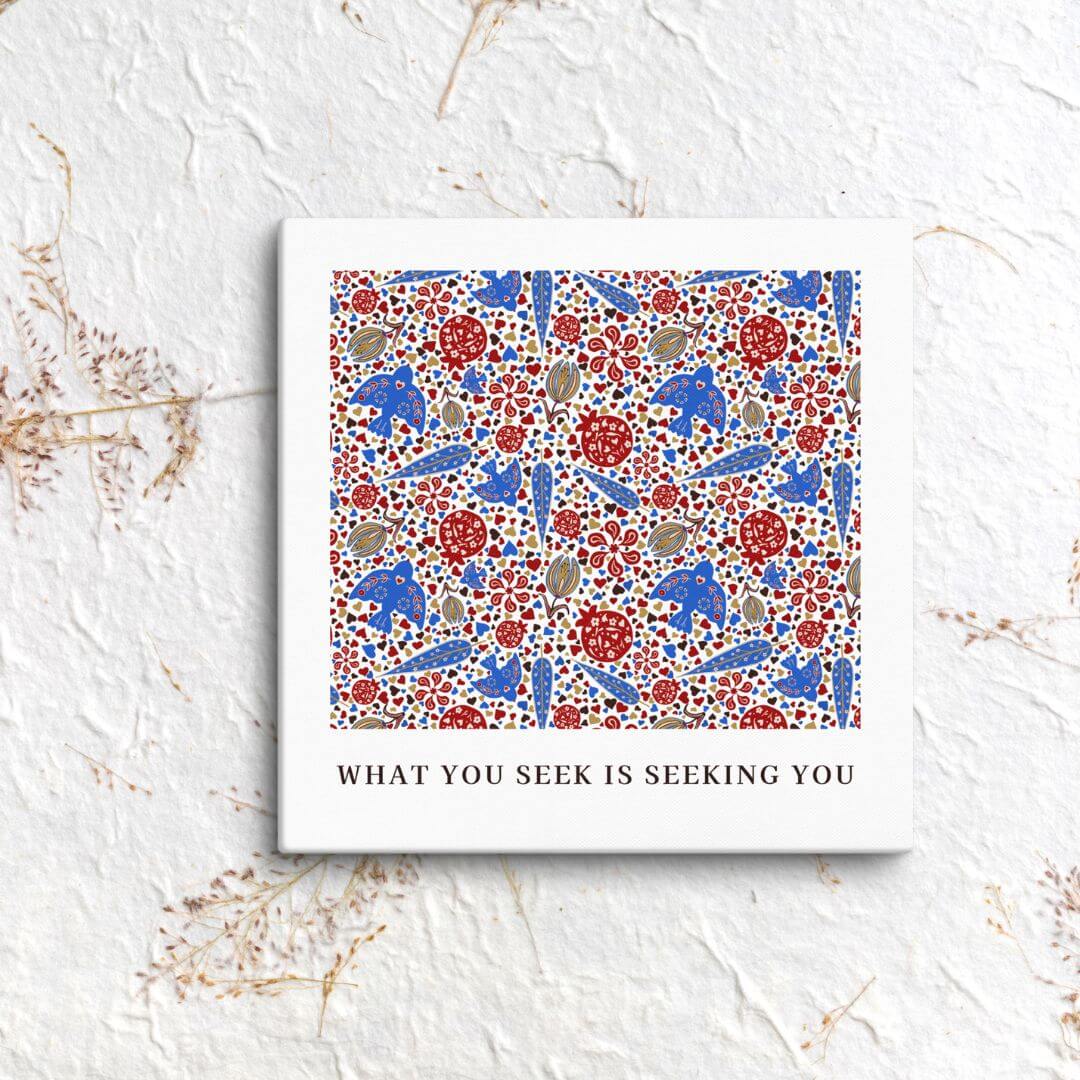
The Seeker's Garden (Rumi)
This artwork blends heritage, colour, and symbolism; a quiet reminder of seeking, longing, and Divine closeness. The canvas carries the quote “What you seek is seeking you” by Rumi, adding a soft spiritual note.
Check what you are actually seeking
This line can also be a gentle question:
What are you actually seeking, day to day?
Is it approval, attention, status, perfection, comparisons with other people’s lives?
Or is it quiet, sincerity, beauty that reflects your values, the pleasure of Allah?
If what you seek is only outward things – bodies, brands, likes, admiration – then you may find yourself constantly chased by anxiety, jealousy, and emptiness. Those things can “seek you” back too: more pressure, more exhaustion, more noise.
But if you seek:
- truth instead of performance,
- depth instead of constant surface,
- a home for your heart instead of endless scrolling,
then what comes back to you gradually changes: calmer choices, cleaner spaces, friendships with people whose souls feel safe, and a different relationship with your Lord.
The original Farsi/ Persian text for "What you seek is seeking you"
This line appears in the Mathnawi, and it is considered the closest original Persian source behind the widely known idea expressed in English as “What you seek is seeking you.”
هر چیز که در جستن آنی، آنی
Har chiz ke dar jostan-e ānī, ānī
Literal translation: “Whatever you are seeking, you are that.”
Some scholars translate it as “You are what you are looking for,” and others connect it more directly to the popular rendering “What you seek is seeking you.”
The wording may differ, but the underlying meaning remains the same: the qualities we search for; truth, clarity, love, nearness to God, must already be present within us at some level, or our hearts would not recognise them enough to seek them.
Another couplet often attributed to Rumi expresses a similar idea in different imagery:
تشنگان گر آب جویند از جهان
آب جوید هم به عالم تشنگان
Teshnegān gar āb jūyand az jahān /
Āb jūyad ham be ‘ālam-e teshnegān
“If the thirsty search for water in this world,
the water also searches for the thirsty.”
Both lines reflect a shared spiritual insight found throughout Rumi’s work: the seeker and the sought are connected. Longing is not one-sided. The search itself is a sign of something already calling you.
A garden of symbols: pomegranate, flowers, cypress, the bird, the hearts
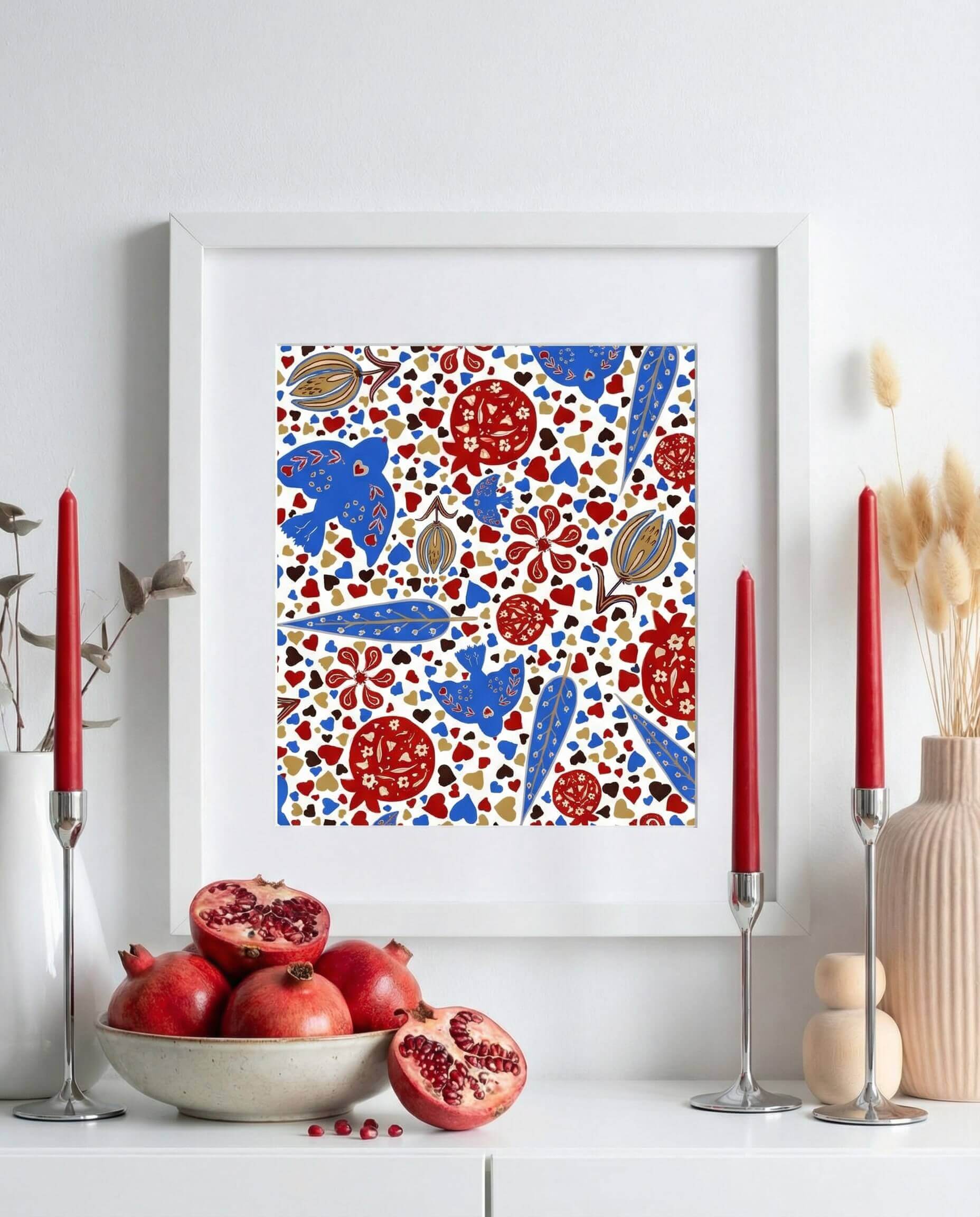
The artwork draws from the atmosphere of Rumi’s words through familiar Islamic-Persian motifs that express what the heart cannot always say directly.
The garden as a symbol of the seeking heart
In Islamic culture, gardens are not just pretty backdrops.
They symbolise:
- mercy
- shade after hardship
- life after dryness
- a small reflection of Jannah
A seeker’s heart is like a garden in progress. Some parts are wild, some parts are overgrown, some parts are carefully tended, and some corners are still “under construction”.
Rumi’s line sits inside that garden as a quiet reassurance:
- You are trying to move towards God – He is already closer to you than your own jugular vein.
- You are trying to live more truthfully – truth has always been woven into the fabric of the world.
- You are trying to become more yourself – the real you has not gone anywhere, she is waiting to be uncovered.
Each one of the motifs in this artwork has a long history in Persian and Islamic art, and together they create a quiet symbolic world where Rumi’s words feel at home.
The pomegranate
Across Persian culture, the pomegranate symbolises blessing, abundance, protection, and inner richness.
It is often used to represent the heart and its hidden seeds, the parts of us that are waiting to ripen.
In the context of Rumi’s line, it suggests that what you seek may already be planted inside you, quietly growing.
The flowers (tulip-inspired motifs)
The tulip in Persian literature carries a deep emotional meaning.
A red tulip often represents the burning heart of the lover — a heart touched by longing and transformed by it.
It is a symbol of devotion, sincerity and sometimes sacrifice.
In this artwork, the tulip-shaped flowers open outward calmly and steadily, mirroring how the heart opens to truth: not all at once, but petal by petal.
The cypress tree
The cypress is one of the oldest symbols in Persian art.
Tall, upright and resilient, it represents steadfastness, dignity and spiritual aspiration.
It never bends easily, even in harsh weather — a reminder that the seeker’s path requires patience and a kind of quiet strength.
Placing the cypress among softer motifs balances the garden: longing (tulip), richness (pomegranate), and perseverance (cypress).
The bird
Birds appear constantly in Sufi writing, often as metaphors for the soul — restless, curious, pulled toward its true home.
Think of Attar’s Conference of the Birds or even Rumi’s own references to birds longing for the sky.
The small bird in the artwork suggests movement, searching, and hope — the gentle idea that the soul is always in motion toward something higher.
The hearts
In Islamic spiritual language, the heart (qalb) is not a symbol of romance.
It is the inner garden — the place where clarity, sincerity and presence grow.
Rumi often writes about polishing the heart until it reflects truth without distortion.
The hearts scattered throughout the composition remind us that every spiritual journey is inward before it is outward.
The collection was first hand-painted and later translated into fine art prints, allowing this symbolic garden to move from reflection into physical space.
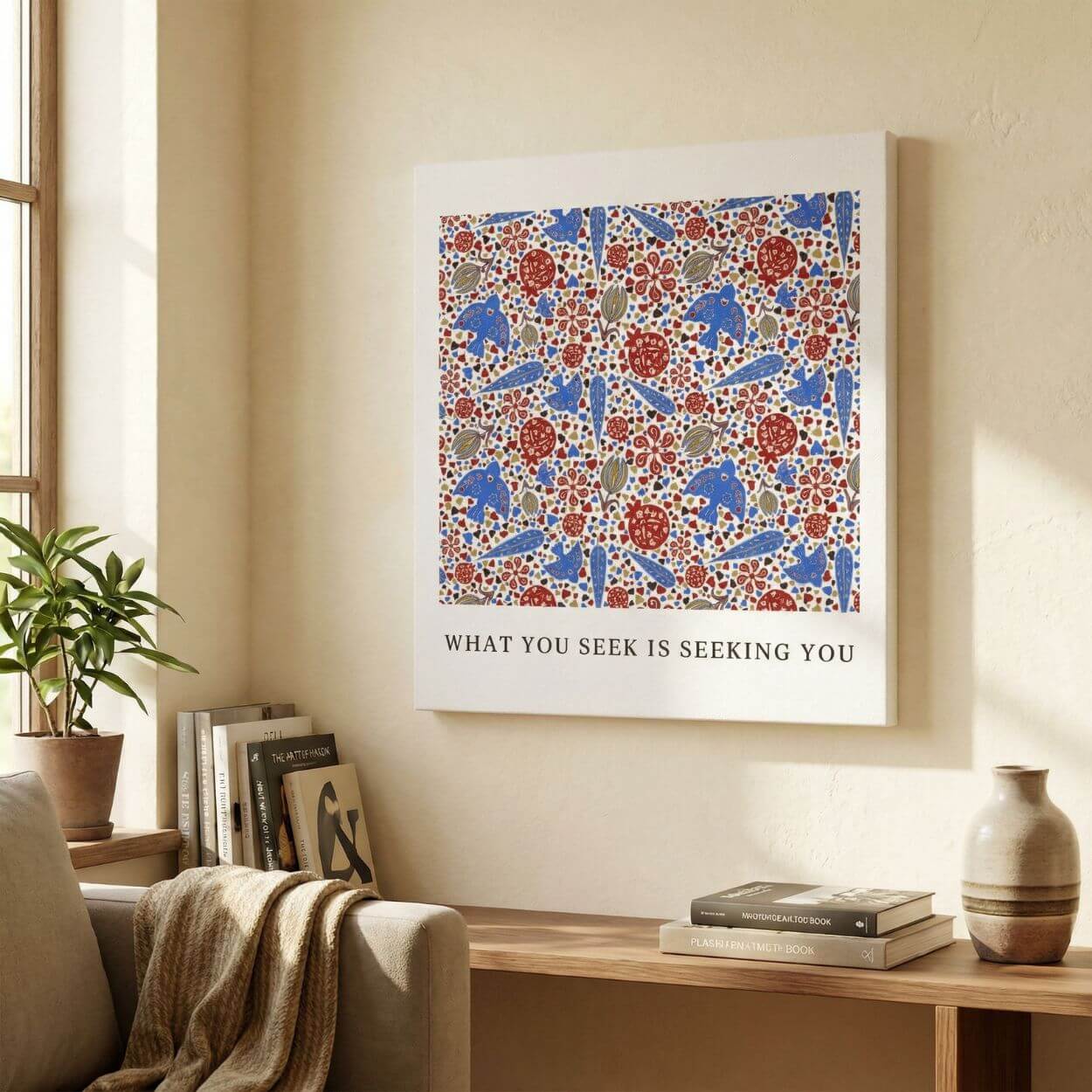
The Seeker's Garden
This print on canvas blends heritage, colour, and symbolism; a quiet reminder of seeking, longing, and Divine closeness.
The pomegranate (رُمّان), a Qur’anic symbol of blessing and abundance, brings a quiet spiritual depth to the artwork.
Living with the quote in everyday life
You don’t have to be in a dramatic life crisis to live this quote. It can shape ordinary days:
When you feel stuck between who you are and who you want to be:
Remember that sincere seeking is already a form of movement. You don’t have to fix everything overnight. Feeding the right intention, consistently, is part of being sought.
When you feel spiritually flat:
Instead of waiting to “feel” something, start with a small act – two quiet rak‘ahs, a whispered dua, a page of Quran – and trust that the One you are seeking is already aware of you.
When you feel lonely:
Ask yourself: What am I truly seeking? Shallow company or real companionship?
Then make one small move towards the kind of friendship you actually want.
Keeping these words visible in your home is not about aesthetics only. It is about gently aligning your surroundings with what your soul is actually trying to move towards.
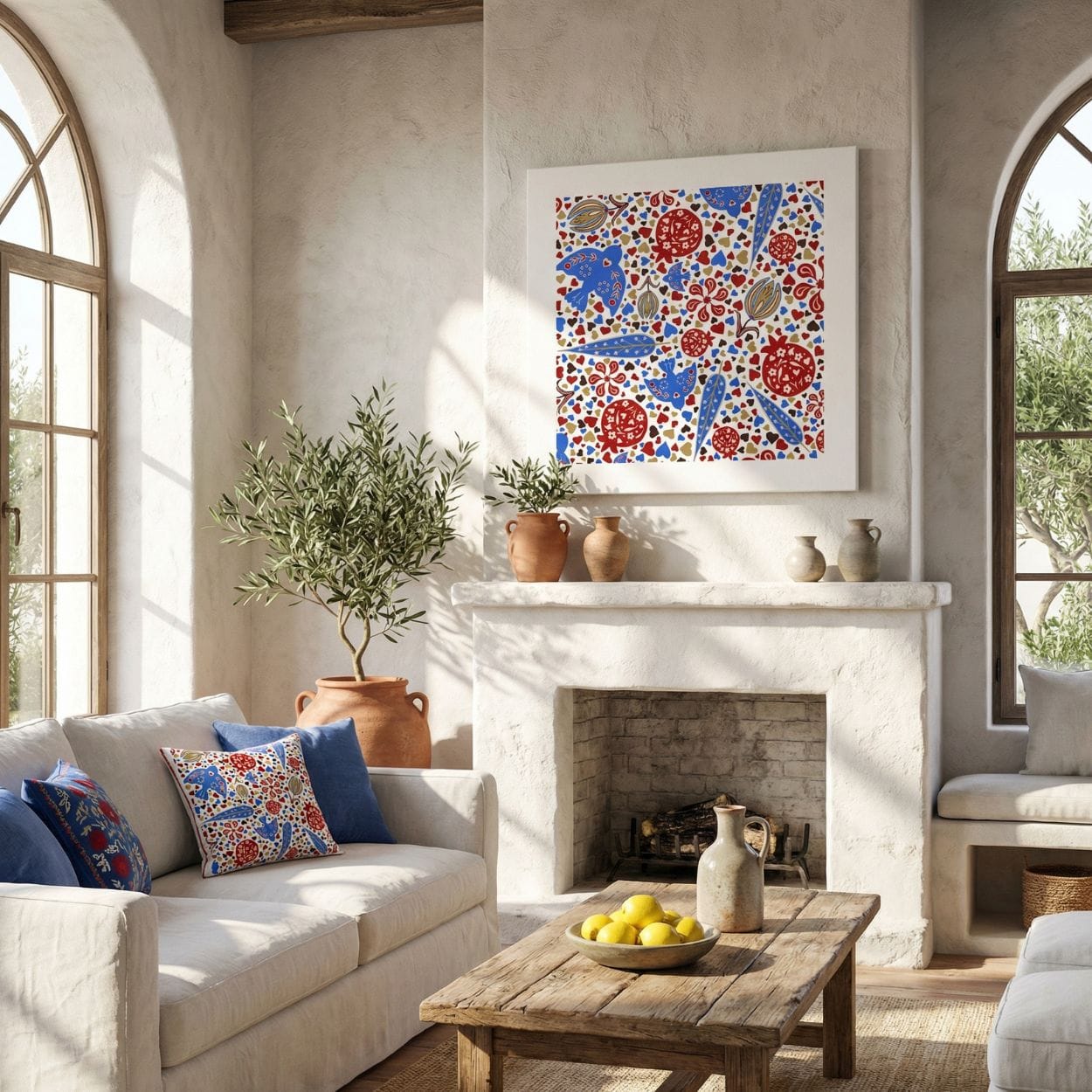
The Seeker’s Garden Collection (art inspired by Rumi's poem)
The Seeker’s Garden collection is available through the official Deenista shop (Deenista.shop), where each artwork is offered as a carefully produced fine art print.
The collection includes:
- Rumi quote artwork – featuring the line “What you seek is seeking you” printed beneath the artwork as a daily reminder.
- The Seeker’s Garden canvas – the garden itself, without text, for a more subtle presence of the theme.
- Framed limited edition print – for those who want a collector’s piece that arrives ready to hang and is only available in a set number of copies.
Explore the full collection at Deenista.shop.