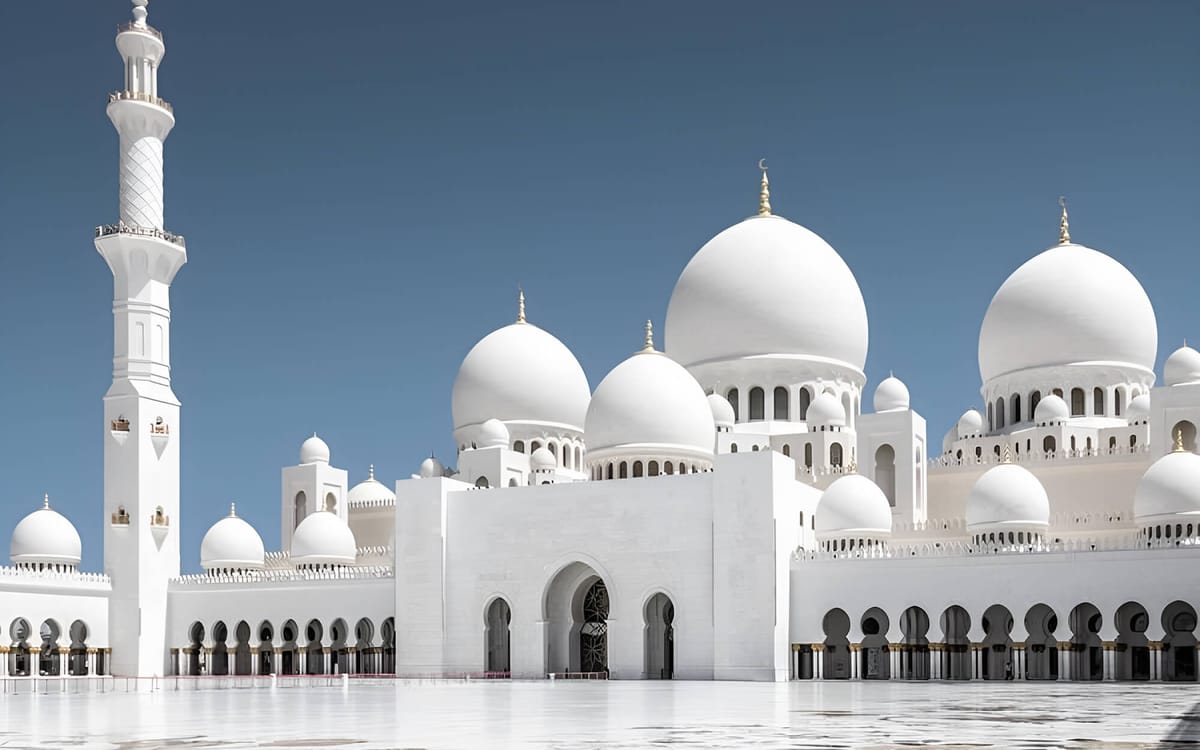

We have all seen the phrase. Maybe as a calligraphy print on a wall, or as something a mother repeats when life feels heavy.
Inna Allaha ma’a as-sabirin.
“Indeed, Allah is with the patient.”
It appears in the Quran in Surah Al-Baqarah (2:153). It is one of the most quoted verses, and many of us return to it when times are difficult.
Beyond its familiarity, it carries the word sabr, a term that appears throughout the Quran again and again. When a word returns that often, it is worth paying attention.
So what does “Allah is with the patient” really mean? And what does sabr mean in the Quran?
Is it endurance, or is it a mindset?
Is it silence, or is it resilience?
Is it withdrawal, or is it disciplined strength?
In this post, we explore the meaning of Quran 2:153 word by word and look at what sabr represents across the Quran.
Quick links
- Meaning of the verse 2:153
- Word-by-word explanation of Quran 2:153
- How many times sabr is mentioned in the Quran
- Duas for sabr in the Quran
The verse 2:153 in Arabic and translation
From Surah Al-Baqarah (2:153):
يَا أَيُّهَا الَّذِينَ آمَنُوا ٱسْتَعِينُوا بِٱلصَّبْرِ وَٱلصَّلَاةِ ۚ إِنَّ ٱللَّهَ مَعَ ٱلصَّابِرِينَ
“O you who believe, seek help through patience and prayer. Indeed, Allah is with the patient.”
The sentence is concise and carefully structured: an address, an instruction, and a promise.
Word by word meaning of Quran 2:153
“O you who believe” (يَا أَيُّهَا الَّذِينَ آمَنُوا)
The verse opens with a direct address to those who believe. It signals relationship and responsibility. The instruction that follows assumes awareness and commitment.
“Seek help” (ٱسْتَعِينُوا)
The first verb is active. It calls for deliberate turning toward support. Strength begins with intention.
Patience is presented as a means through which help is accessed.
“Through patience” (بِٱلصَّبْرِ)
Sabr is often translated as patience, yet in the Quran it carries breadth.
Across its occurrences, sabr includes:
- steadiness under pressure
- emotional restraint
- moral consistency
- endurance in responsibility
- composure in decision-making
Classical scholars often describe sabr across three broad expressions: steadiness in hardship, consistency in obedience, and restraint from harm. Together, these reflect strength of character and inward alignment.
Later in the verse, the word ٱلصَّابِرِينَ (aṣ-ṣābirīn) refers to those who embody this steadiness as an ongoing state. It signals continuity. Sabr is cultivated and sustained.
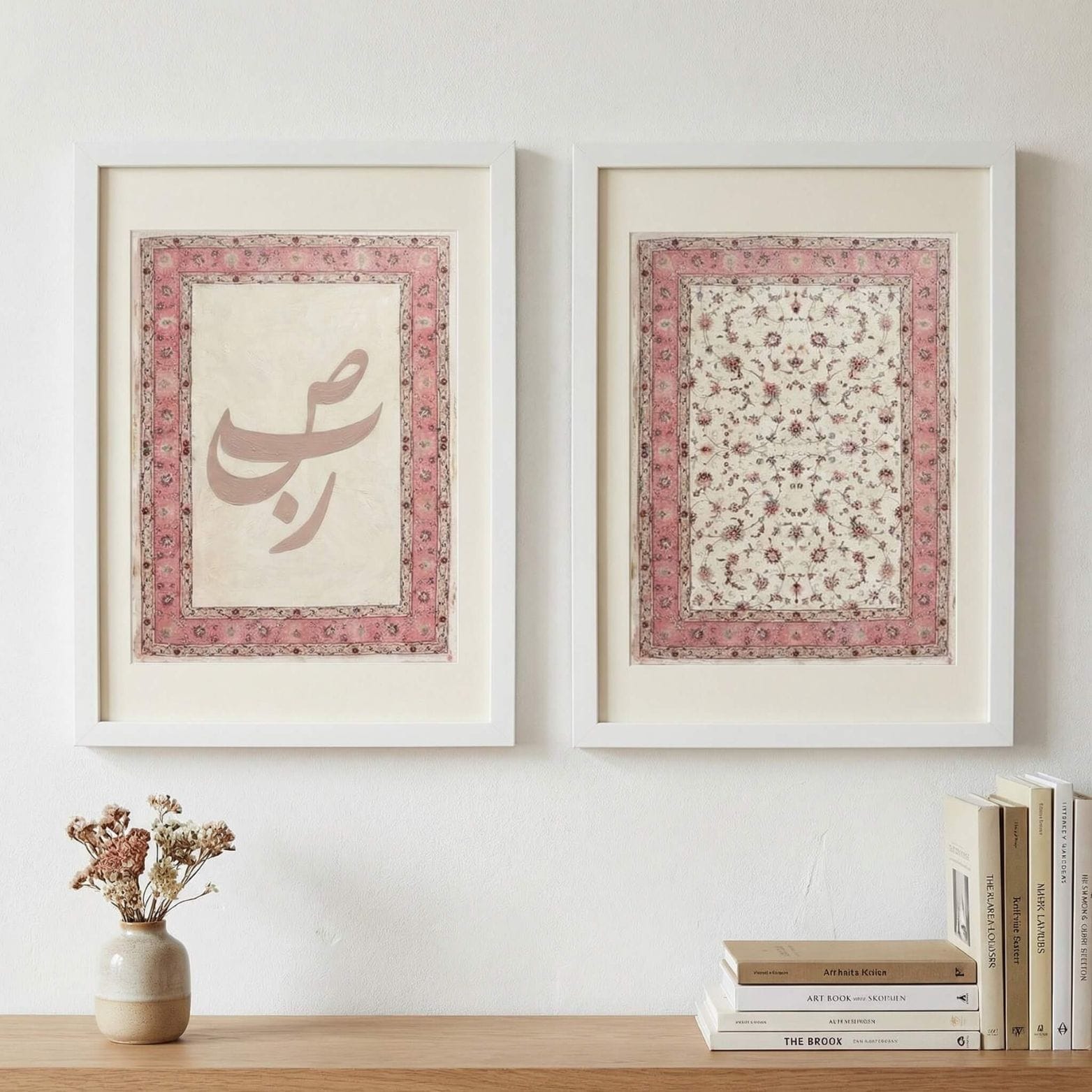
sabr digital art print — instant download
A minimal sabr artwork inspired by Quran 2:153.
Digital file. Print at home or professionally. Instant access after purchase.
“And prayer” (وَٱلصَّلَاةِ)
Patience is paired with prayer. The pairing forms a rhythm.
In the Quran, the order of words matters. If you pay attention, prayer comes after patience. The verse says “seek help through patience and prayer,” not the other way around.
The sequence suggests that steadiness comes first. Sabr shapes the inner state. Prayer then becomes grounded and focused.
The structure itself carries meaning.
“Indeed” (إِنَّ)
Sometimes, when reading the Quran, we move quickly past small connector words. But for a moment, let’s take our magnifying glass and look closely at “Indeed” in Surah Al-Baqarah (2:153).
What it does is remove doubt. It strengthens the statement that follows. It makes it clear that the quality of sabr is not optional or secondary.
The verse speaks with certainty. This matters.
“Allah is with the patient” (إِنَّ ٱللَّهَ مَعَ ٱلصَّابِرِينَ)
This is really the core of the verse in Surah Al-Baqarah (2:153). Everything comes together here.
So what is it actually saying?
At first glance, we might read it simply: Allah is with those who are patient. You go through something difficult, you endure it, and Allah is with you. That is true.
But there is another layer.
The verse does not describe a single moment. It says Allah is with ٱلصَّابِرِينَ (aṣ-ṣābirīn) — those who are people of sabr.
That points to more than one reaction. It points to a mindset. A lifestyle.
Sabr is not just something you show once. It is how you carry yourself. How you respond. How you hold your emotions. How you move through pressure.
Now look at the word مَعَ (maʿa) — “with.” It is a small word, but it carries closeness. Presence. Support.
Put the two together.
Allah is with those who live with sabr as part of who they are. Not just when something hard happens, but in the way they think, choose, and act.
That is where the depth of this verse sits.
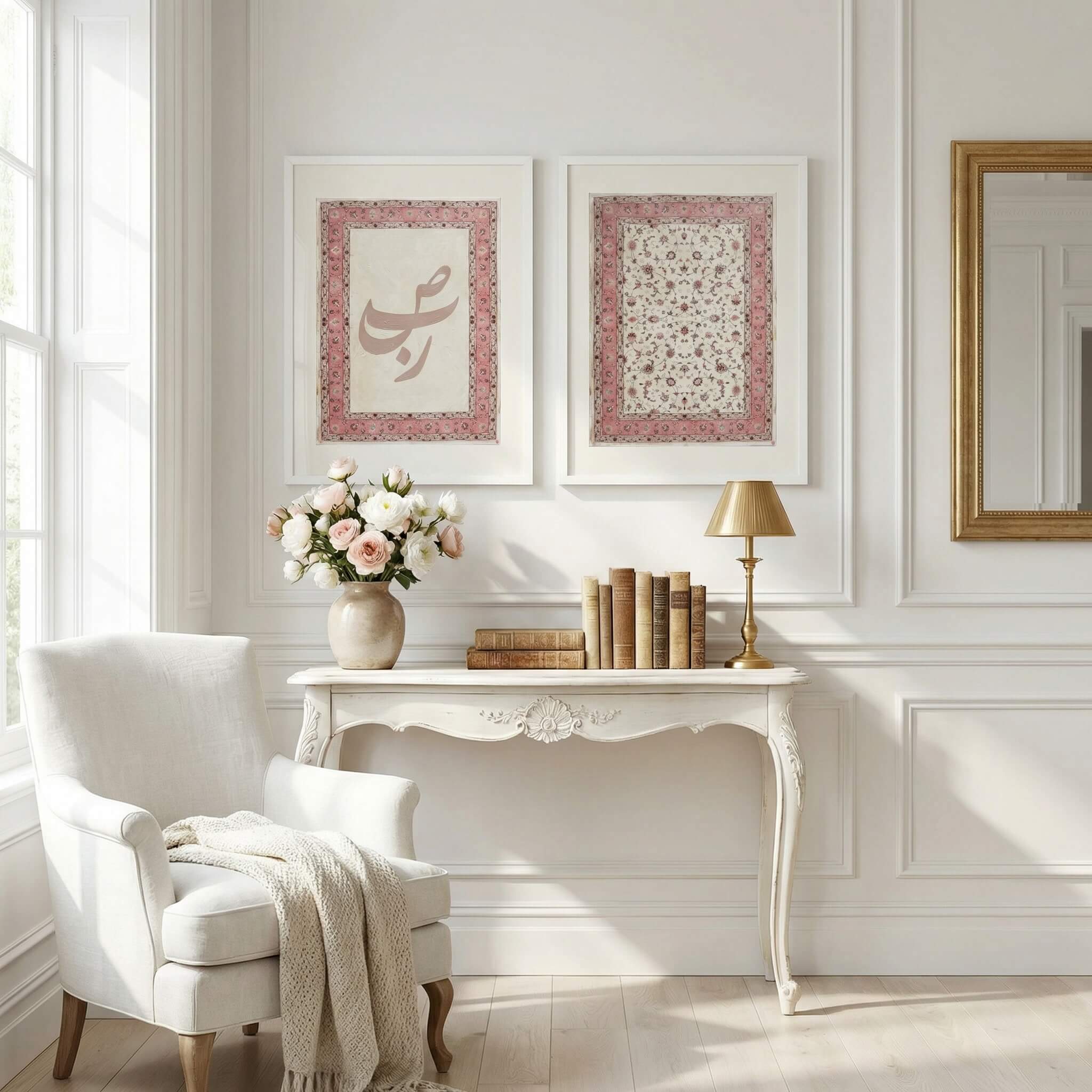
sabr duo inspired by Quran 2:153
Simply download the digital artworks available at Deenista.shop and frame them in your chosen frames. A beautiful, budget-friendly, and environmentally conscious way to bring a quiet reminder of this verse into your space.
How many times is sabr mentioned in the Quran?
Imagine this: you’re reading a book and a single word appears 103 times. At some point, you realise it isn’t random. It’s intentional.
In the Quran, that word is sabr (صبر).
The triliteral root ṣ-b-r appears approximately 103 times in different grammatical forms, including:
- sabr (patience)
- iṣbir (be patient)
- ṣābirīn (those who are patient)
- ṣabarū (they were patient)
When a quality is repeated that often, it tells you something. Sabr is not a minor theme. It appears in stories of prophets, in moments of loss, in instructions to communities, and in private trials. The repetition builds emphasis.
Sabr is not presented as a one-time reaction. It is described across situations and seasons. That suggests it is a way of living, a mindset carried through different circumstances.
The Quran goes further in Surah Yusuf (12:18), where we read:
فَصَبْرٌ جَمِيلٌ
sabrun jamil
“So patience is beautiful.”
When Prophet Yaqub speaks these words after hearing of his son’s loss, he does not deny his grief. He does not claim that nothing hurts. He describes his patience as beautiful.
In that context, beautiful patience means recognising that something is painful, but also recognising that it is part of reality. You face it head on, and you use the tool you have — patience — without letting bitterness take over.
When the Quran calls patience beautiful, it shows that sabr is not passive endurance. It is strength. It is knowing that you can turn to Allah without falling apart in sadness or despair.
That shifts how we understand the word entirely.
Duas for sabr in the Quran
Many people search for a dua for sabr during difficult periods. The Quran includes direct supplications asking Allah for patience and firmness.
One of the most frequently cited is from the Quran, Surah Al-Baqarah (2:250):
رَبَّنَا أَفْرِغْ عَلَيْنَا صَبْرًا وَثَبِّتْ أَقْدَامَنَا
“Our Lord, pour upon us patience and make firm our steps.”
This dua combines sabr with stability. It asks not only for endurance, but for firmness in action.
Other verses in the Quran also include prayers connected to patience, especially within prophetic narratives. The theme is consistent: sabr is requested as strength that steadies the heart and clarifies direction.
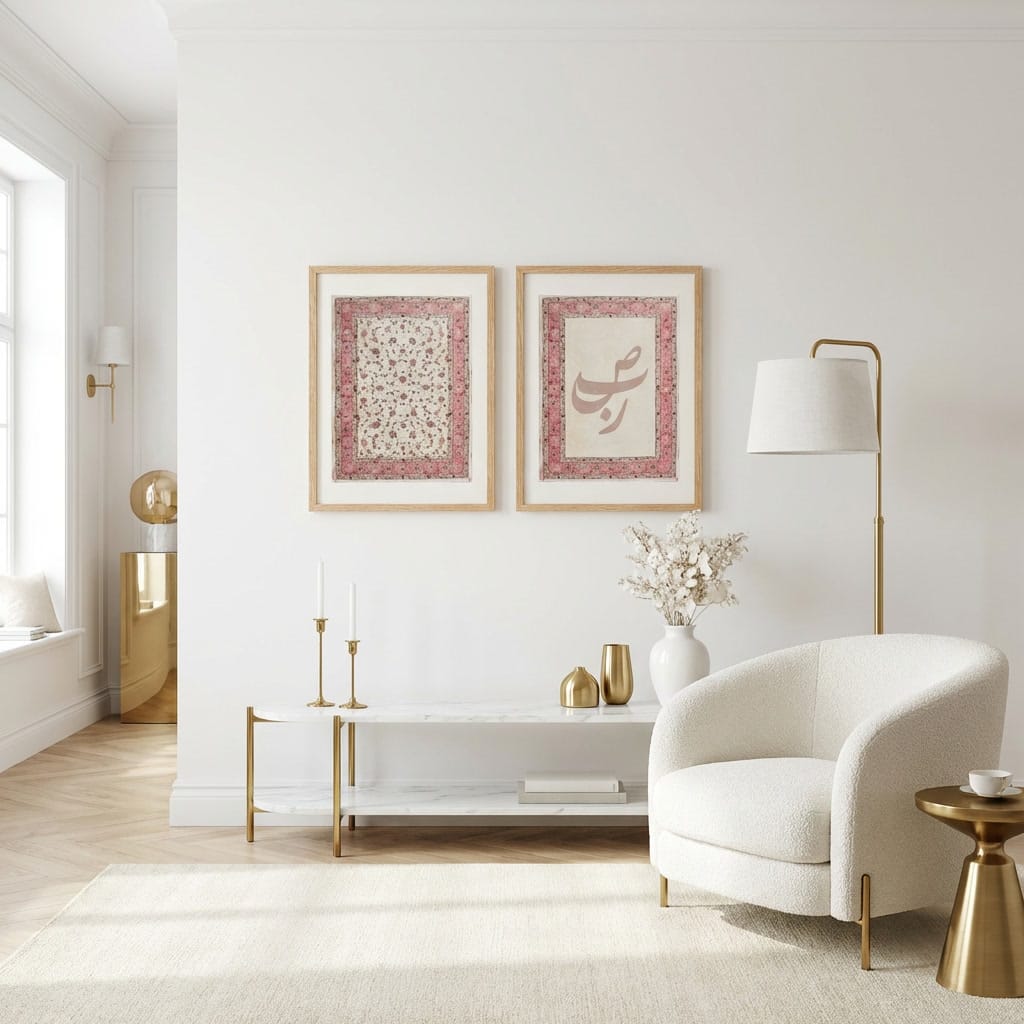
sabr artwork inspired by Quran 2:153
You’ve read the verse. Now place it where you can see it.
Digital download. Print and frame in your own style. Instant access after purchase.
Final thoughts: What “Indeed Allah is with the patient” really means
When the Quran says, “Indeed Allah is with the patient” in Surah Al-Baqarah (2:153), it is not offering a slogan. It is describing a reality tied to character.
Sabr appears across the Quran more than one hundred times. It is placed before prayer in this verse. It is strengthened by the word “Indeed.” It is described elsewhere as beautiful.
Taken together, this shows that sabr is not a single reaction to hardship. It is a mindset carried through life. A way of responding with steadiness instead of impulse. A way of turning to Allah without collapsing into bitterness.
The verse teaches that divine closeness is connected to who you are becoming.
And that changes how we read it.
If reflections like this resonate with you, you can explore more in the Deen & Dunya topics, where we look at spiritual and Quranic themes through everyday life, mindset, and lived experience.
 February 18, 2026 ∙ 4 minutes read